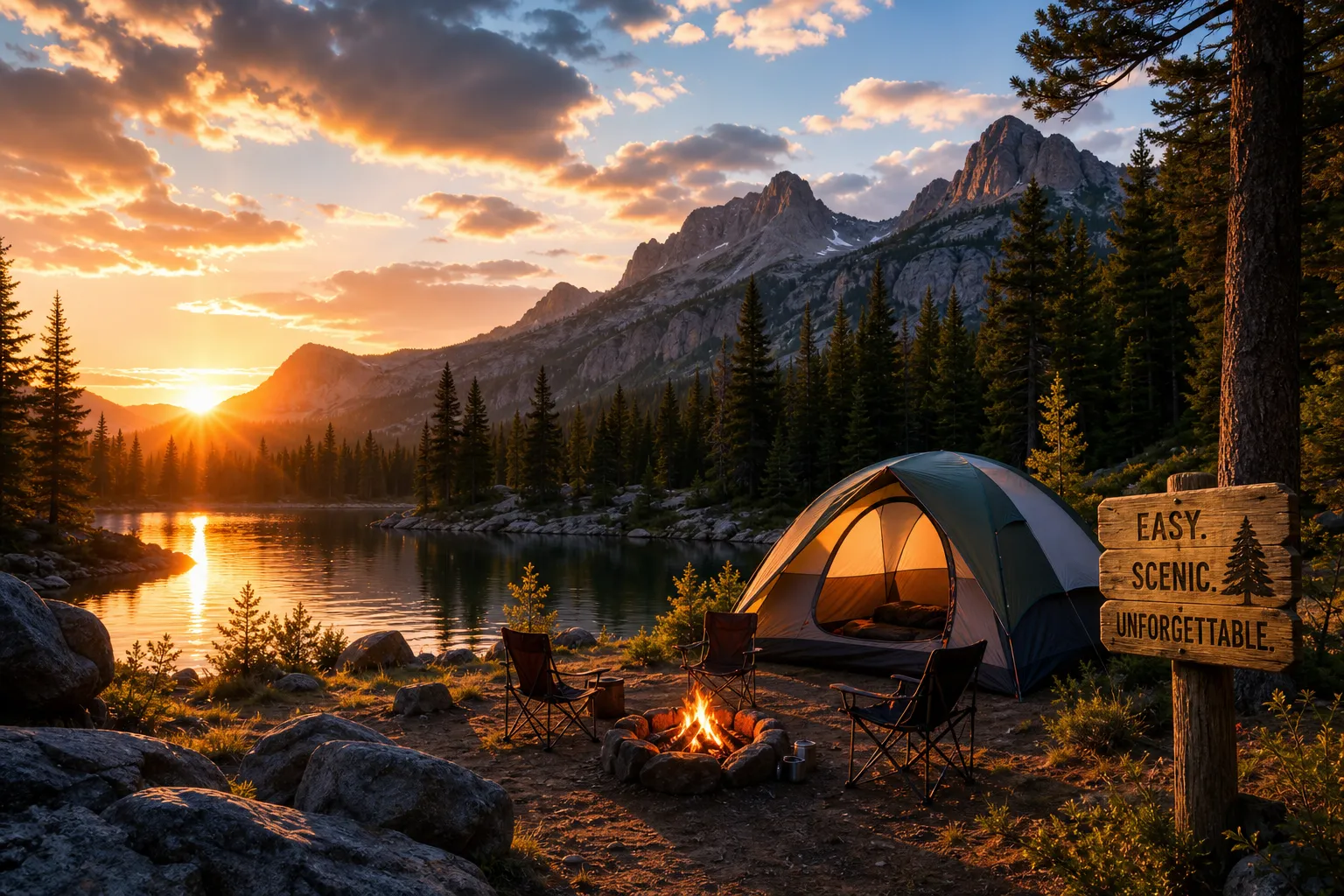
If you’re wondering where are the best beginner-friendly campgrounds in the United States for a first trip, the answer starts with one principle: pick a site that does the work for you. Most first-time campers don’t struggle with the idea of camping. They struggle with the details, which campground actually has bathrooms, whether a reservation is required, what happens if they forget something, and whether they’ll show up somewhere that feels more like a survival test than a relaxing weekend. That gap between the excitement of sleeping outside and the anxiety of picking wrong is where a lot of people stall out.
The good news is that choosing a smart first campground eliminates most of those concerns before they start. The best campgrounds for a first trip share a common profile: car-accessible sites, clean restrooms, potable water, and short trails that deliver real scenery without requiring technical skill. Ranger or visitor center access is typically available at national and state park campgrounds on this list, though staff presence varies at KOA and other developed private sites, always confirm amenities on the official reservation page before you book. At Qurabox, we’ve built step-by-step beginner camping gear guides and first-timer prep resources to help you get ready for that first night out. This article handles the other half of the equation: telling you exactly where to go.
Below you’ll find regional picks across the Northeast, Southeast, Midwest, Mountain West, and Pacific Northwest, plus reservation tips and a checklist of mistakes to skip.
Where to Find the Best Beginner-Friendly Campgrounds in the United States for a First Trip
The biggest mistake first-timers make before they even leave home is not understanding the difference between campground types. Show up at a primitive or dispersed site with no water source, no restrooms, and no marked boundaries, and that “beginner camping trip” becomes a stressful experiment. That’s not the experience this list is about.
The four amenities that actually matter for a first trip
Prioritize these four things and everything else becomes easier: flush or vault toilets within a short walk, potable water on-site, drive-in car-accessible sites so you’re not packing gear a mile through the woods, and ranger or visitor center access. At national and state park campgrounds, that support is often a short walk away. Having someone you can ask about trail conditions, fire restrictions, or wildlife keeps the trip from feeling like you’re flying blind. Private campgrounds like KOA sites offer different amenities, staff on-site, camp stores, laundry, that more than compensate.
Car camping vs. developed sites: understanding what you’re booking
A developed campground gives you a numbered site with a picnic table, a fire ring, and bathrooms within reasonable distance, plus a paved or gravel pull-in for your vehicle. Most campgrounds on this list deliver that setup, though specific amenities vary by site type, confirm the details on the reservation page before booking. Dispersed or primitive camping is something else entirely. It’s for people who are already comfortable outdoors and deliberately want fewer amenities. For a first trip, developed car camping is the right call every time.
Best beginner-friendly campgrounds in the Northeast
The Northeast has a large network of developed state parks and KOA campgrounds, making it one of the most forgiving regions for first-timers. You don’t have to drive far from major cities to find a well-managed site with solid facilities.
Watkins Glen-Corning KOA and Camp Chautauqua (New York)
The Watkins Glen-Corning KOA is one of the strongest first-trip options in the Northeast. It offers clean bathhouses with hot showers, potable water, on-site propane and firewood, a snack bar, laundry facilities, and clearly defined sites with electrical hookups available for RVs. For first-timers driving from New York City or Buffalo, it sits in the Finger Lakes region of upstate New York and makes for a solid weekend trip without requiring backcountry skills of any kind.
For hiking, the Gorge Trail at Watkins Glen State Park is an easy-to-moderate walk that follows a sandstone gorge through a series of waterfalls, the park’s official trail page lists the specifics and current conditions. Book through the KOA website for KOA sites, or through the New York State Parks reservation portal for Camp Chautauqua and similar state park options. Budget in the range typical for developed private campgrounds and plan at least two to three months ahead if you’re targeting a summer weekend. Camp Chautauqua nearby offers a similarly family-friendly setup with lake access and is worth a look if KOA sites are already filled.
Acadia National Park campgrounds (Maine)
Blackwoods and Seawall campgrounds inside Acadia National Park are excellent Northeast picks for a first trip. Blackwoods is managed entirely through Recreation.gov, with 90% of sites released six months in advance on a rolling monthly basis. Seawall offers drive-in tent sites and books on a two-month rolling basis. Check Recreation.gov for current nightly rates and availability, the park charges a $35 entrance fee in addition to nightly campsite costs.
Acadia is uniquely beginner-friendly because of its paved carriage roads, which are ideal for walking or cycling without any technical trail demands. The Ocean Path near Blackwoods runs 4.4 flat miles along the coast and is one of the best easy hikes in national parks in the entire Northeast. Ranger-led programs for families and strong visitor center support make this a campground where you genuinely feel looked after.
Top campgrounds for first trips in the Southeast and Midwest
The Southeast and Midwest consistently offer some of the most manageable first-trip environments in the US. Mild shoulder seasons, tree cover, and well-staffed parks with strong visitor center infrastructure mean you’re never far from help or a good view.
Great Smoky Mountains National Park (Tennessee/North Carolina)
Great Smoky Mountains is the most-visited national park in the United States, and that popularity comes with a real upside for beginners: exceptional infrastructure. Developed campgrounds at Elkmont, Smokemont, and Cades Cove all offer car-accessible sites, flush restrooms, and ranger presence. There’s no entrance fee, which is unusual for a national park. Campsites run roughly $21 to $27 per night (confirm current rates on Recreation.gov, as fees are subject to change), and sites fill fast. Book six months ahead for any summer weekend visit.
At 2.6 miles round-trip on a paved forested path, the Laurel Falls Trail is the standout first hike option here, leading to one of the most photographed waterfalls in the park. Ranger-led programs and Junior Ranger activities give families an easy structured activity built into the trip. The Elkmont Nature Trail is a short 0.8-mile loop that starts directly from the Elkmont campground, making it an ideal morning walk before breakfast.
Starved Rock State Park (Illinois) and Mill Creek at Berlin Lake (Ohio)
Starved Rock in Illinois is the top Midwest pick for beginners. The park offers guided canyon hikes through 18 canyons carved by glacial meltwater, interpretive programs, flush restrooms, and a reservable campground that doesn’t require months of advance planning to access. It’s accessible from Chicago and offers a noticeably different landscape than most of the flatland surrounding it, which makes the trip feel worthwhile even on a short weekend.
Mill Creek Campground at Berlin Lake in Ohio is a solid alternative for campers near Cleveland or Columbus. Sites are frequently available, the terrain is beginner-friendly, and non-electric options keep costs low. Both campgrounds book through state park portals, and shoulder-season visits in May or October offer the same amenities with far less competition for sites.
Beginner camping destinations in the Mountain West and Southwest
This region can feel intimidating because of its scale, but the national park campground system here is among the best-managed in the country. Stay within park boundaries at developed campgrounds and the experience is entirely manageable for a first trip.
Zion National Park campgrounds (Utah)
Watchman and South Campground in Zion are two of the best beginner campgrounds anywhere in the United States. Both offer flush toilets, potable water, paved sites, and a visitor center a short walk away. Junior Ranger programming gives families a built-in activity. The $35 park entrance fee applies in addition to nightly campsite fees, check Recreation.gov for current rates, and Recreation.gov handles reservations with a six-month booking window.
The Pa’rus Trail is the perfect first hike from either campground: 3.5 miles, completely flat, paved, and running alongside the Virgin River with canyon walls on both sides. Avoid summer if this is your first trip to Zion. The canyon floor reaches extreme heat in July and August, and spring or fall visits give you genuinely comfortable conditions with the same stunning views.
Yellowstone and Rocky Mountain national park campgrounds
Yellowstone’s Bridge Bay and Madison campgrounds come with flush toilets, fire rings, food storage boxes, and easy-access geothermal boardwalk trails that reward first-timers immediately without requiring any hiking experience. Junior Ranger booklets are available free at visitor centers and give kids a structured way to engage with the park. The critical reservation detail for Yellowstone: Recreation.gov opens a 13-month advance booking window for this park, which is longer than any other major campground on this list. If Yellowstone is on your shortlist, mark the booking date on your calendar now.
Rocky Mountain National Park’s Moraine Park campground is worth noting for first-timers near Denver. It sits about 1.5 hours from the metro area, offers clearly labeled easy trails, a strong visitor center, and solid amenity infrastructure that removes most of the guesswork from a first trip.
Best beginner-friendly campgrounds on the West Coast
Washington State has some of the most beginner-supportive campground infrastructure on the West Coast. The combination of national park sites and state park campgrounds means there are real options at every experience level, and the developed sites feel genuinely welcoming rather than just functional. The picks below focus on the Pacific Northwest, where beginner-friendly camping infrastructure is especially strong.
Ohanapecosh Campground, Mount Rainier National Park (Washington)
This is one of the strongest first-trip campgrounds on the West Coast. Ohanapecosh has a visitor center directly adjacent to the campground, short hikes that start from the campsites themselves, flush toilets, and forested sites that feel secluded without being remote. The Grove of the Patriarchs Trail is 1.1 miles round-trip on flat terrain through old-growth forest with trees over 1,000 years old. It’s one of the most rewarding short hikes in the Pacific Northwest and takes under an hour.
Sites run $20 per night with a $35 park entrance fee, and Recreation.gov handles bookings. The best season window is late June through September. Arriving outside that window risks weather conditions and partial facility closures that make a first trip harder than it needs to be.
Dosewallips and Fort Flagler state parks (Washington)
Dosewallips State Park earns its reputation as one of the most approachable first-trip campgrounds in Washington. Forest and beach access come from the same site, the terrain is entirely manageable, and Washington State Park amenities are reliable and well-maintained. Fort Flagler State Park pairs well for families who want a manageable 5-mile coastal loop and a campground setup that doesn’t require any technical outdoor knowledge.
Both book through the Washington State Parks reservation system, with fees typically running $20 to $35 per night. Shoulder-season visits in April, May, September, or October deliver lower crowds with identical amenities, a significant advantage for first-timers who don’t want to compete for sites or navigate peak-weekend parking logistics.
How to book your site and actually make the trip happen
Most national park campgrounds on this list use Recreation.gov, with a standard six-month rolling booking window. Yellowstone’s 13-month window is the exception. State parks use their own portals, often Reserve America or state-specific systems. Nightly fees for developed sites typically range from $10 to $30, plus park entrance fees where applicable. Shoulder seasons in May and September offer the same amenities with dramatically lower competition. Showing up at a peak-summer campground without a reservation almost guarantees you won’t have a site.
Five mistakes to skip before your first night out
- Not testing your gear at home: set up the tent in the backyard before the trip, not in the dark at the campsite
- Skipping a food storage plan: bear boxes and hard-sided containers matter at many of these campgrounds
- Underestimating water needs: bring more than you think you need, accounting for cooking and cleanup
- Arriving after dark: give yourself enough daylight to set up camp comfortably
- Ignoring quiet hours and Leave No Trace basics: quiet hours typically begin at 10 p.m., and neighbors notice
Qurabox’s beginner camping gear checklist and first-timer confidence guide walk through every item and decision point before your first trip. Once you’ve picked a campground from this list, those resources handle the prep side completely. The gear checklist covers everything from shelter and sleep systems to food storage and fire safety, organized by priority so nothing gets missed. For guidance on choosing gear and knowing what’s actually necessary for your level of experience, check our detailed guide on how to choose the right camping gear as a beginner.
Where are the best beginner-friendly campgrounds in the US? Start here.
Every campground on this list does the heavy lifting for you: bathrooms, car-accessible sites, easy trails, and reservation systems that work with a standard credit card and a few minutes online. Whether you’re searching for the best beginner-friendly campgrounds in the Southeast, the Mountain West, or the Pacific Northwest, there’s a well-supported site on this list within a reasonable drive of where you live.
Start with whichever campground is closest to your home region, pull up Recreation.gov or the relevant state park portal, and book a site before you talk yourself out of it. Then head to Qurabox and grab the beginner camping gear checklist to cover the prep side. The combination of a well-chosen campground and a solid packing plan removes almost every variable that makes first-time camping feel risky.
The first trip doesn’t need to be perfect. It just needs to happen. The only way to know if you’re a camping person is to spend one night outside. These campgrounds are the safest, friendliest places to find out.