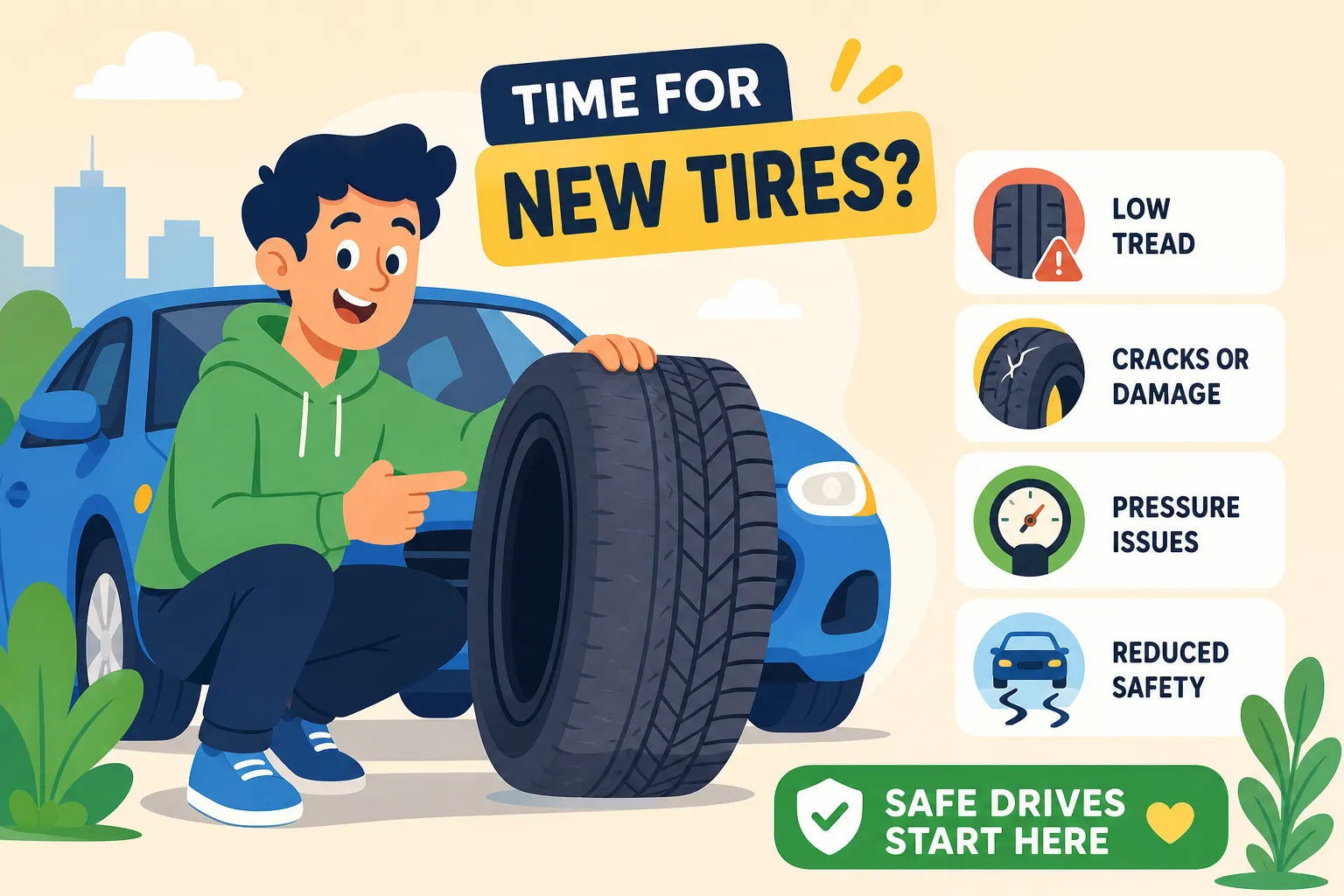
Here’s a situation most drivers have faced: you’re parked in a lot, notice your tire looks low, and then spot a nail in the tread. Now you’re standing there wondering whether tire replacement is actually necessary or whether a $25 plug will do the job. Get it wrong in either direction and you’re either out $150 you didn’t need to spend or rolling on a structurally compromised tire without knowing it. This guide cuts through that confusion.
By the time you finish reading, you’ll know exactly how to tell whether a tire can be repaired or needs full replacement, how worn is too worn, how many tires your vehicle actually needs, where to get it done fast, and what everything costs. If this is your first time handling a tire issue on your own, Qurabox offers beginner-friendly automotive guides covering exactly these kinds of practical car maintenance decisions, no mechanic-speak required.
Start with the most immediate question: repair or replace.
Repair or replace: how to make the right call on tire replacement
Most drivers assume any tire damage means a new tire. That assumption costs real money. The actual answer depends on three things: where the damage is located, how big the puncture is, and whether the tire’s structure is still sound.
What tire damage can actually be repaired
A nail or screw in the tread area is often repairable, as long as the puncture is under 1/4 inch in diameter. The correct fix is a combination plug-patch applied from the inside of the tire, not just a plug pushed in from the outside. A plug alone is a temporary emergency measure, not a permanent solution. Done properly at a shop, this repair typically runs $20 to $40, and an industry-standard plug-patch repair is considered permanent when applied correctly.
When a tire shop won’t (and shouldn’t) patch it
Some damage disqualifies a tire from repair entirely, and no reputable shop will touch it. Sidewall punctures fall into this category without exception. The sidewall flexes constantly under load, and any patch there will fail. The same goes for shoulder damage, any puncture larger than 1/4 inch, and any visible bulging or bubbling on the sidewall. Tires driven while flat are often structurally compromised as well, even a short distance can cause internal damage that isn’t visible from the outside, and commonly require replacement; have them inspected by a professional before assuming a patch will hold. If your tire shows any of these issues, you’re looking at a full tire replacement, not a patch.
What tire wear is actually telling you
Before you buy anything, you need to know whether your remaining tires are worth keeping. Tread depth, wear pattern, and age each tell a different story, and each one points to a different problem.
The tread depth check (and the penny test)
The legal minimum tread depth in the U.S. is 2/32 of an inch. The penny test checks this: insert a penny into the tread groove with Lincoln’s head pointing down. If you can see the top of his head, the tread is at or below the legal minimum and the tire needs to go. For a better real-world wet-weather check, use a quarter instead. If Washington’s full head is visible, tread depth is below 4/32 inches, which means traction in rain is already degraded. Safety guidance from tire industry organizations recommends replacing at 4/32 inches for improved wet-weather performance, so most drivers should schedule tire replacement well before the penny test even becomes relevant, especially in wet climates. For step-by-step instructions on performing the penny test yourself, see this guidance from Bridgestone on how to check your tire tread with the penny test.
Uneven wear and what it signals
Wear pattern tells you what’s been wrong with the setup, not just the tire. Wear concentrated in the center of the tread points to chronic overinflation. Wear on both edges suggests underinflation. One-sided wear, where one shoulder is significantly more worn than the other, is almost always an alignment problem. Replacing a tire without fixing the underlying issue means you’ll wear through the new one the same way, so the alignment or inflation problem needs addressing at the same time.
Age and cracking signs that most drivers miss
A tire can look perfectly fine on the surface and still be dangerous. Rubber compounds break down over time regardless of mileage, and the visible sign is small cracks forming in the sidewall or tread grooves. The general industry guideline is to have any tire inspected at the six-year mark from the manufacture date, and to replace without exception at ten years regardless of remaining tread depth. The manufacture date is stamped on the sidewall as a four-digit DOT code: the first two digits are the week, the last two are the year. A code reading “2419” means the tire was made in the 24th week of 2019.
Should you replace one tire or the whole set?
This is where many drivers get bad advice, or no advice at all. The correct answer depends on your vehicle type and how much tread is left on the other tires. Getting this wrong on an AWD vehicle in particular can lead to expensive drivetrain repairs that dwarf the cost of a few extra tires.
One-tire replacement: when it’s acceptable
Replacing a single tire is acceptable when the remaining three are in good shape and closely matched in brand, model, and tread depth. The Tire Industry Association recommends that any new tire go on the rear axle, paired with the tire carrying the most remaining tread. This protects rear traction and helps prevent oversteer in wet conditions. The key requirement is the match: a significantly different tire on one corner creates uneven handling you may not notice until you need to brake hard.
AWD and 4WD vehicles have stricter rules
On AWD vehicles, tires that differ in rolling circumference force the transfer case and differentials to compensate constantly, which accelerates wear on expensive drivetrain components. Most manufacturers require all four tires to be within 4/32 of an inch of each other in tread depth, and many specify matching brand and model as well. In practical terms, if your other three tires have less than 4/32 inches of tread remaining and you’re replacing one, you’ll likely need to replace all four to stay within spec. For a deeper explanation of why tire matching matters on AWD and 4WD vehicles, Tire Rack covers the drivetrain impacts and manufacturer recommendations in detail.
When replacing all four makes obvious sense
If two or more of your tires are near the end of their useful life, replacing the full set at once is almost always the better financial and safety decision. You reset the rotation schedule, get uniform handling, and avoid paying installation fees twice in six months. Staggered replacements might seem like a way to spread costs, but the math rarely works in your favor.
Your three options for tire replacement and installation
Getting the right tires is only half the job. Getting them mounted correctly is the other half, and you have three realistic paths: a traditional tire shop, a mobile tire change service, or a temporary spare swap to get you to a shop safely.
Tire shops: same-day installs and online booking
For most drivers, a traditional tire shop is the most straightforward option for tire replacement. Discount Tire offers same-day installation at most locations, full online booking, and a Low Price Promise that matches competitor advertised pricing, including club pricing. Walmart’s tire centers also offer online scheduling through their website and app. For anyone searching for tire replacement near me, checking whether local Firestone, Pep Boys, or Goodyear branches offer same-day booking is worth a quick look, availability varies by location. For anyone buying tires online, Tire Rack partners with local installers who handle both the drop-ship and the installation in a single appointment, which removes a lot of coordination headache. If you want to book online, Discount Tire’s appointment guide explains how to schedule and what to expect when you arrive.
Mobile tire service: convenience with a price premium
Mobile tire services dispatch a technician to your home, office, or roadside location. This is the right option when the car simply can’t be driven safely to a shop. Service call fees in 2026 typically run $50 to $150 on top of the tire and labor costs, and a technician can usually complete a four-tire job on-site in about 45 minutes. Same-day dispatch is common if you call or book before noon. It’s a premium you pay for genuine convenience, not a better result, the same tires installed at a shop cost less total.
Handling the swap yourself: getting safely to a shop
If the tire failed on the road, your first move is a spare swap, not a call to a tire replacement service. Pull fully off the road onto a stable surface, engage the parking brake, and loosen the lug nuts slightly before you jack the car up. Use the vehicle’s designated jack points, marked in the owner’s manual, not the frame rails. One critical detail: compact spares (the small “donut” spare) are temporary and come with manufacturer-specific speed and distance limits, typically around 50 miles and 50 mph, but check your owner’s manual for your vehicle’s exact restrictions. A compact spare is not a replacement tire and should never be treated as one. If you need a concise step-by-step walk-through for changing a flat, our guide on how to change a flat tire walks you through the whole process safely and clearly.
What tire replacement costs and how to cut it
Real numbers help you walk into a shop without getting surprised at the counter. Here’s what the current market actually looks like.
Real price ranges for single tires and full sets
A single tire replacement for a standard passenger vehicle runs roughly $125 to $230 installed, which includes mounting and balancing. A full set of four falls in the $500 to $1,400 range installed, depending on the tire brand, your vehicle’s size, and the shop’s fees. Truck tires, performance tires, and larger SUV fitments push toward the higher end of that range. Budget tires exist below that floor, but they typically trade wet traction and longevity for the lower price, a tradeoff that matters more than most drivers realize. For recent market estimates and a breakdown of replacement costs, JD Power’s guide on how much it costs to replace tires is a helpful reference to compare against local quotes.
Promotions that can cut the bill significantly
“Buy 3, get 1 free” on select brands is one of the most common tire promotions you’ll find at major retailers. Fixed dollar discounts of $80 to $150 off a set of four are also standard, and many tire manufacturers run mail-in or online rebates that stack on top of store promotions. Some retailers bundle free services into the tire purchase: free rotation, alignment checks, or an oil change. Ask about active rebates before you finalize any purchase. These promotions rotate monthly, and the counter staff won’t always volunteer the information.
How to book your tire replacement service fast
If you’re ready to act, a little preparation before you call or click will cut the appointment time significantly.
What to prepare before you call or click
Find your tire size before you do anything else. It’s printed on the sidewall of your current tire in a format like 225/55R17, and also on the sticker inside the driver’s door jamb. Have your vehicle’s year, make, and model ready as well. If your car has a TPMS (tire pressure monitoring system), mention that upfront when booking; sensor resets after a tire swap add a small fee and the shop needs to plan for it.
Booking online vs. walking in
Same-day appointments are available at most major chains if you book early in the day. Discount Tire’s online booking shows real-time availability by location and is straightforward to use. Walmart’s online scheduling works the same way. For mobile tire change services, most providers require either a call or an app booking, and same-day dispatch is common as long as you contact them before noon. Walking in without an appointment is possible at most shops, but booking ahead cuts your wait time significantly on busy weekends.
The short version: what to do right now
Work through the tire replacement decision in order. Check the damage type first: can it be patched, or does it need a full tire? Check your tread depth and look at your wear patterns. Determine how many tires your vehicle actually needs, especially if it’s AWD. Pick your service path based on whether the car can be driven. Then use available promotions to reduce the cost before you commit.
Acting on worn tires early is always cheaper than a blowout or a tow, and at highway speed, a blowout is a safety emergency, not just a maintenance headache. If this guide raised more questions about your car, whether it’s checking fluids, understanding when to rotate, or knowing when a shop visit is actually necessary, Qurabox’s automotive section has beginner-friendly guides covering all of it. For example, see our step-by-step guide on how to check oil level in your car, or learn how to change car oil at home if you’re ready to tackle basic maintenance yourself.
Book the tire replacement appointment today. Not after the next road trip.