Are natural cleaners as effective as store-bought chemical ones? It’s the question most cleaning articles sidestep with a vague “it depends” before listing recipes. This article doesn’t do that. The honest answer is that performance varies by task, and the gap between natural and conventional cleaners is measurable in some situations and negligible in others. Here’s what the evidence shows across the tasks that matter most: grease and grime removal, surface disinfection, and mold cleanup.
White vinegar, baking soda, castile soap: these are cheap, accessible, and carry far fewer ingredient concerns than the spray bottles lined up under most kitchen sinks. It’s easy to understand why so many households have shifted toward them. But the honest question is whether they actually get the job done at the same level as conventional counterparts. At Qurabox, every home cleaning guide is built around one core principle: give readers both the natural option and the conventional option, with honest context about where each one belongs. This article applies that same standard.
Where natural cleaners genuinely earn their reputation
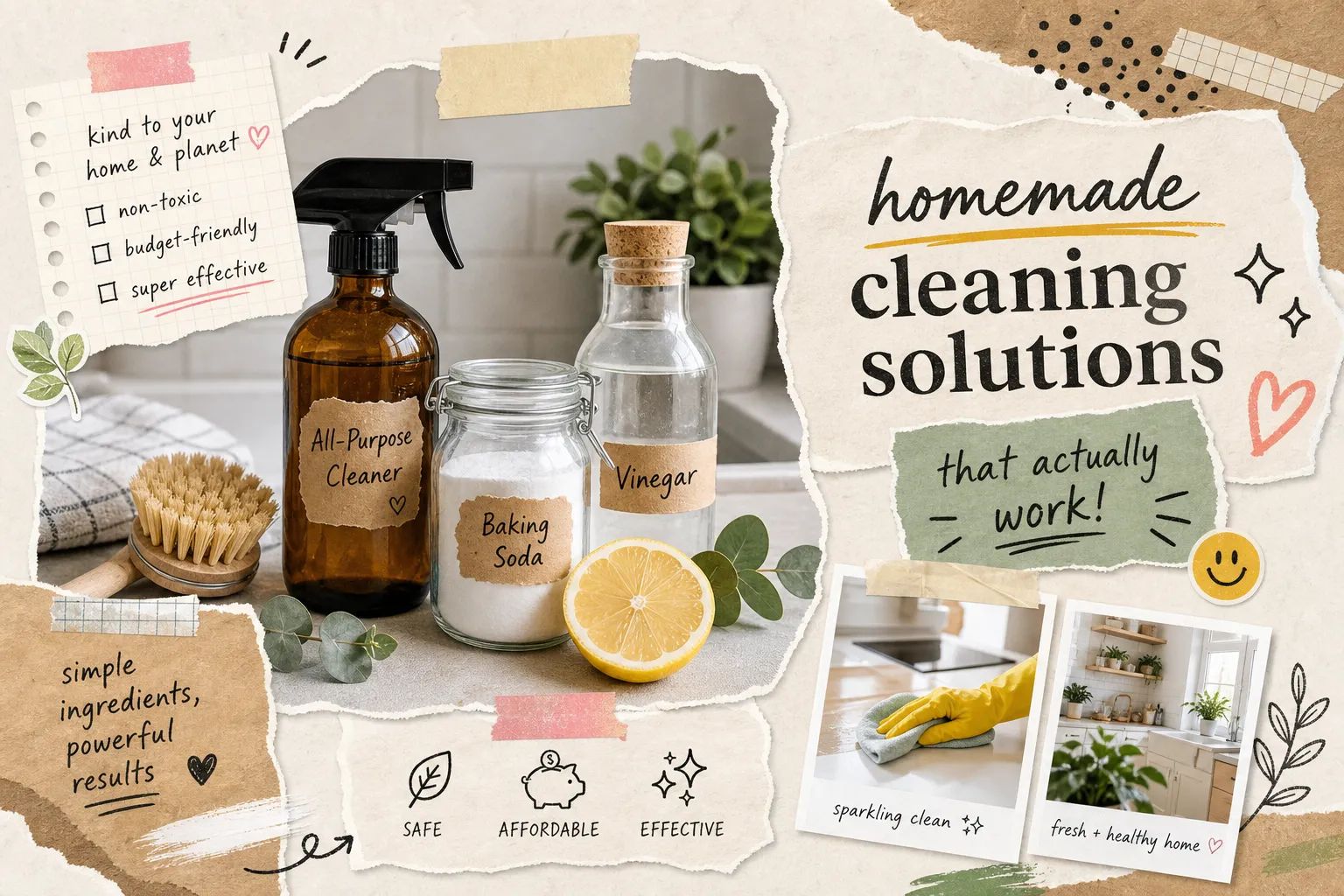
Start with what natural cleaners do well, because the list is real. White vinegar has a pH of around 2.5, which makes it genuinely effective at dissolving soap scum, mineral deposits, and light grease on hard surfaces. The acidity cuts through calcium-based buildup and lifts grime better than plain water without needing any surfactant for these jobs. For non-heavy soil on glass and tile, vinegar performs comparably to many light-duty commercial degreasers.
Baking soda earns its place through mechanical action rather than chemistry. Its mild abrasiveness scrubs stovetop residue and carbonized food without scratching most surfaces, and it genuinely neutralizes odors rather than just masking them. Castile soap functions as a solid surfactant: it lifts dirt and oils from surfaces through physical action without the ingredient concerns attached to some synthetic detergents.
The critical distinction here is between cleaning and disinfecting. Cleaning means removing visible dirt, grease, and buildup. Disinfecting means killing pathogens to a measurable standard. These are not the same thing, and conflating them is exactly where the trouble starts.
Are natural cleaners as effective as store-bought chemical ones for disinfection?
This is where the honest answer gets harder. A study published in Infection Control and Hospital Epidemiology tested baking soda alongside commercial disinfectants and found baking soda produced less than a 3 log₁₀ reduction against all test pathogens. EPA-registered disinfectants are required to achieve a 99.9% (3 log₁₀) bacterial reduction at minimum, and many registered products far exceed that threshold. Baking soda didn’t clear the bar.
Vinegar’s track record is mixed, and the overall verdict lands in the same place. Peer-reviewed studies show undiluted white vinegar can reduce certain bacteria like Salmonella and P. aeruginosa under specific conditions. Against S. aureus and E. coli, performance in the same studies was poor. One study found that 6% acetic acid killed Mycobacterium tuberculosis after 30 minutes of contact, but commercial bactericides achieve the same result in five minutes. Vinegar’s antimicrobial performance depends heavily on concentration, contact time, the specific organism, and the surface. EPA-registered disinfectants are formulated to remove that variability, that’s the core of the disinfectant efficacy gap.
The pathogens that most clearly require an EPA-registered product are viral. Norovirus is covered by EPA List G. Influenza A is covered by EPA List M. SARS-CoV-2 has its own dedicated EPA List N. These lists exist precisely because standard cleaning agents don’t reliably inactivate these viruses on surfaces. After illness moves through your household, after raw meat touches a cutting board, or in bathrooms used by sick family members, a conventional EPA-registered disinfectant is the responsible choice.
Are natural cleaners as effective as store-bought chemical ones for mold removal?
Vinegar has genuine but limited antifungal properties against certain mold species in lab conditions. That’s the real origin of the popular recommendation, and it’s not fabricated. The problem is that lab results don’t automatically translate to surface mold remediation in the humid, variable conditions of a real bathroom or basement. Most DIY sources that recommend vinegar for mold cleaning cite each other rather than controlled mold-kill studies. For more on vinegar’s cleaning properties, see a lay summary on why vinegar is so good at cleaning.
For surface mold on sealed tile or nonporous materials, 3% hydrogen peroxide is the stronger non-toxic cleaning alternative. Research supports its ability to kill many household mold species on nonporous surfaces at full concentration, applied and left wet for at least 10 minutes before scrubbing. Vinegar can help with light surface mold on tile grout if scrubbed thoroughly, but it isn’t validated for reliable mold remediation.
The rule of thumb that holds up: if mold covers more than 10 square feet, returns within weeks of cleaning, or is growing on drywall, wood framing, or other porous materials, no DIY cleaner is the right tool. That situation requires a product with proven antifungal efficacy or professional remediation. Using a vinegar spray and hoping for the best on structural mold isn’t a cleaning strategy; it’s a delay.
What’s actually inside store-bought cleaners, and whether it matters
Conventional cleaners have real ingredient concerns worth understanding. Bleach (sodium hypochlorite) is an effective disinfectant, but mixing it with ammonia-based products releases chloramine gas, a risk that is well-documented and entirely a misuse problem, but worth knowing before you reach for two bottles at once.
Quaternary ammonium compounds (quats), found in many household disinfectants and fabric softeners, are linked to respiratory sensitization and occupational asthma with repeated exposure. Studies of ready-to-use QAC sprays found that using them in small, poorly ventilated spaces generates airborne particles in the user’s breathing zone at concentrations near consumer inhalation limit values. Phthalates and synthetic fragrances appear in many scented products and show up in studies examining endocrine disruption and worsened asthma symptoms. VOCs from aerosol sprays can also degrade indoor air quality, particularly in bathrooms and kitchens with limited ventilation. For a clear overview, see the quaternary ammonium compounds (quats) fact sheet.
None of these concerns are reasons to panic. The EPA’s own position is that most conventional cleaning product ingredients pose low risk at normal household exposure levels. The serious outcomes are almost always tied to misuse, mixing incompatible products, or repeated occupational-level exposure.
The practical move: look for EPA Safer Choice-certified products when you want a conventional cleaner with vetted ingredients. The program covers more than 2,500 certified products, requires ingredient-by-ingredient safety review, and mandates performance testing so the products actually clean. Brands like Seventh Generation All Purpose Cleaner and ECOS carry this certification. You get the disinfectant efficacy where you need it without the highest-concern ingredients. For households focused on eco-friendly cleaning products, this label is the most reliable place to start. Learn more about EPA Safer Choice-certified products.
DIY natural cleaner recipes that hold up
For glass and mirrors, the most reliable formula is 1 part white vinegar to 1 part water. Spray it on and wipe dry before the solution dries on the surface to prevent streaking. For glass with heavy fingerprint buildup or greasy film, a better formula is 1/3 cup white vinegar, 1/2 cup isopropyl alcohol, and enough water to fill a 16 oz spray bottle. The alcohol speeds drying and cuts oily residue more effectively than vinegar alone. One important note: avoid vinegar-based cleaners on natural stone surfaces like granite and marble, because the acid etches the finish over time.
For all-purpose surface cleaning and light degreasing, a solid formula is 1/4 cup white vinegar plus 1/2 teaspoon liquid dish soap plus 2 cups water. The dish soap adds surfactant action for greasy film; the vinegar handles mineral deposits and light grime. For baked-on stovetop residue, a paste of baking soda and a small amount of castile soap applied and left for five minutes before scrubbing removes carbonized food with minimal scratching.
What none of these recipes do: they are not validated disinfectants. Use them for cleaning, then follow with an EPA-registered disinfectant when actual pathogen reduction is the goal. These two steps work together, natural cleaners and conventional disinfectants aren’t in competition; they cover different jobs.
Building a cleaning system that actually works
The framework that makes sense is a clean split between daily use and targeted use. Natural cleaners handle the daily workload: routine surface cleaning, glass, soap scum, light grease, and deodorizing. Vinegar-based and baking soda solutions are genuinely effective for these tasks, cost less, and carry lower ingredient concerns. Use them as your default. If you need help turning that split into a weekly plan, our realistic home cleaning schedule guide walks through time-blocking and task rotation so nothing gets missed.
EPA-registered disinfectants belong in specific, targeted situations: after illness moves through the household, in food prep areas after raw meat contact, and in bathrooms used by sick family members. This doesn’t mean saturating every surface daily with bleach spray. It means knowing which situations actually call for proven pathogen reduction and reaching for the right product in those moments. A practical rule: clean the surface first, then disinfect. Disinfectants work better on physically clean surfaces, so these two approaches are complementary by design.
The answer is task-dependent, not one-size-fits-all
So, are natural cleaners as effective as store-bought chemical ones? For cleaning, the physical removal of dirt, grime, mineral deposits, and grease, natural and eco-friendly cleaning products often perform comparably to conventional options. For disinfection, meaning reliable reduction of viruses, bacteria, and mold spores to measurable standards, conventional EPA-registered products win clearly. The evidence on disinfectant efficacy isn’t close.
The goal isn’t to go fully natural or fully conventional. Both categories have a legitimate role, and households that use them strategically get better results than those committed to either extreme. The right cleaner is always the one matched to the specific job at hand.
Qurabox’s cleaning guides go deeper on the specifics, oven deep cleaning, bathroom disinfection, kitchen degreasing, so you’re never left guessing whether your kitchen counter is actually clean after dinner. Read The Ultimate House Cleaning Routine for Every Home for a full walkthrough, or our piece on the Best Way to Organize a Cleaning Routine for a Small Home if space is limited.