So, are natural homemade cleaners actually as effective as chemical cleaning products? The honest answer is: it depends entirely on what you’re trying to accomplish. Most content on this topic lands in one of two camps, enthusiastic cheerleading for all things natural, or fear-mongering about anything that isn’t lab-formulated. Neither is useful. At Qurabox, the goal is to give you the evidence-backed answer, one that holds up against published lab studies and CDC guidance.
The key to understanding this debate is a distinction most people never bother to make. Cleaning, sanitizing, and disinfecting are three different processes with three different standards of evidence. Once you understand that framework, the question of natural versus chemical stops being a debate and becomes a practical decision you can make surface by surface, situation by situation. That shift in thinking is what separates smart, non-toxic household cleaning from guesswork.
Cleaning, sanitizing, and disinfecting: why the distinction changes everything
Cleaning physically removes dirt, grease, and microbes from surfaces. It doesn’t kill them; it moves them. Sanitizing reduces microbial populations to a safe level, typically a 99.9% reduction (a 3-log reduction in lab terms). Disinfecting kills nearly all pathogens on hard surfaces, often requiring a 6-log reduction, meaning 99.9999% of organisms eliminated. The CDC distinguishes these three processes clearly and recommends different approaches for each. Most people use the terms interchangeably, and that’s exactly why the natural-versus-chemical debate stays muddy.
Asking whether natural homemade cleaners are actually as effective as chemical cleaning products is only meaningful when you specify effective at what. A soapy water solution can outperform a bleach spray at removing grease from a stovetop. That same bleach spray will outperform vinegar every single time when you need to disinfect a surface after a stomach illness. The question isn’t which product category wins. It’s whether the product you’re using matches the task at hand.
Where natural cleaners genuinely hold their own
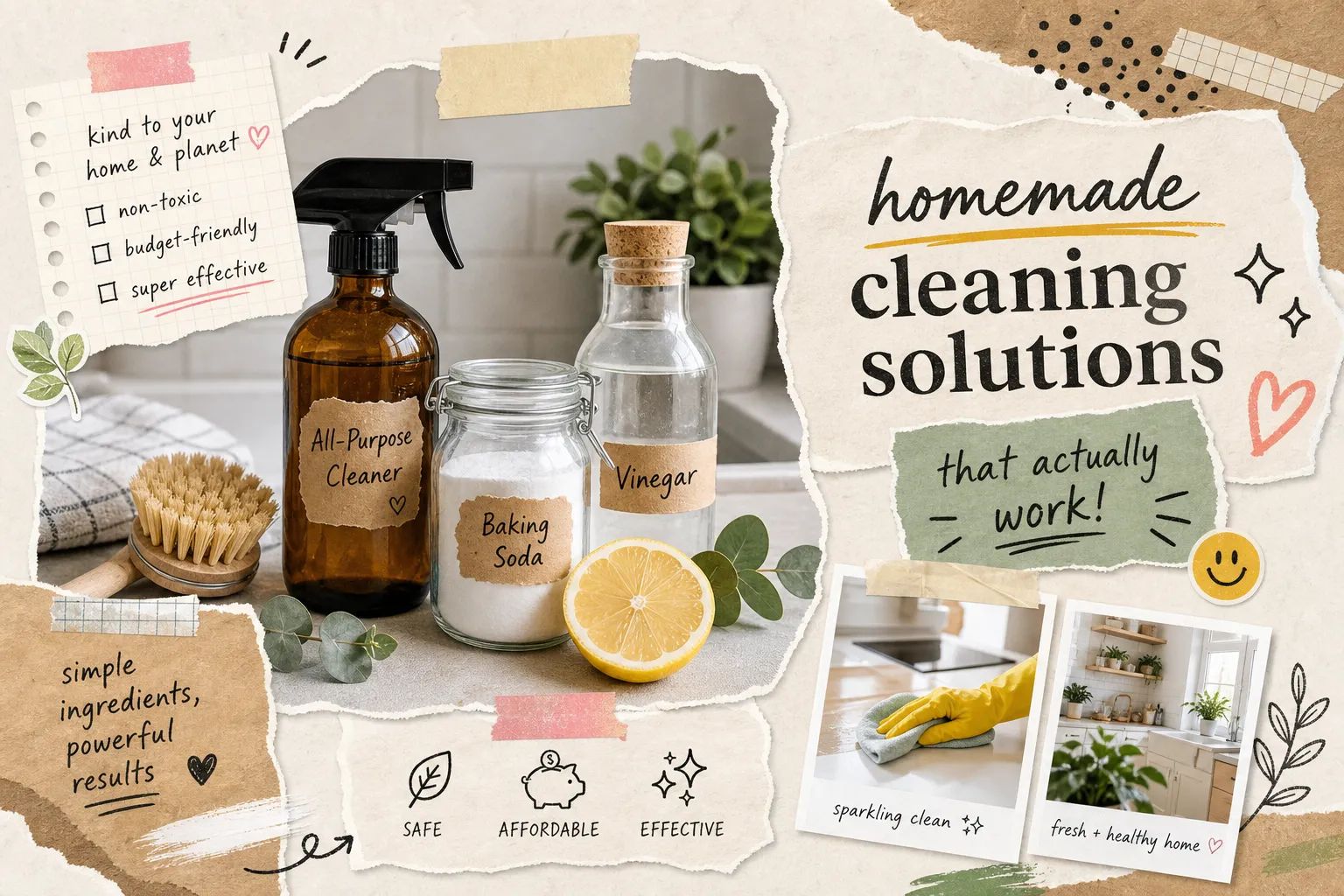
The evidence supporting DIY cleaning solutions is real and worth taking seriously. Understanding which ingredients work, for which tasks, and at what concentrations is what separates effective green cleaning from well-intentioned but ineffective habits. Here’s what the data actually shows.
What the lab data says about vinegar’s antimicrobial action
Standard white vinegar contains 5% acetic acid, and lab testing shows it has genuine antimicrobial properties. One head-to-head study found vinegar achieved 83.19% mean efficiency against E. coli, Pseudomonas, and Bacillus species. A separate surface test using the DIN EN 13697 standard reported greater than 5-log reductions for both E. coli and S. aureus at 5% acetic acid. Vinegar performs better against Gram-negative bacteria like E. coli and Salmonella than against others. That performance qualifies it as a light antimicrobial cleaner for everyday use, not a disinfectant. In kitchen use specifically, vinegar can even help reduce bacteria on fresh produce, an application many home cooks find useful (vinegar can help home cooks battle bacteria on leafy greens).
Why soap and water is the most underrated option
Soap doesn’t kill germs in the traditional sense. It physically lifts them off surfaces and suspends them so they can be rinsed away. The CDC states that routine cleaning with soap or a detergent-based cleaner is sufficient for most everyday home tasks. A simple all-purpose spray of 1 teaspoon dish soap in 2 cups of warm water handles the overwhelming majority of everyday messes without any chemical risk and without leaving residues that could affect sensitive surfaces or skin. For routine surface cleaning, this is the most broadly useful and evidence-backed approach available, and one of the clearest examples of natural cleaners’ effectiveness for day-to-day use.
Hydrogen peroxide as a legitimately effective option
3% hydrogen peroxide, the standard drugstore bottle, showed 97.96% mean efficiency in the same head-to-head study that tested vinegar. The CDC notes that 0.5% accelerated hydrogen peroxide demonstrates bactericidal and virucidal activity in under one minute, and at 3%, it can inactivate rhinovirus in 6, 8 minutes. Among true DIY ingredients, hydrogen peroxide has the strongest documented antimicrobial profile for light surface disinfection when used correctly. Spray it undiluted on a non-porous surface, let it sit for 5, 10 minutes, and you’ve got meaningful antimicrobial action, making it one of the more compelling non-toxic household cleaners in the DIY toolkit.
Are natural homemade cleaners actually as effective as chemical cleaning products for every task?
This is the section most natural living articles skip entirely. Two things deserve a clear-eyed look: the popular baking soda and vinegar combination, and what regulatory agencies actually say about DIY germ control.
The baking soda and vinegar combination myth
When you combine baking soda (a base) and vinegar (an acid), they neutralize each other. The fizzing looks satisfying, but the reaction produces water and carbon dioxide, leaving you with a weaker solution than either ingredient alone. Peer-reviewed testing confirms that vinegar-baking soda mixtures are not effective against bacteria, viruses, or mold as a combination. The mix works fine for physically scrubbing a drain or loosening mineral deposits, but it provides no antimicrobial benefit whatsoever. Use these ingredients separately; they work better that way.
What the CDC and EPA actually say about DIY germ control
The CDC’s position is unambiguous: for routine home cleaning, soap and detergent-based cleaners are adequate. When you need to disinfect, after illness, raw meat contamination, or on high-touch bathroom fixtures, EPA-registered disinfectants are the recommendation. No standard DIY recipe outside of a properly diluted bleach solution meets the bar for verified disinfection. For an accessible summary of official guidance on cleaning and disinfection, see the CDC’s household cleaning guidance (CDC: Cleaning and Disinfecting Your Home). Rutgers University’s overview also highlights the limitations and risks of homemade disinfectants during public-health emergencies (Rutgers University: dangers of homemade cleaning products). The distinction matters most when someone in your home is sick or immunocompromised.
A surface-by-surface guide: natural cleaner or chemical disinfectant?
Abstract rules are less useful than knowing exactly what to reach for in your own home. Here’s how the evidence translates to specific surfaces.
For kitchen counters and food-prep surfaces on ordinary cooking days, soap and water is completely sufficient, a clear win for natural cleaners’ effectiveness in low-risk scenarios. After handling raw meat or poultry, the CDC recommends cleaning first with hot soapy water, then following up with a sanitizing solution, at minimum a diluted bleach product or an EPA-registered sanitizer. Vinegar alone doesn’t meet the sanitizing threshold for food-contact surfaces after raw meat exposure, which is one of the clearest situations where defaulting to natural isn’t the right call.
For bathrooms, toilets, and high-touch fixtures, pathogen loads are consistently higher than on most other household surfaces. Faucet handles, light switches, and toilet surfaces warrant stronger chemical disinfectants, especially after recent illness. A soap-and-water spray handles soap scum and surface grime effectively, but for actual germ control in bathrooms, an EPA-registered disinfectant or properly diluted bleach solution with adequate contact time is the right choice. Lead with the exception here: if nobody in your home has been ill and it’s a routine clean, a simple dish-soap spray is genuinely sufficient for the sink basin and countertop.
For glass, everyday counters, and low-risk hard surfaces, natural cleaners genuinely shine. A 1:1 vinegar-water spray works well on glass without streaking. A dish-soap spray handles everyday counter grease efficiently. For these routine, low-stakes cleaning tasks, you don’t need a chemical disinfectant, and using one doesn’t add any benefit. Save the heavier products for situations that actually call for them.
DIY recipes with verified effectiveness (and the technique that makes them work)
The one homemade recipe with independently verified sanitizing efficacy is diluted bleach: 1/4 cup bleach per 1 quart of water, with a 15-minute contact time before rinsing. This is the CDC’s own guidance for hard-surface sanitizing when EPA-registered products aren’t available. Two important caveats: never mix bleach with ammonia or vinegar because it produces chloramine gas, and bleach solutions degrade quickly, so make a fresh batch each time. For practical dilution charts and safety tips from an industry source, see the bleach dilution guidance (bleach dilution ratio chart).
For everyday cleaning, the most reliable all-purpose recipe is 1 teaspoon dish soap in 2 cups warm water. For light antimicrobial action on non-porous surfaces, undiluted 3% hydrogen peroxide applied as a spray with 5, 10 minutes of contact time has the strongest evidence base of any true DIY option. Browse Qurabox’s The Ultimate House Cleaning Routine for Every Home for a full library of tested homemade cleaner recipes with step-by-step instructions covering grout, glass, wood, and more, all grounded in the same evidence-first standard used throughout this guide.
Contact time is the most commonly ignored variable in home cleaning, and it’s the one that cancels out the effectiveness of even a legitimate product. Spraying and immediately wiping a surface eliminates any antimicrobial benefit. Most cleaners need at least 1, 2 minutes of dwell time for dirt removal; actual sanitizers need 10, 15 minutes. The right concentration and the right dwell time are non-negotiable if you want results that match what the label or the lab promises.
If you struggle to turn those principles into a plan you can stick with, start with a realistic schedule, see How to Create a Cleaning Schedule You’ll Actually Stick To for practical tips that make maintenance easy.
Are natural cleaners actually safer for your health?
Frequent exposure to commercial cleaning chemicals, particularly sprays and aerosols used in poorly ventilated spaces, is associated with eye, nose, and throat irritation, worsened asthma symptoms, and in cases of accidental mixing, toxic gas exposure. Quaternary ammonium compounds, ethanolamines, and glycol ethers found in many standard disinfectants have been linked to respiratory symptoms including coughing, wheezing, and occupational asthma with repeated long-term exposure. This is a legitimate reason to default to soap-based, non-toxic household cleaners for routine tasks where disinfection isn’t needed.
That said, “natural” doesn’t automatically mean safe. Vinegar’s acetic acid can irritate eyes and mucous membranes. Castile soap in concentrated form can cause skin irritation. Most critically, mixing vinegar and bleach produces chlorine gas, a mistake that happens more often than it should when people combine cleaners without checking compatibility first. Baking soda and hydrogen peroxide combined in a sealed container can build dangerous pressure. Treat every cleaning ingredient, natural or not, with the same basic precautions: ventilate the space, never mix products without confirming they’re compatible, and keep concentrations appropriate for the task.
The bottom line: match the product to the job
Are natural homemade cleaners actually as effective as chemical cleaning products? For cleaning, yes. Soap and water, vinegar, and hydrogen peroxide all have solid evidence supporting their use for everyday surface cleaning and, in the case of hydrogen peroxide, light antimicrobial action. For disinfecting, the answer is no: no standard DIY recipe outside of properly diluted bleach meets the bar for verified pathogen kill, and the CDC and EPA are consistent on this point. Green cleaning efficacy is real, but it has defined limits, and knowing those limits is what makes you a smarter cleaner.
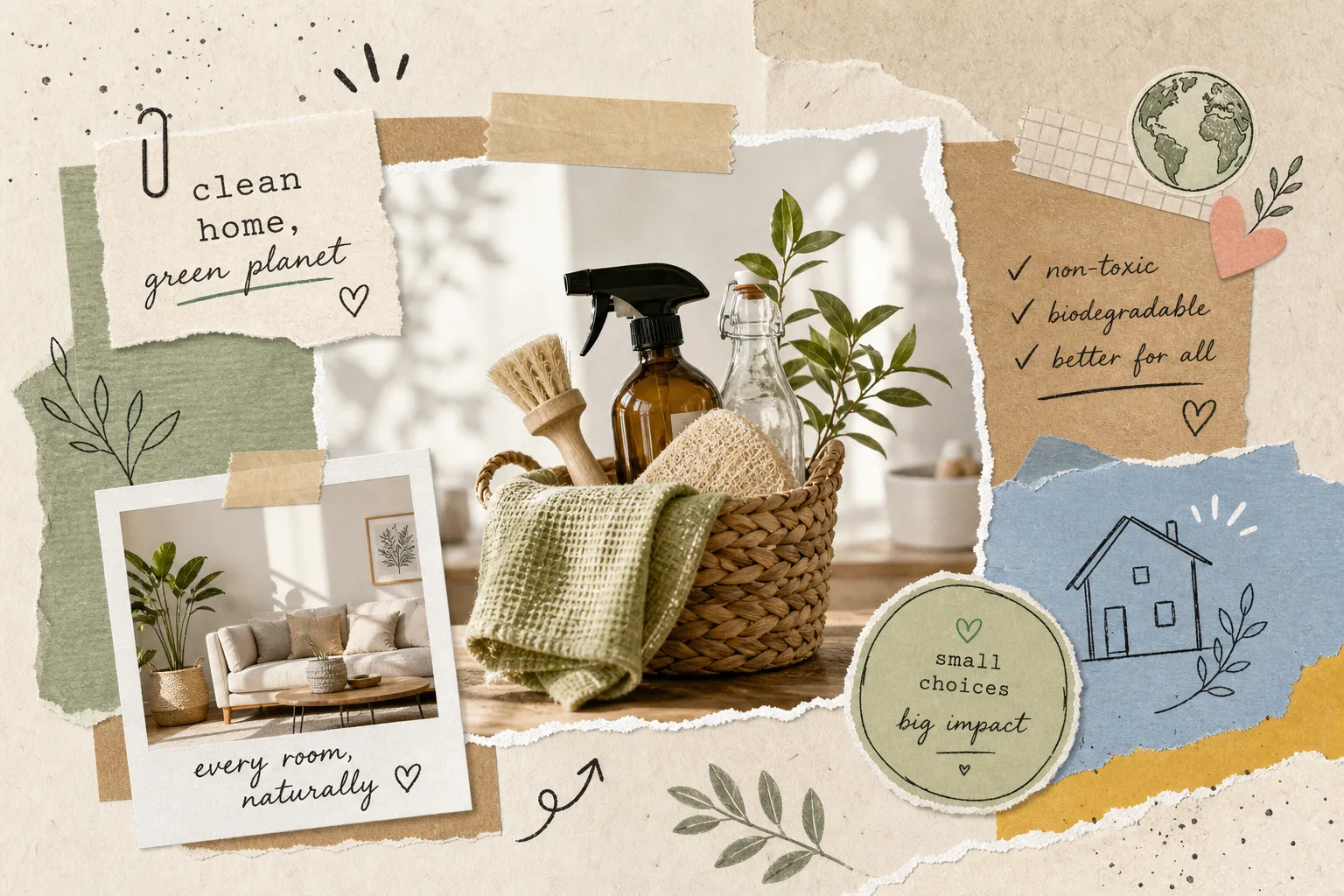
The smartest approach isn’t picking a side. Use natural cleaners for your daily routine, where they perform well and carry fewer health risks. Reserve EPA-registered disinfectants for when they’re genuinely needed: after illness, raw meat exposure, or in high-risk bathroom environments. For busy households wanting a ready-made plan, check out our Best Weekly Cleaning Routine for Busy Adults in 2026. That combination covers every real-world scenario without unnecessary chemical exposure or sacrificing germ control when it matters.
Browse Qurabox’s step-by-step DIY cleaner recipes for every room in your home, all built on the same evidence-first standard that guides everything we publish.