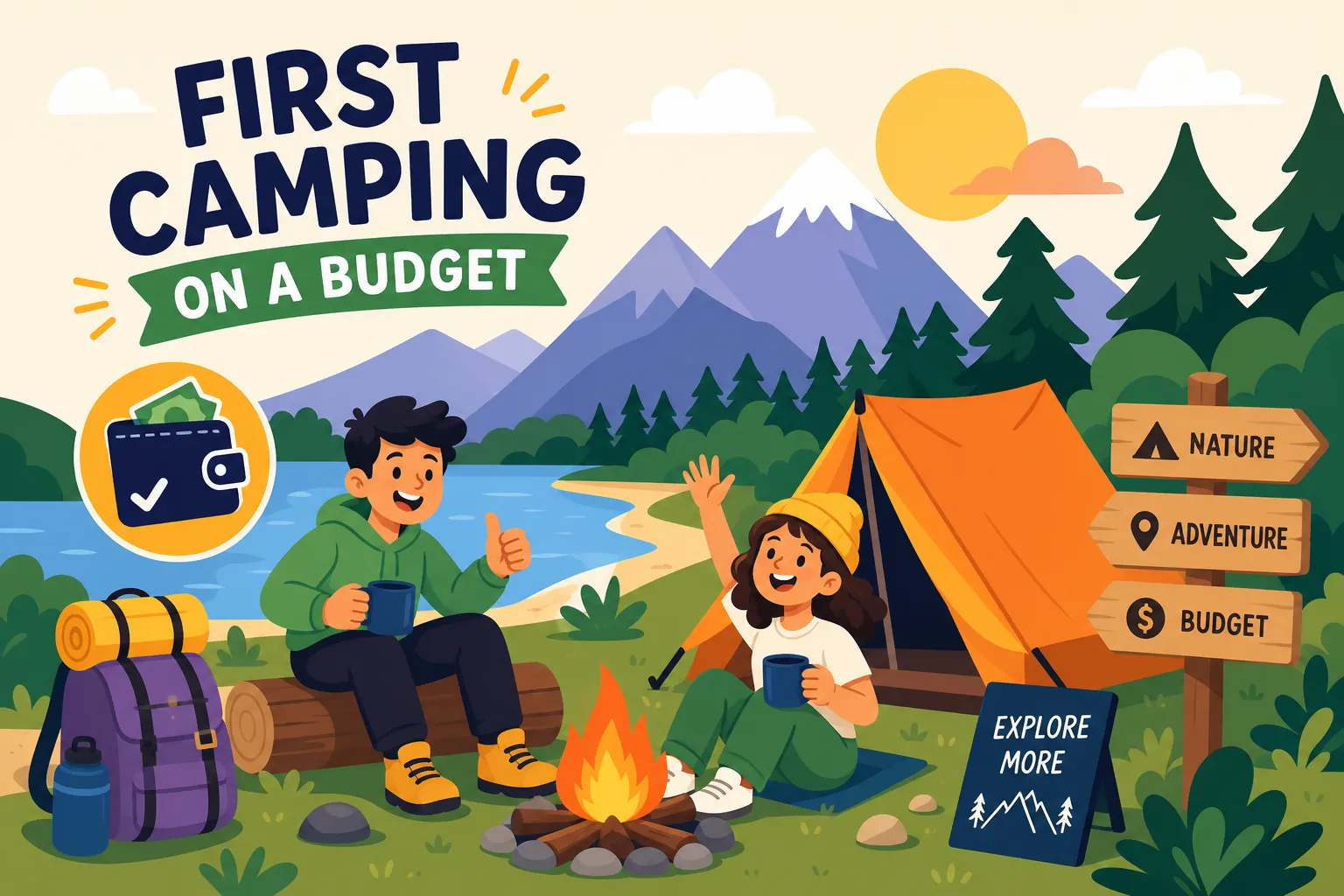
Finding the best beginner-friendly campgrounds in the United States for 2026 is harder than it sounds. You start looking, and suddenly you’re comparing primitive sites to full-hookup pads, wondering whether “national forest” means no bathrooms, and second-guessing whether you need a reservation six months out or can just show up. It gets complicated fast, and most guides don’t help, they either recommend backcountry spots that aren’t beginner-appropriate or list campgrounds without telling you what you actually need to know before booking.
This guide cuts through that noise. Below you’ll find the strongest easy-access campgrounds in the US for 2026, organized by region, with real cost ranges and a booking strategy that works. If gear is still on your to-do list, Qurabox has a companion beginner camping gear checklist and packing guide that covers exactly what to bring and what to skip. These two resources cover the full trip: where to go and what to bring. By the end of this article, you’ll have specific campgrounds to book, real cost numbers, and a clear action plan for your first night under the stars.
What a truly beginner-friendly campground actually looks like
Not every campground is created equal, and the gap between a beginner-appropriate site and a remote primitive campground is significant. Before looking at specific picks, it helps to know what filters to apply so you can evaluate any campground listing on your own.
Drive-up access matters more than beginners realize. A drive-up or pull-through site means you park directly next to your tent or RV pad, which eliminates the need to haul gear down a trail and makes it easy to grab supplies from your car throughout the trip. Look for listings that mention “level site” or “paved pad”, a level surface dramatically reduces setup headaches for first-timers who haven’t practiced pitching a tent on uneven ground.
The five amenities that define a beginner-friendly campground are flush toilets, hot showers, potable water, electric hookups, and a dump station if you’re trailering. The difference between a “developed” site and a “primitive” site comes down to exactly this list. Primitive sites offer little to none of these features; developed sites offer most or all of them. State parks and private campgrounds reliably deliver the full stack. Backcountry national forest and BLM dispersed sites generally don’t, so filter those out until you have a few trips under your belt.
On-site staff is an underrated advantage for first-time campers. National park campgrounds on Recreation.gov and most state park systems have staffed camp offices and, in many cases, ranger-led programs you can join without any experience. That built-in support network makes troubleshooting easy when you arrive with questions. It’s one of the main reasons established park campgrounds beat remote dispersed sites for your first trip.
Best beginner-friendly campgrounds in the United States 2026, Northeast and Southeast
These two regions offer some of the most accessible and amenity-rich developed campgrounds in the country, making them strong starting points for anyone new to camping.
Northeast standouts worth booking in 2026
KOA campgrounds across the Northeast are a reliable default for first-timers. The brand explicitly markets its cabin-and-hookup infrastructure as “camper friendly, even for the novice,” and the sites back that up: they’re level, well-maintained, and easy to navigate. For a more scenic option, Sandy Pines Campground in Kennebunkport, Maine delivers a heated saltwater pool, a playground, a kids’ craft tent, lawn games, a general store, and a snack bar. Reviewers on Google and TripAdvisor consistently call it clean and well-maintained, which matters when you don’t yet know what “good” looks like at a campground. Sites run roughly $50 to $90 per night depending on hookup level and season; reserve through their direct website at least two to three months ahead for summer weekends.
State park campgrounds in New York round out the Northeast shortlist. Letchworth State Park and Niagara Falls State Park both offer developed visitor infrastructure with easy access, flush toilets, and established trail systems nearby. Letchworth sites book through ReserveAmerica and typically run $20 to $35 per night, solid value for the scenery. These are straightforward sites with real support networks around them, which is exactly what a first trip needs.
Southeast campgrounds for beginners with full amenities
Cherry Hill Park in College Park, Maryland is one of the most beginner-supportive campgrounds in the entire country. It includes a shuttle service, pool, splash pad, mini golf, arcade, workout room, camp store, and a restaurant on site. Tent sites start around $47 per night; full-hookup RV sites run $71 to $88. That level of infrastructure means you can focus entirely on enjoying your first camping experience rather than solving logistical problems. It’s an especially good choice if you’re camping with kids for the first time. Book directly through Cherry Hill Park’s website, summer weekends fill up two to three months out.
For a coastal option, Cape Hatteras KOA in Rodanthe, North Carolina delivers reliable amenities, electric hookups, Wi-Fi, a pool, and laundry facilities, in a scenic Outer Banks setting that feels rewarding without requiring any technical skill. Sites run roughly $60 to $110 per night. Assateague State Park in Maryland offers a more traditional camping experience at $30 to $45 per night through ReserveAmerica, with enough infrastructure to stay manageable for a first-timer. Both are solid next-step options once Cherry Hill Park starts to feel a little too resort-like.
Best beginner-friendly campgrounds in the United States 2026, Midwest, Southwest, and West
Your region of the country shouldn’t limit your options. Here are the strongest beginner picks outside the East Coast, plus a search formula for anywhere the well-reviewed campgrounds are harder to find.
Midwest options with reliable infrastructure
Copper Falls State Park Campground in Wisconsin is one of the most structured beginner-appropriate campgrounds in the region. It offers 32 North Campground sites and 23 South Campground sites, with electric hookups across both. The campground sits close to trails and waterfalls, so your days stay full without needing any specialized gear. Sites book through Wisconsin’s state park reservation system and run $20 to $30 per night, book four to six months ahead for summer.
Hocking Hills State Park Campground in Ohio earns a spot here for its amenities: swimming pool, clean showers, volleyball, basketball, laundry facilities, and trail access all at the same location. It’s one of the better drive-up campsites with amenities in the Midwest for first-timers who want a full-service experience without the resort price tag. Sites run roughly $25 to $40 per night through Ohio’s state park reservation system.
Platte River Campground in Michigan’s Sleeping Bear Dunes National Lakeshore is another strong pick. It has 179 sites with electric hookups, flush toilets, and hot showers, the most RV-friendly campground in the national lakeshore. Book through Recreation.gov; sites open six months in advance and summer weekends go fast at around $30 per night.
Southwest and West picks near national parks
Thousand Trails Yosemite Lakes in California works well for both RV beginners and tent campers because of its network-style infrastructure. The site handles the complexity of a Yosemite-area trip without dropping you into a primitive backcountry experience. It’s one of the better RV parks for beginners in the West, with full hookups, a pool, and organized activities on site.
Colter Bay Village at Grand Teton National Park in Wyoming is a developed, amenity-stocked national park campground, with flush toilets, showers, a marina, and a camp store all on site, that takes the guesswork out of your first Western camping trip. Sites run $30 to $35 per night through Recreation.gov, which opens the booking window six months out. Colter Bay fills quickly for July and August; mid-week stays in June or September are your best shot at last-minute availability.
Appalachian pick for budget-minded beginners
Grandview Sandbar at New River Gorge National Park in West Virginia is worth noting for budget-minded beginners. It’s a low-cost, shaded, free primitive campground with easy river access. It won’t give you hookups or showers, but it’s a simple and manageable entry point if you want a real camping experience without paying for a resort-style setup. It’s a good bridge between a full-amenity first trip and genuine backcountry camping, and a useful step toward first-time camping destinations that don’t require a reservation at all.
When the research is thin, know your formula
In any region where well-documented beginner picks are harder to find, use this search method: look for KOA campgrounds, state park campgrounds with electric, water, and sewer hookups, or any site reservable through Recreation.gov with the amenity filters set to drive-in access and full hookups. On Campspot, filter by site type (RV or drive-up), then check full hookups. Exclude primitive, tent-only, and no-hookup results. That process works regardless of state or region.
What these campgrounds cost in 2026
Public campgrounds, including national parks, state parks, national forests, and BLM sites, generally run $15 to $40 per night. Yellowstone, for example, comes in around $20 to $25 per night depending on the specific campground. These sites offer the best value but fill up fastest during peak season, so the savings only materialize if you book early.
Normandy Farms gives you a real-world example: tent sites run around $47, while full-hookup private sites land between $71 and $88. The higher cost usually reflects direct access to showers, pools, activities, and on-site staff, which makes the experience significantly easier for a first-time camper. The extra cost is often worth it for trip one. Once you know the basics, you can move to public sites and stretch your budget further.
How and when to book your campsite
Recreation.gov handles federal campgrounds and includes ranger-led activities in its listings. It’s your first stop for national park and national forest sites. ReserveAmerica covers most state park systems and has a clean online booking flow. Campspot supports instant booking for private parks and is useful when you want to confirm a site quickly. Hipcamp connects you to private land and farm stays, often with a helpful host who can answer questions before arrival. For a roundup of booking options, see a guide to the best websites to book national and state park campgrounds.
The most common mistake first-time campers make is waiting too long to reserve. Father’s Day through Labor Day is the highest-pressure booking window of the year. Memorial Day, July 4th, and Labor Day weekends fill months in advance at popular destinations. For summer weekend sites at well-known campgrounds, start looking three to six months out. Most Recreation.gov campgrounds open their booking window six months in advance, and popular sites on holiday weekends disappear within hours of that window opening. For weekday trips or shoulder-season dates in early spring or late fall, two to four weeks is usually enough lead time.
What to sort out before your first night at camp
A few non-negotiables will make the difference between a smooth first trip and an avoidable disaster. Confirm your site’s specific amenities before you go. Don’t assume flush toilets exist because the campground has a “developed” label; verify it on the booking page. Plan to arrive before the camp office closes, since many staffed campgrounds have strict check-in cutoff hours. Bring a headlamp and backup water even at fully developed sites, power can go out and water lines occasionally get shut down for maintenance.
Save the campground’s address and your reservation confirmation offline before you leave home. Cell service is unreliable at most campgrounds, and you don’t want to be searching for your site number in the dark with no signal. These aren’t dramatic preparations; they’re the small things that experienced campers do automatically and first-timers forget until it’s inconvenient.
Packing is its own challenge, and the gear side of your first trip deserves the same attention as the campground selection. Qurabox’s beginner camping gear checklist and packing guide walk through exactly what to bring, what to leave home, and which rookie gear mistakes cost first-timers the most comfort. That guide pairs directly with this one: this article gets you to the right campground, and the packing guide gets you there prepared.
Start with the right campground and the rest follows
Choosing a developed, amenity-rich campground for your first trip isn’t taking the easy way out. It’s the smart move. You’re building a skill set, not proving something. A site with flush toilets, drive-up access, and on-site staff lets you focus on actually enjoying camping rather than troubleshooting logistics in the dark.
The best beginner-friendly campgrounds in the United States in 2026 are the ones that set you up to succeed, full hookups, drive-up access, staffed offices, and enough nearby activity to make the trip feel like a real adventure. Pick one campground from this list that fits your region and your setup (tent, car camping, or RV), make the reservation this week, then pull up the Qurabox packing guide to handle the gear side. The best campground for your first trip is the one you actually book, everything else follows from showing up.