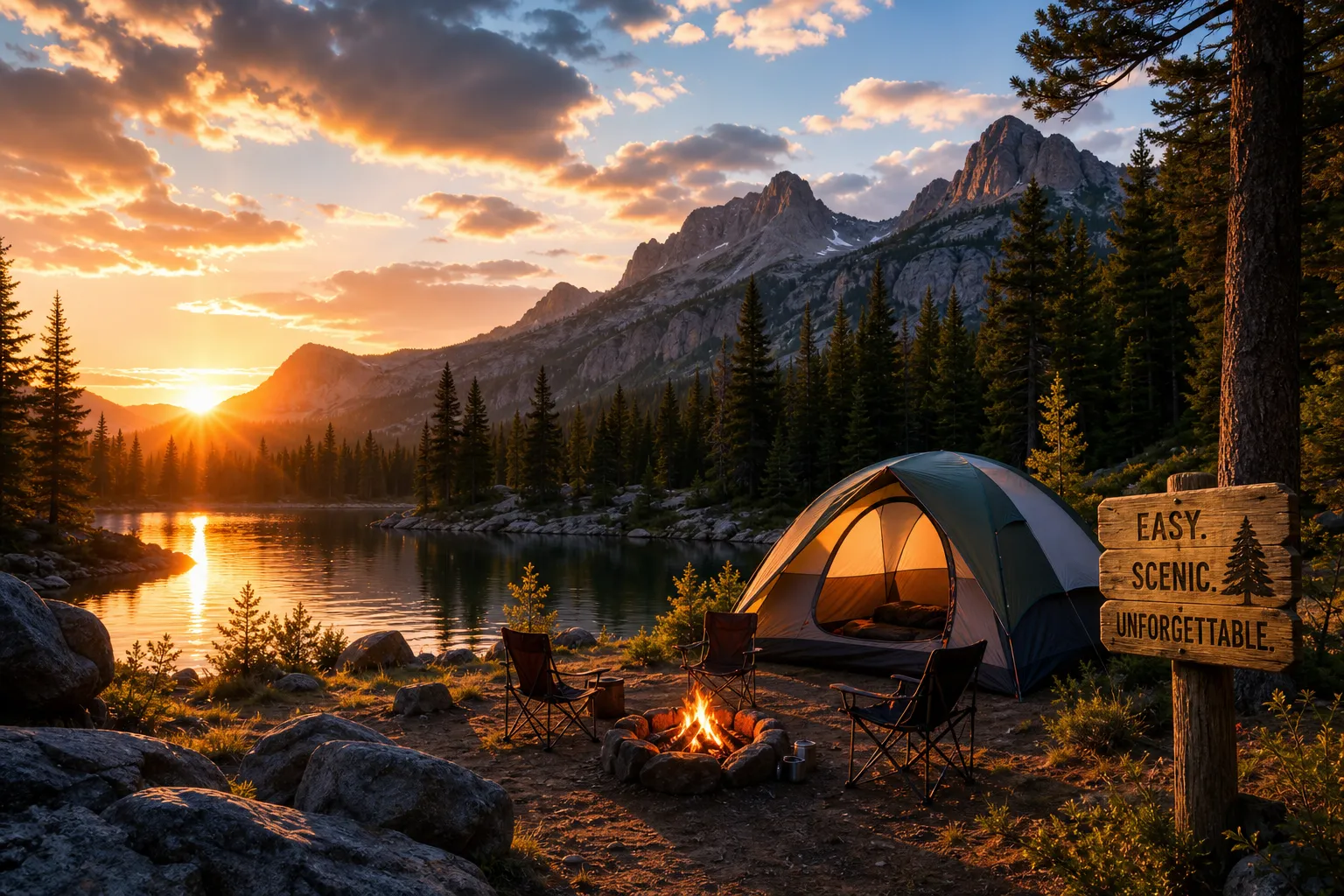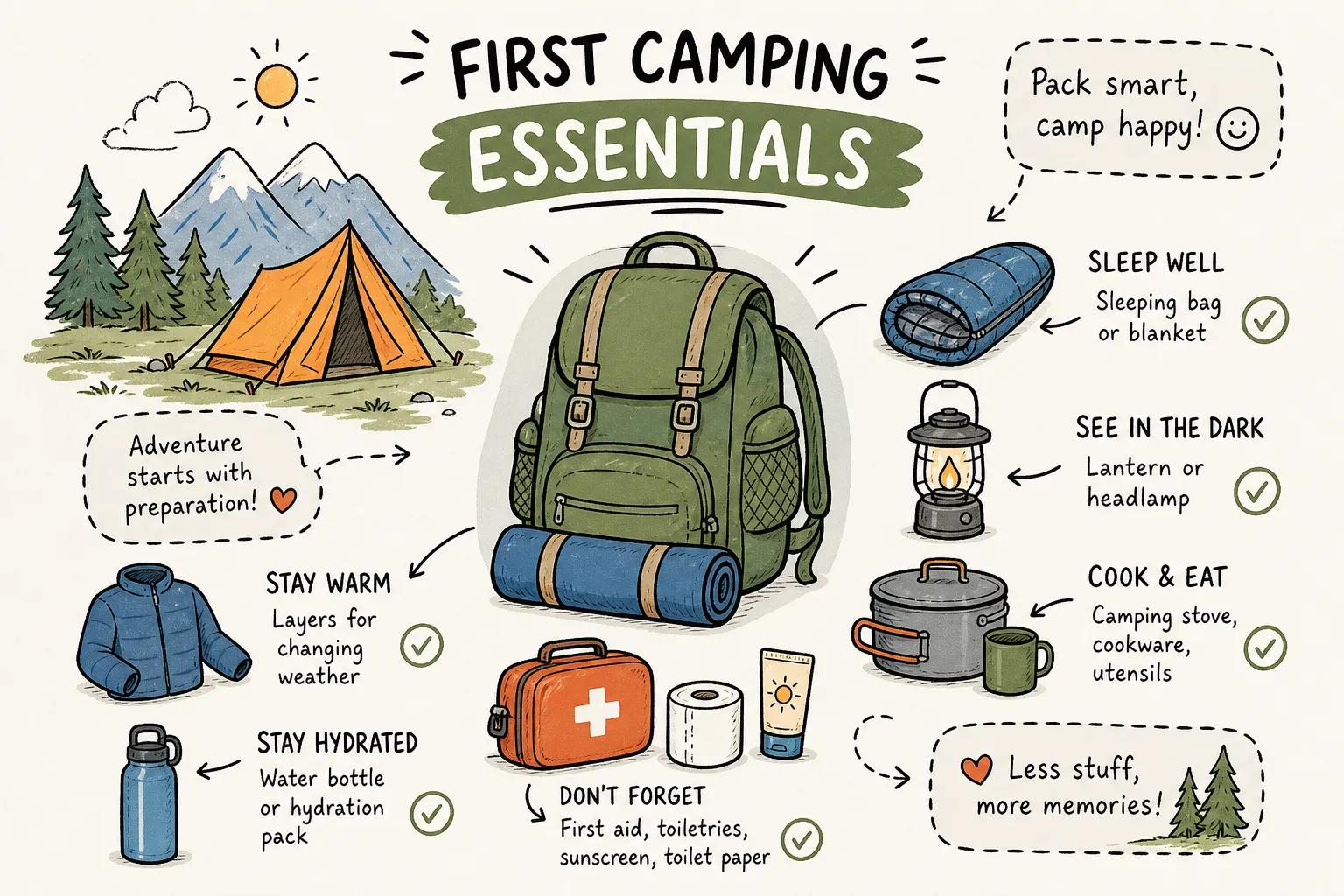
If you’re wondering what to pack for your first camping trip ever, you’re already asking the right question. Most beginners fall into one of two traps: they haul half their apartment into the woods and spend the whole trip shuffling through overpacked bags, or they show up underprepared and spend the night shivering because no one told them that summer nights at elevation actually get cold. Knowing what to bring comes down to two things: understanding which type of camping you’re doing, and sorting your gear into two distinct categories before you zip a single bag.
This first-time camper packing list breaks everything into base camp gear (what stays at your site) and day bag gear (what you carry when you leave camp). You’ll also get specific numbers on food and water, a plain-English first aid list, and honest guidance on what you actually need to buy versus what you can borrow from a friend. Qurabox’s beginner camping hub has the full printable checklist, plus gear selection guides and campsite picks. Bookmark it before your trip.
Car Camping vs. Backpacking: Which Packing List Applies to You?
This distinction shapes every single item on your list, so sort it out before you start packing anything. Car camping means your vehicle does the heavy lifting. You carry gear only from the trunk to your campsite, so weight and bulk don’t need to be your primary concerns. Backpacking means every ounce rides on your back for miles, so the list shrinks dramatically and each item has to earn its place.
This guide focuses on car camping because that’s the right starting point for first-timers. The skills are more forgiving, the gear is less expensive, and the experience teaches you what you actually like before you invest in a lightweight setup. That said, the day bag section below applies to both styles, because once you leave your campsite to hike or explore, you’re carrying everything on your back regardless.
The practical advantage of car camping is significant: a thicker sleeping pad, a real pillow, a full cooler, camp chairs, a lantern, and a complete cooking setup are all fair game. Backpackers strip all of that down to a lightweight shelter, an ultralight sleep system, a single small stove, and compact food. That’s a different skill set for a later trip.
What to Pack for Your First Camping Trip Ever: Base Camp Essentials
These are the non-negotiables that live at your site. Get these right and the rest of the trip takes care of itself. Get them wrong and no amount of good food or good weather will save you.
Shelter and Sleep: The Items You Cannot Improvise
Consider sizing up one person when choosing your tent, a slightly larger shelter gives you room to store gear inside and adds real comfort on a rainy night. Make sure it comes with stakes, a rainfly, and ideally a footprint (a ground cloth that protects the tent floor from moisture and abrasion).
Your sleeping bag rating matters more than almost any other gear decision. Look for a bag with a comfort rating suited to the overnight lows you expect. Sleeping bag manufacturers list both a comfort rating and a lower limit rating; beginners should shop by comfort rating, not limit rating. A bag rated to 40°F is a solid starting point for three-season camping. Beginners consistently underestimate how cold nights get, even in summer, so err on the warmer side if you tend to sleep cold. Pair your bag with a sleeping pad, foam pads work fine, inflatable pads are more comfortable, and either one beats sleeping directly on cold ground, which drains your body heat regardless of how warm your bag is.
Camp Kitchen: What to Bring for Real Meals at the Site
A two-burner camp stove or a single-burner backpacking stove with a fuel canister handles the vast majority of camp cooking. Bring a lighter and a backup set of matches in a waterproof bag. Add a medium pot, a pan, a spatula, basic utensils, two plates, and a collapsible cup per person. One cutting board and a camp knife cover the rest of your meal prep needs.
A cooler with enough ice for your perishables keeps food safe and significantly expands your meal options. Pack biodegradable soap and a small sponge for cleanup, plus a few trash bags. Leave No Trace principles require you to pack out everything you bring in, and a two-day trip generates more waste than most beginners expect.
Lighting, Seating, and the Comfort Layer
A headlamp per person is the single most-forgotten base camp item. A shared flashlight is not an adequate substitute. Headlamps keep your hands free for cooking, setting up the tent after dark, and navigating to the bathroom at 2 a.m. Bring extra batteries for each one. Camp chairs and a small folding table turn a site from survival mode into an actual comfortable setup. If rain is possible, a tarp or canopy over the cooking area is worth the small added weight and bulk.
What Goes in Your Day Bag When You Leave Camp
Every time you leave your campsite for a hike, a swim, or a walk around the area, you need a second, smaller set of gear on your back. This is where beginners get caught out. They assume the campsite is always nearby and leave critical items in the car.
The Six-Item Minimum for Any Trail or Outing
- Water: at least 2 liters per person for a half-day hike in a reusable bottle or hydration bladder (scale up for longer or hotter outings)
- Snacks with real calories: trail mix, jerky, granola bars, or dried fruit
- A headlamp or small flashlight in case the hike runs longer than planned
- A basic first aid pouch with blister strips, bandages, and pain reliever, separate from your larger kit at camp
- Sunscreen and bug spray, applied before you leave and reapplied midway through
- A charged phone with a downloaded offline map, or a paper map of the area
A rain jacket deserves a permanent spot in your day bag, even on clear mornings. Mountain and forest weather shifts fast, and getting soaked two miles from camp is a miserable experience that’s completely avoidable. Clip a whistle to your bag strap for emergency signaling. Any personal medications, especially allergy or asthma prescriptions, should always travel with the person who needs them, not stay back at the site.
Food, Water, and Fuel: How Much to Actually Bring
Specific numbers take the guesswork out of planning. Most beginners either overbuy and haul food they don’t eat, or underbuy and start rationing by day two.
The Per-Person Water Math for a Weekend Trip
Plan for 1 gallon of water per person per day as your baseline. That covers drinking, basic cooking, and minimal washing. For a two-day trip with two people, that’s 4 gallons minimum. Bump that up to 5 gallons if temperatures will push above 80°F or if you’re doing active hiking, heat and exertion raise your fluid needs considerably. Water purification tablets or a filter are solid backup tools if you’re camping near a water source, but don’t rely on them as your primary supply on a first trip. The simplest baseline is jugs from a grocery store before you leave.
Lightweight Food Options That Actually Work at Camp
Freeze-dried meals require only boiling water and tend to taste better than their reputation among non-campers. They’re a practical choice for dinners because cleanup is minimal and prep time is about ten minutes. Instant oatmeal, peanut butter tortillas, and granola bars handle breakfasts and lunches without cooking complexity. If you have a cooler, hard-boiled eggs, cheese, deli meat, and fresh fruit expand your options considerably.
Plan 1.5 to 2 pounds of food per person per day. For a two-day weekend trip, that works out to roughly 3 to 4 pounds per person total. Bring slightly more than you think you need, camp air and physical activity increase appetite, and running short on food on day two is an unpleasant way to end a trip.
First Aid, Safety, and the Things Beginners Forget Most
A solid first aid kit at your base camp and a smaller pouch in your day bag cover the gap between a minor scrape and a situation that needs more attention.
Building a Starter First Aid Kit for Your Campsite
Adhesive bandages in multiple sizes, gauze pads, antibiotic ointment, and antiseptic wipes handle most minor injuries. Add moleskin or blister strips if any hiking is planned, blisters are the most common first-timer complaint and entirely preventable with the right footwear and early treatment. Round out the kit with ibuprofen, antihistamine tablets, tweezers for ticks or splinters, a pair of medical gloves, and a space blanket. Pre-assembled starter kits at outdoor retailers are widely available at accessible price points and typically cover all of these items, check current prices at your local store or online.
The Forgotten Items That Cause Real Problems
Prescription medications top the list of items left at home on camping trips, people assume two nights isn’t long enough to matter, but it always does. Duct tape is one of the most underrated items you can bring: it repairs tent tears, seals gear splits, and works as backup blister padding when moleskin runs out. A portable charger keeps your phone functional for navigation and emergency calls when you’re away from your car. Pack at least one extra pair of socks, too. Wet feet ruin trips faster than almost any other single factor, and an extra pair weighs almost nothing.
What to Borrow vs. Buy Before You Head Out
A complete beginner car camping kit runs roughly $500 to $600 when bought new at entry-level prices. That’s a real investment for a hobby you haven’t confirmed you enjoy yet. Borrowing the expensive items first is a smarter approach.
Gear Worth Borrowing on Your First Trip
A tent, sleeping bag, and sleeping pad are the three highest-cost items and also the three most personal pieces of gear. You won’t know your preferences until you’ve actually slept on them. Camp chairs, a cooler, a stove, and a lantern are also good candidates for borrowing, since your preferences for size, weight, and features will become much clearer after your first real trip.
Items Worth Buying from the Start
Your own headlamp is a personal safety item that shouldn’t be shared, buy one. Toiletries, hygiene supplies, and personal medications are obvious personal purchases. A basic first aid kit is inexpensive enough that owning one outright makes more sense than borrowing. Qurabox’s beginner camping section walks through gear comparisons, campground recommendations, and the full printable checklist in plain language built for people who have never done this before.
FAQ: What to Pack for Your First Camping Trip Ever
What are the true must-haves for a first camping trip?
The non-negotiables are: a tent with a rainfly, a sleeping bag rated for actual overnight temperatures, a sleeping pad, at least 1 gallon of water per person per day, a basic first aid kit, and a headlamp per person. Everything else is comfort or convenience.
What’s the difference between a car camping packing list and a backpacking list?
Car camping lets you bring bulkier, heavier items since your vehicle handles the weight. A backpacking list strips things down to ultralight essentials because you carry everything on your back. First-timers should start with car camping.
How much food should I pack for a two-day camping trip?
Plan on 1.5 to 2 pounds of food per person per day. For two people on a weekend trip, that’s roughly 6 to 8 pounds of food total. Pack a little extra, activity and fresh air increase appetite more than most people expect.
What’s the most overlooked item on a beginner camping checklist?
A headlamp for every person in your group. Most beginners pack one shared flashlight and regret it by the first night. Prescription medications and an extra pair of socks are close runners-up.
Can I rent camping gear instead of buying it?
Yes, and for a first trip, it’s often the smarter move. Many outdoor retailers offer gear rental programs that let you try a tent, sleeping bag, and pad before committing to a purchase. Buy personal items like your headlamp and first aid kit outright.
You’re More Ready Than You Think
Figuring out what to pack for your first camping trip ever is simpler once you break it into two lists: your base camp setup and your day bag. Get those two categories sorted before you start throwing things in a duffel and you’ll sidestep most of the packing mistakes first-timers make. The system sounds simple because it is.
The true non-negotiables are a short list: one tent, a sleeping bag rated for actual overnight temperatures, a sleeping pad, 1 gallon of water per person per day, a basic first aid kit, and a headlamp per person. Everything else is comfort or convenience, and you can dial that in after your first trip once you know what you actually want.
Start with borrowed gear on trip one. Let the experience teach you what’s worth investing in. When you’re ready to go deeper, Qurabox’s beginner camping hub has gear comparison guides, campsite recommendations by region, and the downloadable version of this first-time camper packing list to keep on your phone when you’re standing in the gear aisle wondering what you actually need.