Switching to eco friendly cleaning doesn’t mean scrubbing harder, spending twice as much, or dedicating your weekends to making DIY potions from scratch. Green cleaning has caught up with conventional cleaning in both performance and price, and for most households, you’re only one or two product swaps away from a cleaner home without the harsh chemical smell that follows you room to room. Third-party ecolabel adoption has increased steadily, certified product lines have expanded their performance, and the cost math has shifted in favor of concentrates and refills.
This room-by-room breakdown covers the certifications worth trusting, the ingredients that actually do the work, the best ready-to-buy products for 2026, and where to find refill options that lower your cost per clean over time, written for everyday Americans who want practical results, not a guilt trip about the environment.
How to tell a genuinely green cleaner from clever marketing
The terms “green,” “natural,” and “plant-based” on cleaning products often lack standardized legal definitions, which means they can be printed on a bottle without third-party verification or a requirement to back up the claim. The FTC can act against deceptive environmental claims under its Green Guides, but enforcement is limited, so knowing which certifications carry real standards is still the fastest way to shop smarter. Look for non-toxic household cleaners and sustainable cleaning supplies that carry one of the labels below, and treat everything else as advertising.
The certifications that actually mean something
EPA Safer Choice is the clearest signal to look for on store shelves. The EPA reviews every intentionally added ingredient against criteria for human health and environmental safety, including concerns like carcinogenicity, aquatic toxicity, and VOCs. Products must also pass performance standards, meaning they’re required to clean as well as conventional alternatives, not just be “safer” in a vague sense.
Green Seal is an independent nonprofit certification that takes a full lifecycle approach. It evaluates ingredients, packaging, and manufacturing practices, not just what ends up in the bottle. ECOLOGO (UL) is a credible third-party certification that holds products to the top 20 percent of their category by environmental performance. Both are worth trusting, especially when paired with a published ingredient disclosure. For a broader view of available cleaning ecolabels, consult the comprehensive Ecolabel Index for cleaning products, which lists certifying programs and their scopes.
Labels that are mostly marketing noise
Terms like “natural,” “eco-conscious,” “non-toxic,” and “biodegradable” carry no standardized legal definition for cleaning products. A product can call itself natural and still contain ingredients that irritate skin, trigger asthma, or harm aquatic life. The rule is simple: no third-party certification means the label is advertising, not a guarantee. Treat it accordingly.
The eco friendly ingredients that actually do the work
Understanding a handful of core ingredients makes DIY cleaning practical and helps you evaluate any product you pick up at the store. These aren’t fringe alternatives. Several appear in certified commercial cleaners and are backed by chemistry research.
For disinfecting and descaling
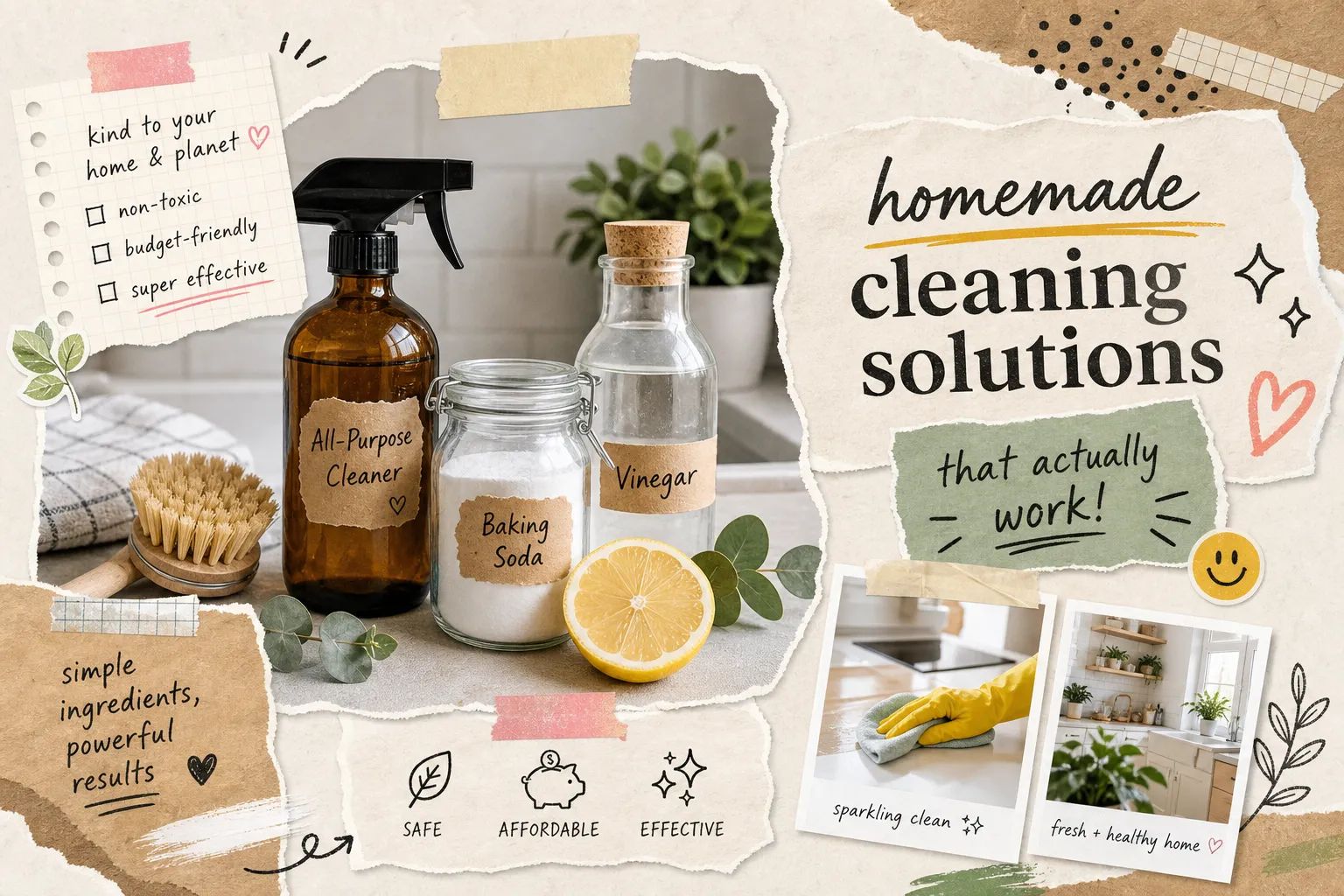
White vinegar (acetic acid) handles light disinfection, cuts through soap scum, and dissolves mineral deposits effectively. Citric acid performs similarly and is especially aggressive on limescale and hard water buildup around faucets and in bathrooms. Neither is a hospital-grade disinfectant, but for everyday household surfaces they’re effective and both biodegrade quickly. For true germ-killing on high-touch surfaces, skip plain vinegar and look instead for an EPA-registered disinfectant or a product carrying the EPA’s Design for the Environment (DfE) label for antimicrobial use. Hydrogen peroxide and isopropyl alcohol are also strong natural-leaning options for surfaces that need a higher antimicrobial standard.
For grease, grime, and grout
Baking soda (sodium bicarbonate) works as a mild abrasive for scrubbing without scratching most surfaces. Washing soda (sodium carbonate) is more alkaline and more effective on heavy grease buildup, though it requires gloves because it can irritate skin. Sodium percarbonate (oxygen bleach) is a commonly recommended oxygen-based bleach for grout stains and fabric brightening. It avoids chlorine fumes and has lower environmental persistence than chlorine bleach, making it a practical swap for most grout and laundry jobs. Plant-based surfactants derived from coconut, like sodium coco-sulfate, used in formulations from brands such as ECOS, Seventh Generation, and Dr. Bronner’s, are commonly found in many well-regarded green dish soaps and all-purpose sprays.
Where not to use natural cleaners
Vinegar damages natural stone (marble, granite), hardwood floors, cast iron cookware, and aluminum surfaces. Washing soda can dull older finishes and should not be used on aluminum. Knowing these limits prevents expensive mistakes. Using the right ingredient on the right surface is what separates effective eco friendly cleaning from a frustrating afternoon.
Room-by-room guide to eco friendly cleaning that actually works
Matching your cleaner to the surface and soil type is where this gets practical. Each room has specific challenges, and the right method is almost always simpler than it sounds.
Eco friendly cleaning for your kitchen: grease, food residue, and food-contact surfaces
Plant-derived dish soap handles everyday grease at the sink without issue. For stove tops and range hoods where grease has built up, a diluted washing soda spray with a few minutes of dwell time can match or outperform many conventional degreasers on heavy greasy soils. Stone countertops like granite or marble should be cleaned with a diluted castile soap spray rather than vinegar since the acidity will etch the surface over time. For oven grime, a paste of baking soda and a small amount of dish soap applied the night before and scrubbed the next morning removes built-up residue without the fumes of commercial oven cleaners.
Eco friendly cleaning for your bathroom: hard water, soap scum, and high-touch surfaces
Citric acid dissolved in water (roughly 1 tablespoon per cup) is the most effective natural spray for bathroom tiles, faucets, and showerheads coated in hard water buildup. For toilet bowls, citric acid powder or a sodium percarbonate-based cleaner handles staining and odor without bleach. For high-touch surfaces like door handles and faucet knobs, use an EPA-registered disinfectant or a DfE-labeled antimicrobial product rather than plain vinegar, those surfaces benefit from a proven antimicrobial standard, especially during cold and flu season.
Living areas and floors
Most living room surfaces only need cleaning, not disinfecting, which makes a diluted castile soap or a certified plant-based all-purpose spray more than adequate. For hardwood floors, skip vinegar entirely since repeated use dulls the finish; a pH-neutral, plant-based floor cleaner is the right tool. Glass and mirrors clean well with a simple mix of diluted white vinegar and water in a reusable spray bottle, effective on standard glass surfaces and enough to eliminate the need for a separate glass cleaner product in most homes.
Top eco friendly cleaning products worth buying in 2026
Once you know what to look for, picking specific products gets straightforward. The following have earned consistent recognition in consumer testing, editor-reviewed roundups, or carry reliable third-party certifications.
Best all-purpose picks for most homes
Dr. Bronner’s Sal Suds earns top marks in multiple eco-cleaning roundups, including a tested review by CNN Underscored that highlighted it for versatility across surfaces, concentrated formula, and fully biodegradable ingredients. Biokleen Spray & Wipe carries EPA Safer Choice certification and removes grime without fragrance overload. Clean Cult All-Purpose Cleaner was also highlighted by CNN Underscored for its refillable aluminum bottle system, making it a solid pick if cutting plastic use is a priority.
Mrs. Meyer’s Clean Day holds EcoLogo certification and works well for most everyday surfaces, though it uses more fragrance than some people prefer. Attitude Citrus Zest All-Purpose Cleaner stood out in Safe Household Cleaning’s testing for its short ingredient list, VOC-free profile, and hypoallergenic formulation. For an expanded roundup of consumer-tested options and buying guidance, see this guide to the best natural cleaning products.
Best fragrance-free and sensitive options
Seventh Generation Free & Clear holds both EPA Safer Choice and UL ECOLOGO certifications and is fully fragrance and dye-free, making it a reliable pick for households with sensitivities or young children. It’s available at most major retailers and works across kitchen, bathroom, and general surface cleaning. ECOS All-Purpose Cleaner is the strongest budget-friendly option in this category, EPA Safer Choice-certified and widely stocked at major retailers, so you don’t need to order online to find it. For direct reference to EPA-approved alternatives and Safer Choice listings, consult the EPA Safer Choice product list compiled by ECOs-certified brands.
Zero-waste swaps and refill programs that lower your cost per clean
The most practical financial argument for eco friendly cleaning is the concentrate and refill model. Buying concentrated formulas or signing up for refill programs often brings the per-use cost below what you’d pay for a conventional ready-to-use spray at the grocery store.
Refill brands and programs worth using
Fillaree operates refill stations across the U.S. and ships home refill boxes, making it one of the more accessible options for Americans outside major cities. Blueland offers refills in compostable paper packaging with a reusable spray bottle system. Branch Basics and Truly Free Home both use a reusable bottle plus refill concentrate approach, which reduces plastic waste and keeps recurring costs low. Plaine Products uses a return-and-refill model with aluminum bottles for people who want to eliminate plastic from their routine entirely. For a primer on refillable cleaning systems and the refill movement, this refillable cleaning products roundup is a helpful place to start.
The real math on concentrates vs. conventional cleaners
Cost-per-use comparisons based on published dilution ratios suggest that a green castile soap concentrate can cost around $0.23 to refill a standard spray bottle versus roughly $1.97 for a conventional 32 oz. ready-to-use spray, a difference that compounds quickly over a year of regular cleaning. The upfront cost of a glass or aluminum bottle is higher, but the per-cleaning cost drops significantly after the first purchase. Conventional cleaners win on sticker price at the shelf, but well-chosen eco friendly concentrates consistently win on cost per actual cleaning session when you run the numbers out over a year. If you live in a small space and need a compact, efficient plan for supplies and time, see the Best Way to Organize a Cleaning Routine for a Small Home, Qurabox.
Start with one swap and build from there
Eco friendly cleaning doesn’t require a complete home overhaul or a bigger cleaning budget. Pick one product to replace this week: a certified all-purpose spray like ECOS or Biokleen covers the widest range of surfaces with the least learning curve. From there, a small bag of citric acid handles bathroom buildup, and baking soda takes care of scrubbing jobs throughout the house. For help pairing that swap with a simple schedule, check the Best Weekly Cleaning Routine for Busy Adults in 2026, Qurabox.
When you’re ready to cut plastic and reduce recurring costs, add a refill program like Blueland or Branch Basics. Stick to products carrying EPA Safer Choice, Green Seal, or ECOLOGO, and skip anything that calls itself “natural” or “eco-conscious” without a third-party label to back it up. The Beginner House Cleaning Checklist: Room-by-Room Guide, Qurabox covers every room and surface type with the same practical, no-fluff approach, updated for 2026.