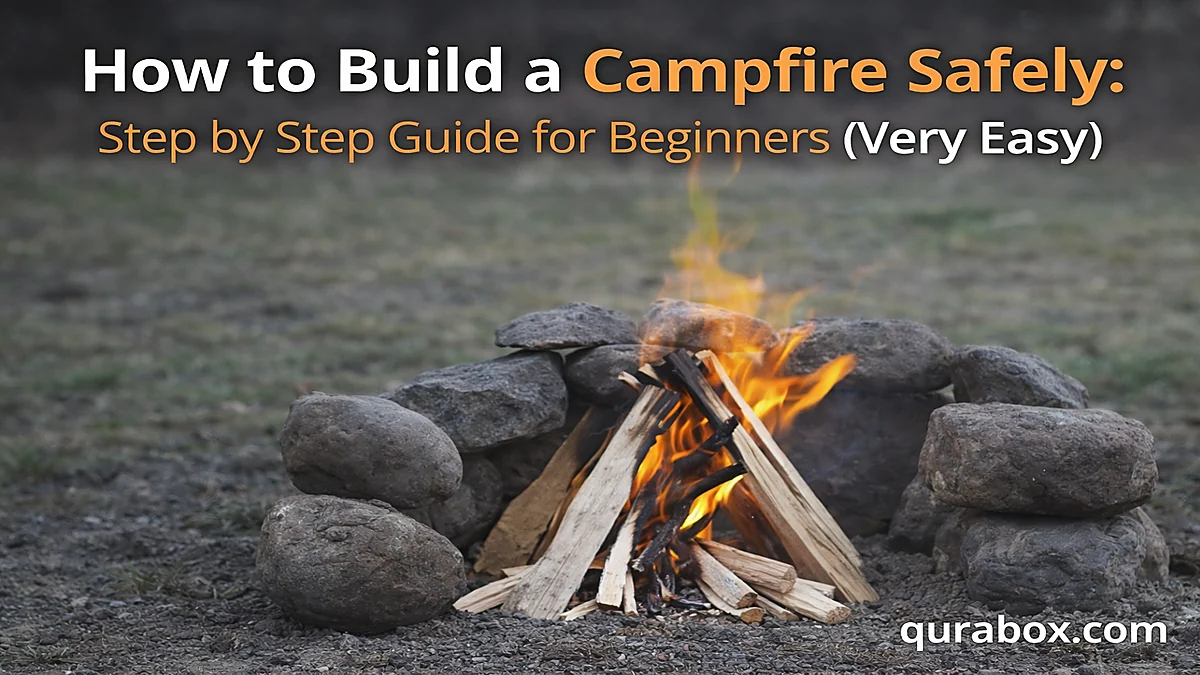
A campfire can turn an ordinary night outdoors into a memorable one. It gives you warmth, light, a place to cook, and a reason to sit still for a while. But a campfire is also one of the easiest ways for a relaxing trip to become dangerous.
For beginners, the safest mindset is simple: a good campfire is not the biggest fire, the prettiest fire, or the longest-burning fire. It is the fire you can control from start to finish. That means checking restrictions first, choosing the right place, using the right fuel, keeping the flames small, and making sure the ashes are cold before you leave.

Why Campfire Safety Matters More Than Most Beginners Think
Many new campers treat campfire safety as a final checklist item. In reality, it should shape every decision you make before, during, and after the fire.
Safety is not just about preventing a worst-case disaster. It is also about protecting campsites, soil, vegetation, wildlife, and other campers. Poor campfire habits can leave behind burned ground, damaged rocks, scattered trash, and hidden hot coals that remain dangerous long after the visible flames disappear.
There is also a practical reason to learn the right method. A well-built fire is easier to light, easier to manage, less smoky, and faster to extinguish. Good technique is not about looking impressive. It is about making the fire do what you want with less fuel, less stress, and less risk.

Before You Build a Campfire, Ask These 4 Questions
1. Are campfires allowed here today?
This is the first question, not the last. Fire restrictions can change quickly based on wind, drought, and local conditions. A campsite that allowed fires last weekend may not allow them today.
2. Is the weather safe enough?
Even if campfires are technically allowed, dry and windy conditions should make you think twice. If you are debating whether the wind is too strong, skip the fire.
3. Do you actually need a fire?
Many people build a fire out of habit, not necessity. If your only goal is cooking or boiling water, a camp stove is often safer, easier, and more efficient. If your site is dry, crowded, or unfamiliar, a fire may not be worth the risk.
4. Do you have water, a shovel, and the right wood?
If you cannot extinguish the fire completely, you are not ready to start one. You should have water, a bucket or container, a shovel, and wood sorted into tinder, kindling, and larger fuel.
Campfire Essentials for Beginners
BUY campfire accessories in AMAZON

Your minimum safe setup
Before you strike a match, have these ready:
- Water
- Bucket or large container
- Shovel
- Existing fire ring or designated pit
- Tinder
- Kindling
- Firewood or logs
- Match or lighter
- Phone for emergencies
What tinder, kindling, and firewood actually mean
Beginners often struggle because they try to light big logs first. That rarely works.
| Fuel Type | What It Is | Purpose |
|---|---|---|
| Tinder | Dry leaves, pine needles, tiny twigs, dry grass, or a fire starter | Catches the first flame |
| Kindling | Small sticks, usually under 1 inch thick | Builds early heat |
| Firewood | Larger pieces of wood | Keeps the fire burning |
The three-stage fuel system works because each material solves a different problem. Tinder catches quickly. Kindling turns that weak flame into real heat. Larger wood sustains the fire after a coal bed forms.
Use local wood only
This rule matters more than many beginners realize. Moving firewood from one area to another can spread invasive pests and tree diseases.
Practical tip: If you are camping in a developed campground, buy the firewood there or at a nearby store. It is easier, safer, and usually allowed.
Where to Build a Campfire Safely
Best option: an existing fire ring
For beginners, an existing fire ring is almost always the best choice. It helps contain the fire and reduces damage to the site.
Distance and clearance matter
Keep your campfire at least 15 feet away from tents, gear, dry vegetation, and low-hanging branches. Make sure there is open space above the fire. Sparks rise, and overhead branches can ignite faster than many people expect.
If there is no fire ring, do not improvise casually
A lot of poor campfire advice tells beginners to just dig a hole anywhere. That is not safe or acceptable in many places.
Best beginner rule:
If there is no designated ring and you are not sure local rules allow another method, do not build a fire there.
Step-by-Step: How to Build a Campfire Safely
BUY campfire accessories in AMAZON
Step 1: Prepare the site
Use a designated fire ring or pit. Remove loose flammable debris around it if needed. Keep the area open and level. Double-check that your tent, chairs, clothing, paper goods, and extra firewood are not too close.
A small, tidy fire area is safer than a cluttered one.

Step 2: Sort your wood before lighting anything
Make three piles:
- Tinder
- Kindling
- Larger wood
This sounds simple, but it solves one of the most common beginner mistakes: scrambling for more fuel while the first flame is dying.
When your wood is sorted in advance, you can build gradually instead of panicking and smothering the fire with oversized logs.
Step 3: Choose the right fire layout
Not every campfire structure behaves the same way. Some light fast. Some burn longer. Some are easier for beginners.
The three most common beginner-friendly campfire structures are the teepee, log cabin, and upside-down pyramid.
Campfire Layouts for Beginners
Teepee fire
Build a small cone of kindling around loosely placed tinder in the center. Light the tinder, and as the flame grows, add slightly larger pieces gradually.

Best for:
- Fast starts
- Beginners
- Short evening fires
- Quick warmth or marshmallow roasting
Pros:
- Easiest to understand
- Lights quickly
- Good airflow
Cons:
- Burns faster
- Needs more tending
- Can collapse if overbuilt
Log cabin fire
Place two larger pieces of wood parallel to each other. Lay two more on top at a 90-degree angle to form a square. Put tinder inside the center and continue stacking slightly smaller wood on top, keeping air gaps between pieces.

Best for:
- Balanced heat
- More stable flame
- Relaxed evening fires
- Beginners who want easier management
Pros:
- Stable structure
- Good for a sustained burn
- Easy to feed gradually
Cons:
- Slightly slower to ignite than a teepee
- Needs a bit more wood to build properly
Upside-down pyramid fire
Start with the biggest logs on the bottom. Build smaller layers on top at alternating angles. Put kindling and tinder at the top. As the top catches, the fire burns downward.

Best for:
- Longer burns
- Campsites where you want less constant feeding
- More patient beginners
Pros:
- Orderly and efficient
- Longer, steadier burn
- Less fiddly once established
Cons:
- Slower to get going
- Slightly less intuitive for first-timers
Campfire Layout Comparison Table
| Fire Layout | Ease for Beginners | Lights Quickly | Burns Longer | Best Use |
|---|---|---|---|---|
| Teepee | Very easy | Yes | No | Fast warmth, quick social fire |
| Log cabin | Easy | Moderate | Yes | Balanced evening fire |
| Upside-down pyramid | Moderate | Slower | Yes | Longer, steadier burn |
Step 4: Light the Fire the Smart Way
Use a match or lighter to ignite the tinder. Once it catches, blow lightly at the base to help oxygen feed the flame.
Avoid the temptation to dump on large logs immediately. A fire becomes reliable in stages. First the tinder catches. Then the kindling takes over. Then the larger pieces begin to burn once there is enough heat.
Rushing the process is one of the quickest ways to create a smoky, weak fire that constantly goes out.
Never use gasoline
Never use gasoline or other dangerous accelerants to start a campfire. If you need to rely on fuel to force the fire, the structure or materials are wrong. For beginners, the best choice is to skip liquid accelerants entirely and build the fire correctly from the start.
Step 5: Manage the Fire Without Letting It Manage You
Once your fire is burning, keep it small.
Small fires are easier to control, easier to cook over, easier to extinguish, and much less likely to throw sparks.
Feed the fire gradually. Add one or two pieces at a time. Do not toss in a pile of wood and hope for the best. If you want cooking coals or a steady evening flame, build a modest bed of embers instead of chasing big flames.
And never leave the fire unattended. Not for a bathroom trip. Not while washing dishes. Not while gathering more wood. If you need to leave or go to bed, the fire should already be fully out.
Common Beginner Mistakes That Make Campfires Unsafe

Making the fire too big
Large fires feel exciting for a few minutes. After that they become wasteful, smoky, harder to control, and harder to extinguish.
Building under branches or too close to gear
This is one of the most preventable mistakes. Keep the area around the fire clear and open.
Using wet wood
Wet wood creates more smoke, burns poorly, and makes the fire frustrating to manage.
Using wood from far away
Transported firewood can spread destructive insects and pests.
Trying to extinguish with dirt
Dirt may not fully extinguish hidden heat. It can cover hot coals without actually putting them out.
Burning trash
Do not burn plastic, foil, cans, or food packaging. Burning trash creates toxic fumes and leaves ugly residue behind. Pack it out instead.

How to Put Out a Campfire Properly
This is the most important part of the entire guide.
A simple rule to remember is:
Drown, Stir, Drown, Feel
Pour plenty of water on the fire, stir the ashes and embers, add more water, and then check for heat. If it is too hot to touch, it is too hot to leave.
The right extinguishing sequence
- Stop feeding the fire early enough that the wood can burn down.
- Pour water over all embers, ash, and partially burned wood.
- Stir thoroughly with a shovel or stick.
- Pour more water.
- Feel carefully for remaining heat.
- Repeat until everything is cold.
What “out” really means
A lot of people think “out” means no visible flame. That is wrong.
A properly extinguished campfire is one that is cool to the touch. That means no hot ash, no warm coals, no glowing interior wood, and no chance that wind will bring it back to life.

Leave No Trace Cleanup After the Fire
A safe campfire ends with cleanup, not just extinguishing.
What to do after the ashes are cold
- Remove any non-burnable trash
- Leave the fire ring tidy
- Scatter fully cool ashes only where local practice allows
- Pack out charcoal chunks and half-burned trash if required
- Return the site as close as possible to how you found it
Good cleanup is part of safety because it prevents lingering heat, reduces visual damage, and keeps future visitors from inheriting your mess.
Campfire vs. Camp Stove: Which Is Better?
For many beginners, this is the better question than “How do I build the perfect fire?”
| Factor | Campfire | Camp Stove |
|---|---|---|
| Atmosphere | Excellent | Minimal |
| Cooking speed | Variable | Fast and reliable |
| Safety in dry conditions | Lower | Usually better |
| Environmental impact | Higher | Lower |
| Ease for beginners | Moderate | Easy |
| Works in fire-restricted areas | Often no | Sometimes yes, depending on rules |
Real-world advice:
If your goal is mainly to boil water, cook dinner, or make coffee, use a stove.
If conditions are safe, local rules allow it, and you want the experience of an evening fire, build a small campfire.
That is the balanced choice. Not every outdoor moment needs flames.
Text Infographic: The Safe Campfire Flow

CHECK
Fire bans? Wind? Dry conditions? Water available? Existing ring?
CHOOSE
Existing ring first.
CLEAR
Keep 15 feet from tents, gear, vegetation, and low branches.
BUILD
Tinder → kindling → logs. Keep airflow. Start small.
CONTROL
Keep the fire small. Never leave it alone.
EXTINGUISH
Drown → stir → drown → feel. Cool to the touch means safe to leave.
Expert-Backed Beginner Strategy
If you remember only one strategy from this article, remember this:
A beginner should build the smallest fire that comfortably does the job.
That single habit makes campfires easier to light, easier to supervise, easier to extinguish, and less likely to escape.
A second expert-level habit is to treat not having a fire as a normal outdoor skill, not a disappointment. The safest campers are not the ones who can force a fire in every condition. They are the ones who know when to skip it.
Frequently Asked Questions
1. What is the easiest campfire for beginners?
The teepee fire is usually the easiest for beginners because it is simple to build, has good airflow, and lights quickly. A log cabin fire is also beginner-friendly if you want a more stable structure.
2. Is it okay to build a campfire if there is no fire ring?
Only if local rules clearly allow it and you know how to use a safe, low-impact method. For most beginners, no existing ring usually means no fire.
3. How far should a campfire be from a tent?
At least 15 feet away from tents, gear, and other flammable items.
4. Can I put out a campfire with dirt or sand?
You should use water, not dirt or sand. Dirt may fail to extinguish hidden heat, and sand can insulate coals that later reignite.
5. Why should I buy local firewood?
Because transported firewood can spread invasive pests and insects into new areas.
6. When is a campfire fully out?
When all ash, coals, and remaining wood are cool to the touch. No visible flame is not enough.
7. What should I do if it is windy but fires are not officially banned?
Skip the campfire and use a stove or another alternative.
Conclusion
Learning how to build a campfire safely is less about mastering one perfect technique and more about mastering a sequence of good decisions.
Check the rules. Read the conditions. Use the right site. Build with the right fuel. Keep it small. Stay with it. Put it out with water until it is cold.
That is what beginners actually need.
A safe campfire is not just a camping tradition. It is a responsibility. And done correctly, it makes the outdoor experience better for you, safer for everyone around you, and less harmful to the place you came to enjoy.
Useful Key Takeaways
- The best beginner fire is usually a small teepee or log cabin fire.
- The best beginner location is an existing fire ring.
- The best beginner backup plan is a camp stove.
- The biggest campfire mistake is starting one without checking restrictions and wind.
- The most important campfire skill is not lighting it. It is extinguishing it completely.