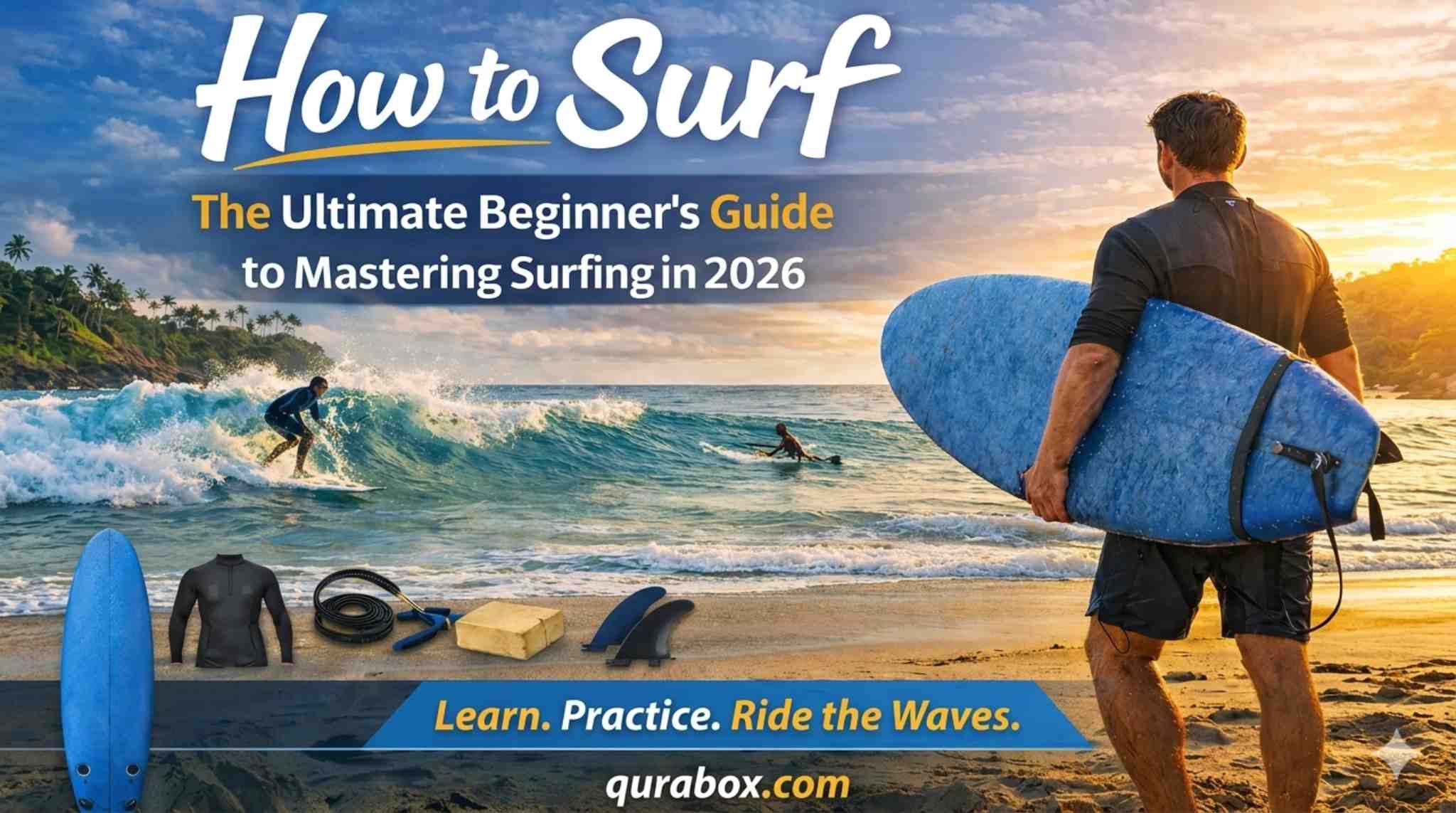
Surfing looks easy from the shore. Paddle out, catch a wave, stand up, smile, and repeat. In reality, it is more challenging than it looks. Surfing takes timing, balance, paddle strength, wave judgment, and patience. You will fall many times before it starts to feel natural.
Still, beginners can absolutely learn. Surfing is more accessible than ever, and more people are starting every year. The best way to start surfing is not by buying a small advanced board and paddling into heavy waves. The smartest way is much simpler.
- Start on a soft-top longboard

- Learn at a sandy beginner-friendly beach
- Understand basic ocean safety first
- Practice the pop-up on land
- Take at least one beginner lesson if possible
- Surf small forgiving waves consistently
This approach gives beginners the best learning curve with the lowest risk.
What Is Surfing?
Surfing is a water sport where a rider uses a surfboard to ride breaking waves toward the shore. Surfers use balance, positioning, timing, and wave knowledge to ride safely and smoothly.

For beginners, the goal is simple:
- Catch waves safely
- Stand up with control
- Ride straight or slightly across the wave
- Stay balanced for as long as possible
Main Types of Surfing
| Type of Surfing | What It Means | Beginner-Friendly? |
|---|---|---|
| Longboard Surfing | Riding longer, more stable boards | Yes |
| Shortboard Surfing | Riding smaller, faster boards | No |
| Bodyboarding | Riding waves while lying on a board | Yes |
| Stand-Up Paddle Surfing | Surfing while standing and paddling | Sometimes |
| Big Wave Surfing | Riding very large and powerful waves | No |
For most beginners, longboard surfing is the best place to start because it offers better balance and stability.
Best Way to Start Surfing for Beginners
If you remember only one thing from this guide, remember this:
Rent an 8 to 9-foot soft-top surfboard, wear a leash, choose a mellow sandy beach with small waves, and keep your first sessions simple.
That setup works because a beginner board needs to do three things well:
- Float easily
- Paddle easily
- Forgive mistakes
Soft-top boards are safer during wipeouts, and longer boards make it easier to catch waves and stay balanced.

Why Most Beginners Learn Slowly
Many new surfers think surfing is mainly about standing up. It is not. Standing up is only one part of it.
Most beginners struggle because of one or more of these reasons:
- Choosing the wrong board
- Paddling in the wrong position
- Trying to surf waves that are too steep or too powerful
- Looking down instead of forward
- Standing up too early or too late
- Ignoring surf etiquette and lineup safety
The good news is that all of these mistakes can be fixed.
Surfing is a skill-based sport. You do not need natural talent. You need the right equipment, the right conditions, and enough repetition.
Essential Surf Gear for Beginners
You do not need a long shopping list to start surfing. You only need the basics.
Beginner Surfing Gear Checklist
| Gear | What to Get | Why It Matters |
|---|---|---|
| Surfboard | Soft-top, 8–9 feet, high volume | Easier balance and wave-catching |
| Leash | Properly sized surf leash | Keeps the board attached and improves safety |
| Wetsuit or Rash Guard | Depends on water temperature | Warmth and protection |
| Surf Wax | If your board needs it | Better grip |
| Sunscreen | Water-resistant | UV protection |
| Board Bag / Fin Key | Optional | Convenience |
When choosing a beginner surfboard, always prioritize stability over performance.

Do Beginners Need a Wetsuit?
Not always. It depends on the water temperature, weather, and your personal comfort level.
Here is a simple guide:
- Warm water: rash guard or swimwear may be enough
- Moderate water: 3/2 wetsuit
- Cold water: 4/3 wetsuit or thicker
If you feel cold quickly in the water, a wetsuit will make your session much more comfortable.
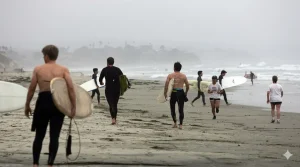
Learn Ocean Safety Before You Surf
Ocean safety matters more than technique in the beginning.
A beginner who can pop up but does not understand currents, safe conditions, or crowd positioning is at more risk than a beginner who cannot stand yet.
Basic Surf Safety Rules
- Surf at lifeguarded beaches when possible
- Avoid large, hollow, or fast-breaking waves
- Do not surf alone during your first sessions
- Stay away from crowded lineups
- Keep your board under control
- Do not paddle out where conditions feel overwhelming
Rip Current Safety
Every beginner should know this:
- Do not swim straight back to shore against a rip current
- Swim parallel to shore or at an angle to escape
- If you cannot get out, float and signal for help
That single piece of knowledge can prevent panic and may save your life.
Best Surf Conditions for Beginners
Not every surf day is beginner-friendly.
The best beginner conditions include:
- Small waves
- Gentle whitewater or soft peeling waves
- Sandy bottom
- Light wind
- Uncrowded beach
- No obvious strong currents
In simple words, you want forgiving conditions, not exciting ones.
Best Waves for First-Timers
A good beginner wave gives you time:
- Time to paddle
- Time to feel the push
- Time to stand up
- Time to react
That is why soft-top longboards work so well in small surf. They help you catch waves earlier and more easily.
Avoid:
- Reef breaks
- Powerful shorebreak
- Advanced surf spots
- Heavy or fast waves
Step-by-Step Guide to Learn Surfing
Step 1: Watch the Ocean First
Before entering the water, spend 10 to 15 minutes watching the surf.
Look for:
- Where the waves break
- Where beginners are entering
- Where stronger surfers are sitting
- Whether there is a safe paddle-out channel
- Whether the current is moving people left or right
Good surfers do not rush this part.
Step 2: Practice the Pop-Up on Land
Before you try your first wave, practice standing up on the sand.
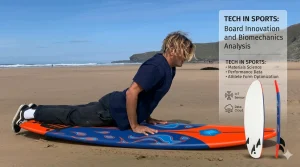
Basic Pop-Up Technique
- Lie on your stomach like you are on the board
- Place your hands near your ribs or shoulders
- Push your upper body up
- Bring your feet underneath you quickly
- Land with bent knees and chest up
Your stance should feel athletic and relaxed.
Biggest Pop-Up Mistake
The most common mistake is going to your knees first. That slows the movement and usually ruins your balance. Try to go from lying down to standing in one smooth motion.

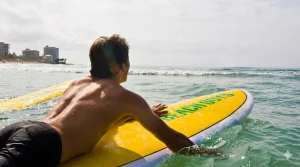
Step 3: Learn Correct Paddling Position
If the front of your board lifts too high, you are too far back. If the nose digs into the water, you are too far forward.
The ideal position is where the board glides flat across the water. Your chest should be slightly lifted and your strokes should be long and smooth.
Good paddling often decides whether you catch the wave or miss it.
Step 4: Start in Whitewater
Many beginners think they should go straight to unbroken green waves. Usually, that is a mistake.
A better beginner progression is:
- Start by riding whitewater straight toward shore
- Learn balance and board control
- Get comfortable falling safely
- Move to mellow green waves later
Whitewater builds confidence without requiring advanced wave reading.
Step 5: Catch Your First Wave
When a small wave or whitewater comes toward you:
- Point your board toward the shore
- Paddle with commitment
- Feel the board begin to accelerate
- Take a few final strong strokes
- Pop up in one motion
Beginners often stop paddling too early. Keep paddling until the wave clearly carries you.
Step 6: Stand Up and Stay Low
Once you pop up:
- Bend your knees
- Keep your chest up
- Look forward
- Use your arms for balance
- Stay relaxed
Do not stare at your feet. Looking down often causes you to lose balance.
Step 7: Learn How to Fall Safely
When you wipe out:
- Fall away from the board if possible
- Protect your head with your arms
- Come up carefully
- Never dive headfirst into shallow water
Always remember that your board may still be attached to you with the leash.
Surf Etiquette Every Beginner Should Know
If you want to progress faster and stay safe, learn surf etiquette early.
Surf etiquette is not about image. It is about respect and safety.
Core Surf Etiquette Rules
- The surfer closest to the peak usually has priority
- Always look before paddling for a wave
- Do not drop in on someone already riding
- Do not paddle through the path of a surfer on a wave
- Be polite when you make mistakes
- Move to an easier break if the lineup is advanced and crowded
Learning etiquette early helps prevent collisions and conflict.

Best Surfboard for Beginners
This is where many beginners go wrong.
They buy a shortboard because experienced surfers ride shortboards. But shortboards require better timing, faster footwork, and more precise paddling.
They are fun later, not first.
Best Beginner Board Setup
For most adults, the ideal first board is:
- Soft-top construction
- 8 to 9 feet long
- Wide outline
- Rounded nose
- High volume
This setup makes it easier to paddle, easier to catch waves, easier to stand, and safer during wipeouts.
Should You Take a Surf Lesson or Teach Yourself?
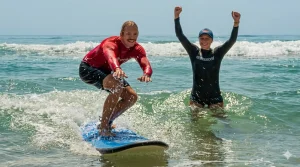
If your budget allows it, take at least one lesson.
A good surf instructor can fix mistakes that would otherwise slow your progress for weeks, such as:
- Wrong board position
- Poor paddling technique
- Bad pop-up habits
- Unsafe lineup behavior
- Choosing the wrong waves
Self-teaching is possible, but one or two lessons can save a lot of frustration.
Best Approach for Most Beginners
- Take one or two beginner lessons
- Practice on your own in beginner-friendly conditions
That is usually the most effective combination.
How Often Should Beginners Surf?
Consistency matters more than intensity.
One long surf every few weeks usually leads to slow progress. Shorter and more regular sessions work better because your body remembers the movement patterns.
A practical beginner routine is to surf as often as you can while keeping sessions manageable enough to focus on technique.
Common Beginner Surfing Mistakes
Every beginner makes mistakes. The important thing is noticing them early.
Most Common Mistakes
- Using a board that is too small
- Paddling too late
- Looking down
- Standing too upright
- Surfing waves that are too powerful
- Ignoring surf etiquette
- Expecting instant results
Surfing has a steep learning curve, but regular practice creates steady progress.
How Long Does It Take to Learn Surfing?
It depends on what you mean by “learn.”
If you mean standing up and riding whitewater for a few seconds, many beginners can do that in a first lesson under good conditions.
If you mean:
- Catching your own green waves
- Reading surf conditions
- Riding down the line
- Staying calm in different surf
Then it takes much longer.
Realistic Beginner Milestones
- First session: safety basics, board handling, first assisted ride
- Early stage: standing more consistently in whitewater
- Next stage: angling takeoffs and cleaner rides
- Long-term stage: reading waves independently and choosing better sections
Surfing rewards patience.
Should You Rent or Buy First?
For most beginners, renting is the better choice at first.
Why Renting First Makes Sense
- You can try different board sizes
- You can see whether you enjoy surfing
- You avoid buying the wrong board too early
- Your starting cost stays lower
Buying makes more sense when:
- You know you will surf regularly
- You understand which board size suits you
- You know your local conditions
- You know whether you need a wetsuit often
If you buy early, buy for learning, not for appearance.
Dry-Land Training That Helps You Surf Better
You do not need a complicated gym plan, but some dry-land work helps a lot.

Best Practice Outside the Water
- Pop-up repetitions on a yoga mat
- Shoulder mobility work
- Push-ups
- Planks
- Squats
- Balance work
- Swimming if possible
The goal is not bodybuilding. The goal is better paddle endurance, core control, and smoother movement.
What a Great First Surf Session Looks Like
A great first surf session is not about riding ten perfect waves.
A great first session looks like this:
- You choose safe conditions
- You know where not to paddle
- You stay calm
- You catch one or two waves
- You feel the board glide
- You stand up at least once
- You finish excited to come back
That is success.
Beginners often think falling means failure. In surfing, falling means you are learning.
Final Beginner Surfing Checklist
Before your first real session, ask yourself:
- Is this a beginner-friendly beach?
- Are the waves small and manageable?
- Am I using a soft-top board?
- Do I know what to do in a rip current?
- Do I understand wave priority?
- Have I practiced the pop-up on land?
- Am I okay with looking awkward today?
If yes, you are ready.
FAQ: Best Way to Start Surfing for Beginners
What is the best age to start surfing?
There is no perfect age. Kids, teenagers, and adults can all learn. Water confidence and safe conditions matter more than age.
Do beginners need a longboard?
Most beginners do better on a long soft-top board because it offers better stability, easier paddling, and simpler wave-catching.
Is surfing hard to learn?
Yes, it is harder than it looks. But it is absolutely learnable if you start with the right board, small waves, and regular practice.
Should I take a surf lesson first?
Yes, if possible. A lesson helps you learn safety, board handling, pop-up basics, and etiquette correctly from the beginning.
What should I do if I get caught in a rip current?
Stay calm. Do not swim straight against it. Swim parallel to shore or at an angle. If you cannot escape, float and signal for help.
Do beginners need a wetsuit?
Only if local water temperature and weather require it. In warm water, a rash guard may be enough. In cooler water, a wetsuit is usually necessary.
How can I improve faster as a beginner surfer?
Use the right board, surf beginner-friendly conditions, practice your pop-up on land, learn etiquette early, and surf consistently.
Conclusion
The best way to start surfing for beginners is to make it easier before you make it exciting.
That means:
- Choose the right board
- Choose the right beach
- Choose the right wave size
- Choose safety over ego
Start on a soft-top longboard. Learn ocean safety first. Respect surf etiquette from day one. Practice the pop-up until it feels natural. Most importantly, keep showing up.
Because the real secret to learning how to surf is not talent.
It is repetition, smart progression, and staying humble long enough for the ocean to teach you.
Key Takeaways
- Start with a soft-top longboard, not a shortboard
- Choose a mellow sandy beach with small waves
- Learn rip current safety before paddling out
- Practice the pop-up on land before your first session
- Learn surf etiquette early
- Rent first if you are still figuring out your board and local conditions
- Consistency matters more than one perfect surf day