Most people switching to natural cleaning products have the same quiet fear: that they’ll end up with a spotless conscience and a dirty house. The market doesn’t help. Walk down any cleaning aisle and you’ll see labels screaming “natural,” “eco-safe,” and “non-toxic” on products that share almost nothing in common ingredient-wise. Many are guilty of greenwashing. The other half work just fine, but nobody explains why or for what job.
This guide cuts through that noise. It covers what the 2026 testing data actually shows about effectiveness, which store-bought natural cleaning products hold up by room, three DIY recipes worth your time (with exact ratios), the ingredients that genuinely disinfect versus the ones that just smell clean, and how to read a label without getting fooled. If you’re building a complete cleaning routine around non-toxic cleaning products, Qurabox’s home care guides cover that room by room with product lists included. Start here to get the product knowledge right first.
Do natural cleaning products actually work as well as chemical ones?
The honest answer is: it depends on the job. For everyday grease and countertop grime, the performance gap between top natural sprays and conventional all-purpose cleaners is smaller than most people expect. Independent testing shows citric-acid-based and plant-surfactant formulas perform comparably to standard chemical cleaners on kitchen grease, food residue, and soap scum. Some citric-acid sprays even leave fewer streaks than harsher alternatives.
The key finding worth repeating is this: performance tracks with formulation, not with “natural” branding. A well-formulated green cleaner designed specifically for kitchen grease will outperform a generic “eco spray” every time. The best natural cleaning products are job-specific, not just generally green.
Where things get honest is bacteria. General-purpose plant-based cleaners clean surfaces mechanically, but they don’t disinfect unless they contain an EPA-registered active ingredient. Consumer Reports draws a clear line here: cleaning removes bacteria physically, while killing bacteria requires hydrogen peroxide, ethanol, or citric acid at effective concentrations. A natural cleaner that hits 99.1% E. coli reduction sounds impressive until you see that a hydrogen-peroxide-based formula hits 99.8% on the same test. If you’re cleaning up after raw meat or managing illness in your home, the active ingredient on the label matters more than the brand story.
DIY natural cleaners worth making at home
The three recipes below are specific and tested, not vague “mix some vinegar and water” suggestions with no ratios attached. For more tested do-it-yourself options, see the Safest and Most Effective Natural Cleaners You Can Make at Home, Qurabox.
All-purpose spray for counters, tiles, and appliances
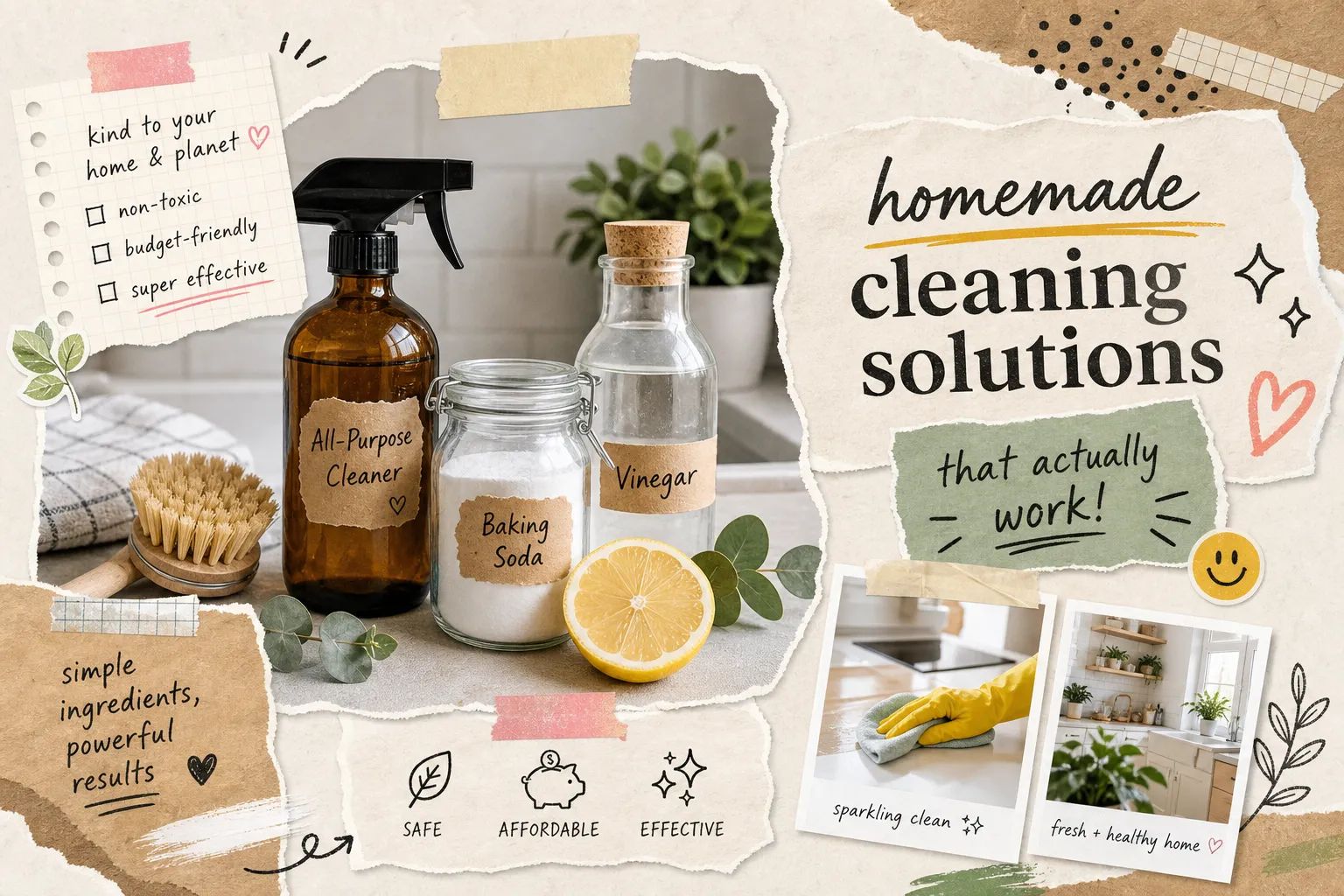
The base recipe is 1 part white vinegar to 4 parts distilled water, plus 10 to 20 drops of lemon or tea tree essential oil for scent and light antimicrobial effect. For heavier grease, use equal parts vinegar and water and add 1 teaspoon of castile soap. This handles food residue, light grease, and general countertop grime reliably well.
Be clear about what this is: a cleaner, not a disinfectant. It won’t kill pathogens at the level an EPA-registered product will. For everyday maintenance, it does the job well. For surfaces that need actual germ-killing, use the alcohol formula below.
Streak-free glass and mirror cleaner
Combine 1/4 cup white vinegar, 1/4 cup isopropyl alcohol, 1 tablespoon cornstarch, and 2 cups distilled water in a spray bottle. The cornstarch is the part most people skip, and it’s the part that actually prevents streaking. It works by absorbing excess liquid before it dries into a film on the glass surface.
Shake the bottle before every single use because cornstarch settles quickly. Wipe with a lint-free microfiber cloth rather than a paper towel. Paper towels typically leave more lint residue on glass; microfiber cloths pull it away cleanly.
A disinfectant that actually disinfects
For real surface disinfection on hard, non-porous surfaces, the formula is 75% rubbing alcohol to 25% water, that’s three parts rubbing alcohol to one part water. It evaporates fast, which means short contact time. If you need longer dwell time on a surface, note that a more diluted mix will slow evaporation but also reduces microbicidal effectiveness, so use the 75% formula whenever reliable disinfection is the goal.
The vinegar-based alternative (3 tablespoons white vinegar, 1/2 teaspoon washing soda, 1/2 teaspoon castile soap, 2 cups hot water) is a strong general-purpose cleaning formula. It’s effective for cleaning, but it’s the alcohol formula that delivers true disinfection. Keep both in your kit and know which job calls for which.
Best natural cleaning products by room
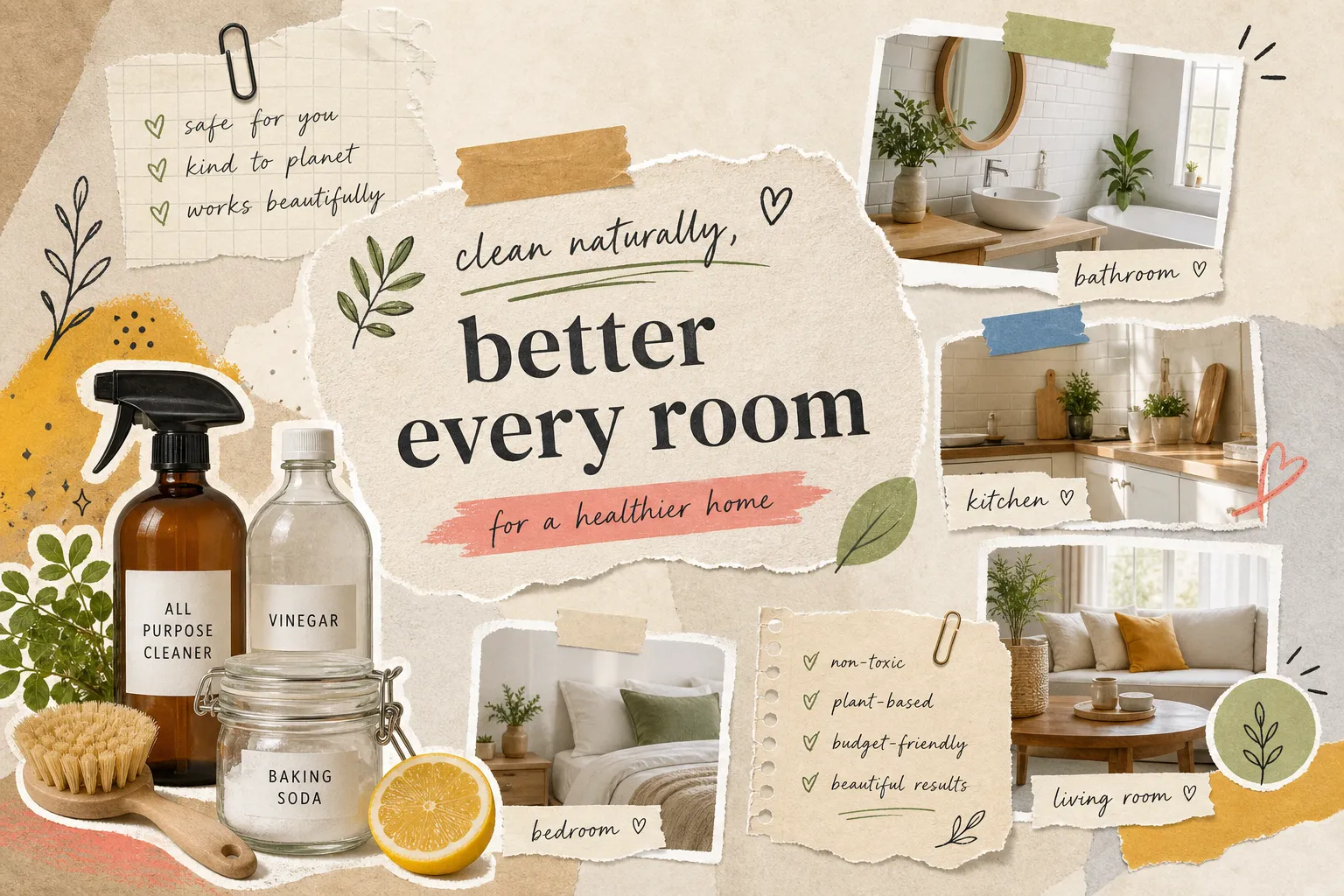
These picks are organized by where you’ll use them, tied to tested ingredients and certifications rather than just good-looking packaging.
Kitchen and multi-surface picks
Puracy Multi-Surface Cleaner is Zenda Guide’s (an independent product-testing publication) top-rated ready-to-use spray for 2026, built on plant-derived surfactants with no harsh actives. It handles food grease and everyday countertop messes without residue and without the harsh fumes of conventional degreasers. For households that want a fragrance-free whole-home system, the Branch Basics Premium Starter Kit is a strong option: concentrate format reduces plastic waste, and the formula works across kitchen surfaces without needing separate products for each job.
One practical note on concentrate systems: the upfront cost is higher, but the per-bottle cost typically works out lower over time. For budget-conscious households making a longer-term switch to green cleaning supplies, it’s worth running the math before dismissing it.
Bathroom and floor cleaners
Better Life Floor Cleaner is rated by Zenda Guide as the top non-toxic floor option for hard surfaces in 2026, safe on tile, laminate, and sealed hardwood. Mrs. Meyer’s Cleaner has been tested by Good Housekeeping for floors and high-touch bathroom surfaces and consistently performs well on soap scum and hard water buildup. It’s also widely available, which matters when you’re trying to build a routine you’ll actually maintain.
For bathroom disinfection specifically, skip the generic “natural bathroom spray” category and look for hydrogen-peroxide-based or citric-acid-based formulas with an EPA Safer Choice mark. Those are the organic cleaning products that clean and reduce pathogen load at the same time, which is what you actually need in a bathroom.
Laundry options without harsh chemicals
ECOS Hypoallergenic Laundry Detergent is the top plant-based pick for sensitive-skin households: no optical brighteners, no synthetic fragrance, and hypoallergenic across the formula. Puracy Natural Laundry Detergent is the stronger performer on actual stains, using plant-derived enzymes to do the lifting rather than relying on chemical brightness agents to mask the problem.
If you want to build a full laundry routine around chemical-free cleaners, including fabric softener alternatives and stain pre-treatment, Natural Cleaners: What They Are and How to Use Them, Qurabox covers that specifically.
Ingredients that disinfect versus ones that are mostly marketing
Knowing what’s in the bottle lets you evaluate any product on a shelf, not just the ones listed here.
Ingredients that actually deliver germ-killing performance
- Hydrogen peroxide (3% or higher): A reliable disinfecting agent cited by Consumer Reports as a safer active ingredient. It should appear as a primary ingredient, not just a trace addition buried in the formula.
- Ethanol at least 70% or isopropyl alcohol: Effective disinfection at correct concentration on hard, non-porous surfaces. This is what powers reliable DIY disinfectants.
- Citric acid at effective concentration: EPA-listed safer disinfecting active with proven action against bacteria and mold. Found in several certified eco-friendly sprays that also clean well.
“Natural” claims that are mostly hype
Vinegar is genuinely useful for cleaning, cutting grease, and descaling, but it’s not a standard disinfectant. The Oregon State University Extension and the University of Arkansas Cooperative Extension both classify it as a cleaner, not a primary disinfectant. Lemon juice and essential oils (tea tree, lavender) have mild antimicrobial properties but don’t come close to EPA-registered disinfecting performance. Baking soda is an excellent deodorizer and mild abrasive scrub with no disinfecting action under any standard definition.
The practical shopping rule: if the label doesn’t specify an EPA-registered disinfecting active ingredient and a germ-killing contact time, you’re holding a cleaner, not a disinfectant. That’s fine for most jobs. Just don’t confuse the two.
What to never mix, and which surfaces to protect
This is the section most natural cleaning guides skip or bury at the end. Don’t skip it.
Dangerous combinations to keep out of the same bottle
- Vinegar + bleach: Creates chlorine gas. Toxic even in small amounts. No safe ratio exists for this combination.
- Vinegar + hydrogen peroxide (mixed in one bottle): Creates peracetic acid, a corrosive compound that irritates skin, eyes, and lungs. Using them separately on the same surface is fine. Combining them in a spray bottle is not.
- Castile soap + vinegar: They neutralize each other and leave a greasy residue with significantly reduced cleaning performance. This combination shows up in DIY recipes constantly and it doesn’t work.
- Rubbing alcohol + bleach: Produces chloroform and other toxic compounds. No household scenario makes this combination safe.
Surfaces where natural cleaners cause real damage
Vinegar and citric acid are acids. Natural stone (granite, marble, limestone) reacts to acid by etching, which creates dull spots that can’t be polished out at home. Use a pH-neutral stone cleaner or mild dish soap with warm water on any natural stone surface. Even diluted vinegar will damage it over time.
On waxed or unsealed wood, vinegar strips the protective coating gradually. A diluted castile soap solution or a product formulated specifically for wood is the safer option. For grout, repeated vinegar use degrades the sealant from the inside, making grout chalky and porous. Hydrogen peroxide is a less acidic alternative that is far less likely to damage grout sealant than acidic cleaners such as vinegar, making it the better choice for grout cleaning among natural household cleaners.
How to shop smarter: certifications that actually mean something
You don’t need to memorize every ingredient to shop well. You need to know which labels represent actual third-party review and which ones are just marketing copy.
Certifications backed by real ingredient review
- EPA Safer Choice is the most reliable consumer-facing standard for cleaning products in the United States. The EPA reviews every ingredient in a certified product against health and environmental criteria, not just the marketing claims on the label.
- Green Seal covers toxicity, VOC limits, and sustainable packaging through a rigorous third-party process.
- UL ECOLOGO is an independent lifecycle-based certification that examines human health impact, pollution reduction, and chemical safety across the product’s full lifespan.
- Made Safe functions as a solid secondary screen for broader household product safety.
Labels that sound good but don’t guarantee much
The words “natural,” “eco-safe,” “non-toxic,” and “green” on a label are unregulated. Any brand can print them without third-party review of any kind. USDA Organic is a meaningful standard for food; it’s not a relevant certification for cleaning product safety. Cruelty-free addresses animal testing only, which is a legitimate personal value but says nothing about ingredient safety or environmental impact.
The bottom-line rule: start with EPA Safer Choice, Green Seal, or UL ECOLOGO. Use Made Safe as a helpful extra. Treat everything else as advertising noise unless it’s backed by one of those three.
Start with one swap this week
The core finding from all the 2026 testing is this: natural cleaning products work well for everyday cleaning when you choose by formulation and job, not by branding and label language. The disinfection gap between natural and chemical cleaners is real, but it’s manageable once you know which active ingredients to look for and when to reach for the alcohol spray instead of the vinegar bottle. For a deeper comparison of approaches, see Natural Home Cleaners vs Chemical Products: Which Is Better?, Qurabox.
Three rules to shop by: use EPA Safer Choice or Green Seal for store-bought picks, the 75% alcohol formula when real surface disinfection is the goal, and the vinegar-based all-purpose spray for everyday maintenance across counters, tiles, and appliances. That covers the vast majority of what a household cleaning routine requires.
Don’t overhaul your cleaning cabinet in one weekend. Pick one room, swap one product, and build from there. If you want a complete room-by-room cleaning routine built around these natural cleaning products, Qurabox’s home care guides walk through exactly that, with specific product lists, schedules, and practical tips for every area of your home. Start with the kitchen or the bathroom, get comfortable with what works, and expand from there.