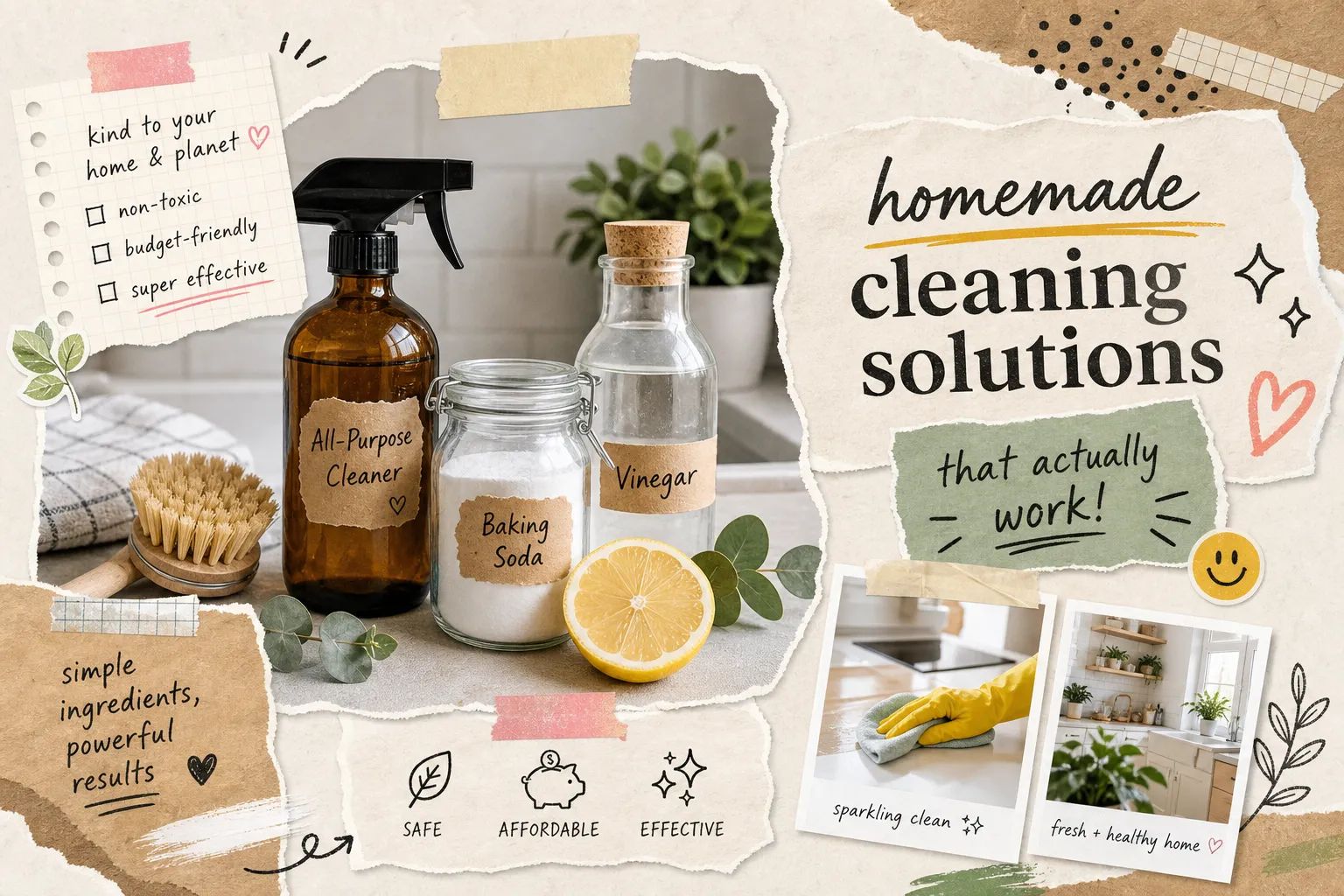
If you’ve ever wondered what is the safest and most effective natural cleaner you can make at home, you’re in good company. A growing number of parents, renters, and health-conscious households are asking whether the surfaces where their families prepare food and play on the floor really need a cocktail of synthetic surfactants and preservatives. The honest answer is no, not for everyday maintenance cleaning. There are well-tested, family-safe DIY non-toxic cleaners you can make in your own kitchen, and the research behind them is solid.
That said, there is no single magic formula that works everywhere. The right homemade natural cleaner depends on what you are cleaning, the surface it sits on, and what you are actually trying to accomplish. At Qurabox, every natural cleaning recipe we recommend passes one test before it earns a place on the site: it must be safe enough for a household with children and pets. This guide walks you through the top three recipes with exact proportions, the chemistry behind why they work, which surfaces they will damage, the combinations you should never attempt, and the situations where you should set natural cleaners aside entirely.
Why your ingredient choices define how well any natural cleaner works
The cleaning power of any homemade natural cleaner comes down to basic chemistry: acidity, surfactant action, mild abrasion, or oxidation. Each ingredient does a specific job. Using the wrong one for the task means you are either not cleaning effectively or potentially damaging the surface you are trying to protect. Understanding what each component does is the difference between an all-purpose natural cleaner recipe that works and one that looks good in a spray bottle but does very little.
The role of acidity in a vinegar-based cleaner
White vinegar contains acetic acid, which is effective at dissolving mineral deposits, limescale, and light surface residue. It works well as a routine maintenance cleaner on compatible surfaces. Where it falls short is grease and microbial control: vinegar is not a reliable degreaser, and its antibacterial action is partial at best. It should not be counted on to kill pathogens. The CDC is clear that vinegar does not meet the threshold for disinfection against viruses like COVID-19.
How castile soap lifts grease and dirt at the molecular level
Plant-based castile soap works through surfactant chemistry. One end of the soap molecule binds to oil and grease; the other binds to water. When you scrub and rinse, the grease comes with it. This makes castile soap a far better choice than vinegar alone when you are dealing with a greasy stovetop or sticky kitchen surface. It is also gentle enough for frequent use on most sealed surfaces without breaking down finishes over time.
What hydrogen peroxide and baking soda bring to the table
Hydrogen peroxide at 3% concentration is the most powerful disinfecting option in the DIY non-toxic cleaner toolkit. Its oxidizing action disrupts microbial cell walls and is effective against many common household bacteria and viruses when given adequate contact time. Baking soda serves a completely different purpose: it is a mild alkaline abrasive that helps scrub away buildup without scratching most surfaces. These two ingredients are not interchangeable, and as you will see below, they should never be carelessly mixed with other ingredients.
What is the safest and most effective natural cleaner I can make at home? Here are three proven recipes.
These green cleaning recipes are drawn from university extension service guidance and established health organization recommendations. Each one has a defined use case, and using the right recipe for the right job is exactly what makes this system work.
1. All-purpose vinegar and castile soap spray (everyday surfaces)
Recipe: 1/4 cup white vinegar + 1 teaspoon liquid castile soap + 12 to 20 drops essential oil (optional) + 2 cups distilled or previously boiled water. Combine in a spray bottle and shake before each use. Using distilled water extends shelf life and prevents bacterial contamination from tap water minerals. Tea tree, eucalyptus, or lavender essential oils add documented antimicrobial properties and make the spray smell far better than vinegar alone.
This eco-friendly cleaning solution works well on glass, sealed tile, bathroom fixtures, and most finished hard surfaces. Shake before each use because the soap and vinegar are not fully miscible at this ratio. One important clarification: this is a cleaner, not a disinfectant. It removes dirt, grime, and light residue effectively but does not reliably kill pathogens. For everyday upkeep, it is more than sufficient.
2. Baking soda paste for tougher scrubbing jobs
Recipe: 1/2 cup baking soda + 2 to 4 tablespoons liquid castile soap, added gradually until you reach a thick paste. Apply with a damp sponge, scrub, then rinse thoroughly. This paste works well on sinks, bathtubs, grout lines, and oven interiors where you need mild abrasion without harsh chemicals. It is one of the most versatile tools in a natural cleaning kit.
Two things to watch for: baking soda leaves a visible white residue if not fully rinsed, especially in grout and crevices, and that residue builds up over time. It should also be kept away from polished stone surfaces and any delicate coating. The mild abrasion that makes it useful on ceramic and porcelain is the same property that can dull a polished marble countertop.
3. Hydrogen peroxide disinfecting spray (high-touch surfaces)
Recipe: 3% hydrogen peroxide, straight from the pharmacy bottle, transferred into a dark spray bottle. No dilution needed. Apply to hard, nonporous surfaces and allow it to sit for a minimum of 5 minutes before wiping. For virus reduction, extend contact time to 10 minutes. The CDC confirms that 3% hydrogen peroxide is an effective disinfectant on inanimate hard surfaces when contact time is respected.
Do not attempt to use higher concentrations. Concentrations above 3% are not safe for home use and carry real risks of skin and eye injury. The 3% bottles sold at every pharmacy are exactly what you need. Store this spray in a dark or opaque bottle away from light and heat, and use it within one to two months of transferring it, since the active ingredient degrades once exposed to air and light.
A surface-by-surface guide to using each cleaner safely
Applying the wrong cleaner to the wrong surface can cause permanent damage, and “natural” does not mean “safe everywhere.” This is the part most online cleaning guides skip, and it matters most when you have stone countertops or hardwood floors.
Surfaces that vinegar and acid-based cleaners will damage
Marble and granite are the two surfaces where vinegar causes the most visible harm. Acetic acid etches and dulls both, often permanently. Sealed wood is also at risk: repeated vinegar exposure strips the finish over time, leaving wood vulnerable to moisture damage. Stainless steel appliances can corrode with regular vinegar contact. Electronics and screens should never be cleaned with any acid-based solution, since vinegar can degrade screen coatings and seep into gaps around buttons and ports.
Where baking soda becomes a risk
Baking soda is gentle by most measures, but it is still an abrasive. Polished stone surfaces, including marble and high-gloss granite, can show micro-scratches after scrubbing with baking soda paste, and delicate painted surfaces carry the same risk. There is also a practical residue issue: baking soda paste can pack into seams, grout gaps, and textured surfaces if not rinsed completely, creating white buildup that gets harder to remove the longer it sits.
Safe pairings: what works well in kitchens, bathrooms, and tiled areas
For day-to-day use, here is the short version: the vinegar-castile spray works well on glass, sealed ceramic tile, and bathroom fixtures. A standalone castile soap solution handles greasy sealed surfaces in the kitchen. The hydrogen peroxide spray is the right choice for toilet seats, hard bathroom surfaces, and cutting boards used for produce, spray, let dry, and skip the rinse for maximum contact time. The baking soda paste belongs in the sink, the tub, and the oven interior where scrubbing power is needed and the surface can handle it.
Ingredient combinations you should never mix at home
A number of common household cleaning ingredients produce toxic gases or corrosive compounds when combined, and the combinations that catch most people off guard are not the obvious ones. Pay close attention to this section before you start mixing anything.
Vinegar plus hydrogen peroxide: not as harmless as it sounds
Mixing these two creates peracetic acid, a corrosive compound that irritates skin, eyes, and the respiratory tract. Many people assume that combining two “natural” ingredients is automatically safe. It is not. Both vinegar and hydrogen peroxide are effective on their own; use them separately on a surface, never combined in the same spray bottle. If you want to apply both to the same area, apply one, wipe it dry, then apply the other.
Bleach combined with acids, ammonia, or alcohol
Bleach is not a natural cleaner, but many households use it alongside DIY products, so it is worth covering the most dangerous pairings. Consider these three combinations off-limits entirely:
- Bleach + vinegar or lemon juice: releases chlorine gas, which burns the eyes, nose, and respiratory tract.
- Bleach + ammonia (present in many glass cleaners): produces chloramine gas, causing coughing, chest pain, and shortness of breath.
- Bleach + rubbing alcohol: can form chloroform, which causes dizziness, nausea, and at high exposures, unconsciousness.
Keep bleach completely separate from any other cleaning product unless the label explicitly states otherwise.
Vinegar plus castile soap: not toxic, but counterproductive
This combination does not produce a dangerous compound, but it does produce a clumpy, ineffective mess. Vinegar’s acidity breaks down the alkaline base of castile soap through an acid-base reaction, converting the soap back toward fatty acids and leaving a goopy, oily residue. The all-purpose recipe in this guide combines the two in a diluted spray at a ratio that minimizes this reaction. Mixing them at high concentrations wastes both ingredients and leaves a film on the surface. Make small batches and keep concentrations consistent with the recipe above.
When a natural cleaner isn’t strong enough
Honest guidance requires acknowledging real limitations. Natural cleaners are excellent for everyday maintenance, and for most households on most days, the three recipes above cover everything needed. But there are situations where relying on a DIY formula is the wrong call.
Situations that call for an EPA-registered disinfectant
Some scenarios call for a step up from even the best homemade natural cleaner. If someone in your home has had a stomach bug, respiratory infection, or COVID-19, an EPA-registered disinfectant is the responsible choice rather than a DIY formula. The same applies to surfaces that came into contact with raw poultry or meat, particularly on porous materials, and to routine bathroom cleaning in households where someone is immunocompromised. Whatever product you choose, the label contact time matters: most disinfectants require the surface to stay visibly wet for a set period to be effective.
The practical disinfection threshold for health-conscious households
A clear rule: for everyday cleaning and routine maintenance, the recipes in this guide are sufficient and safe. When illness is present, cross-contamination risk is high, or reliable germ reduction is genuinely needed, switch to an EPA-registered product and follow the instructions. Natural cleaners are an excellent foundation for a low-toxin household. They are not a substitute for actual disinfection when it counts. Using the right tool for the right situation is not a compromise on values; it is just good judgment.
How to store your homemade cleaners so they stay effective
A well-formulated recipe stored incorrectly degrades quickly. Container choice and labeling are practical details that determine whether your cleaner is still doing its job a week after you made it.
Container choice and labeling
Store hydrogen peroxide spray in a dark or opaque bottle. A clear bottle sitting on a sunny windowsill will lose potency within days, since the active ingredient is highly light-sensitive. Vinegar and castile soap blends work fine in standard spray bottles. Every container should be labeled with the recipe name, the date it was made, and any surface cautions. In households with children, that labeling step is not optional.
Shelf life expectations for each recipe
The all-purpose vinegar spray lasts two to three weeks; using distilled water instead of tap water pushes it toward the longer end by reducing bacterial contamination from the start. The baking soda paste should be made fresh as needed since it does not store well and loses texture quickly. Once transferred from the original bottle into a dark spray bottle, the hydrogen peroxide spray remains effective for one to two months but weakens faster when exposed to light and air. Do not assume a homemade cleaner sitting in a cabinet for three months is still working. If it looks or smells off, make a fresh batch.
The short version: safest and most effective natural cleaners you can make at home
Knowing what is the safest and most effective natural cleaner you can make at home comes down to matching the right recipe to the right job. The all-purpose vinegar-castile spray handles daily maintenance on glass, tile, and sealed surfaces. The baking soda paste tackles scrubbing jobs in sinks, tubs, and ovens. The 3% hydrogen peroxide spray disinfects high-touch hard surfaces when contact time is respected. Together, these three green cleaning recipes cover the vast majority of household cleaning needs without mystery ingredients or harsh fumes.
The surface-compatibility rules and the dangerous combinations covered above are not fine print: they are the difference between a cleaner that works safely and one that causes damage or creates a hazard. Natural ingredients deserve the same respect as any other cleaning product, which means understanding what they can and cannot do. At Qurabox, every practical cleaning guide we publish is built around that standard: the recipe has to work in a real household before we recommend it. If you found this guide useful, explore our other natural cleaning and home care guides for the same depth of coverage across every room in your home: Best Way to Organize a Cleaning Routine for a Small Home and The Ultimate House Cleaning Routine for Every Home.