Small homes have a sneaky reputation. On paper, a studio or one-bedroom should be easier to clean than a four-bedroom house. Less square footage, fewer surfaces, shorter distances between rooms. In practice, though, a small apartment can go from perfectly tidy to visually overwhelming in a single afternoon. One pair of shoes by the door, a stack of mail on the counter, and a dish in the sink, and suddenly the whole space feels chaotic. That’s not a you problem. It’s a design reality of compact living.
So what is the best way to organize a cleaning routine for a small home? It’s not about scrubbing harder or blocking off your entire Saturday. What actually works in a compact space is a system built around frequency and efficiency, not thoroughness. A daily 10-minute reset, a spread-out weekly rotation, a simple room-by-room checklist, and a minimal supply kit. That’s the structure this guide walks you through. Start today; adjust as you go.
Why small homes need a different cleaning approach
In a large home, clutter can gather in a back bedroom or a corner of the dining room without affecting how the rest of the space feels. In a studio or one-bedroom, every surface is in your sightline at all times. One pile on the kitchen counter doesn’t stay in the kitchen; it visually dominates the entire room. The psychological weight of that mess is disproportionate to how much space it actually takes up, and that’s why small spaces often feel harder to maintain, not easier.
Standard cleaning schedules make this worse. Most are designed with larger homes in mind, assuming you have a dedicated laundry room, separate rooms to vacuum, and enough storage to tuck things away between sessions. In a compact apartment, you don’t have that buffer. The answer isn’t to clean more aggressively or dedicate an entire Saturday to the task. The answer is to clean more often, in much shorter sessions, so buildup never gets a foothold.
The daily 10, 15 minute reset that prevents buildup
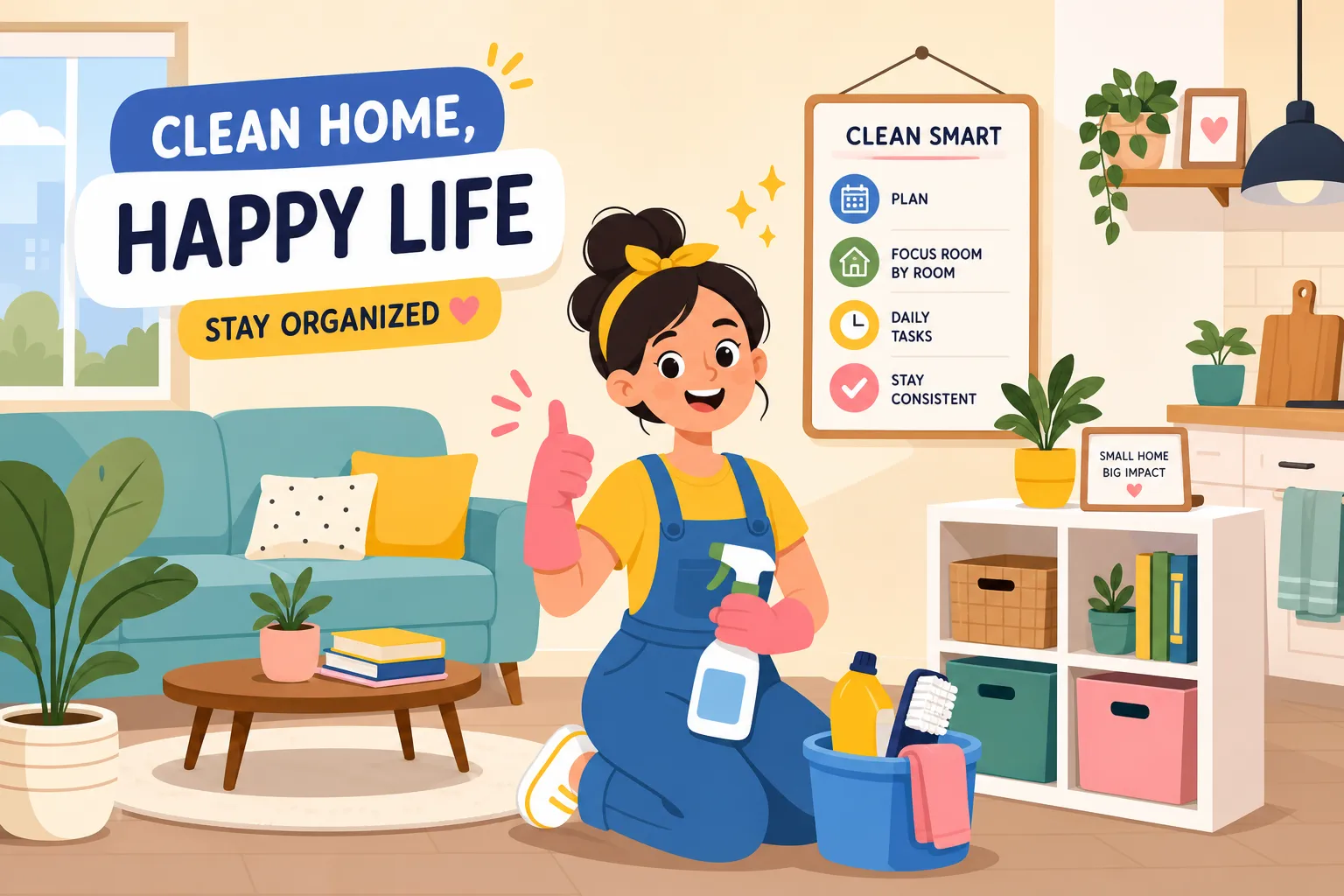
The single highest-impact change you can make is building a short daily reset into your small-space cleaning schedule. Five tasks, consistently done, are enough to keep a studio or one-bedroom from sliding into the kind of mess that takes an hour to recover from. Those five tasks are: make the bed, wash or load the dishes, wipe down kitchen counters, do a quick sweep or vacuum of high-traffic floors, and return any clutter to its designated spot. These are maintenance actions, not deep cleaning. The goal is keeping the baseline manageable.
The key to actually doing this every day is treating it as a timed event, not an open-ended task. Set a timer for 10 to 15 minutes and work until it goes off, not until the apartment feels perfect. This prevents the “while I’m at it” spiral where a quick counter wipe turns into reorganizing the pantry and cleaning behind the microwave. The 15-minute cleaning plan works precisely because it has a hard stop. Once you establish the habit, these five tasks start to feel automatic rather than like a decision you have to make each day.
Your weekly cleaning rotation for a studio or one-bedroom
The traditional “cleaning day” model, spending a couple of hours on Saturday doing everything at once, is exhausting, and it means your apartment is slowly declining all week until that single session rescues it. A more sustainable approach spreads weekly tasks across five or six days, with one or two focused tasks per day. Each individual day stays light, and no single session feels like a full apartment overhaul.
A practical weekly cleaning checklist for a small apartment looks like this:
- Monday: Dust and wipe surfaces
- Tuesday: Clean the bathroom
- Wednesday: Vacuum and mop floors
- Thursday: Laundry and bedding
- Friday: Wipe down kitchen appliances
- Sunday: Quick whole-home reset and trash
Each of those sessions takes 15 to 30 minutes at most. That’s genuinely manageable even on busy weeks. Keep in mind this is one workable rotation, your schedule may shift based on your household and habits, and that’s fine.
A studio or one-bedroom also lets you skip steps that larger homes require. Rather than making separate vacuum passes for a living room and a bedroom, one continuous pass covers both. If your floors are genuinely low-traffic, mopping every one to two weeks may be adequate, though higher-traffic areas benefit from a weekly pass. Give yourself permission to build a schedule around how your home actually gets used, not around what a generic house-cleaning checklist tells you is mandatory.
A condensed room-by-room checklist for small apartments
Kitchen and living area
In many studios, the kitchen and living area share the same footprint. Weekly tasks for that combined zone: wipe the stovetop, clean out the sink and drain, wipe down the microwave interior, clear the counter of anything that doesn’t belong there, and spot-clean the floor near the stove and prep area. For the living portion of the same space: dust surfaces, vacuum the rug and sofa, and clear any “landing zones” where remotes, bags, and mail tend to pile up. That’s where the real efficiency gains happen, you’re already in the space, so finish it completely before moving on.
Bathroom
The bathroom non-negotiables: scrub the toilet, wipe the sink and faucet, clean the mirror, spray and rinse the shower or tub, and swap out towels. Doing these weekly keeps the bathroom from ever reaching the point where it needs a deep scrub.
Bedroom
The bedroom short list: change bedsheets, vacuum or sweep the floor, wipe down nightstand surfaces, and reset any under-bed storage if you use it. Keep this checklist somewhere visible, pinned inside a cabinet or saved on your phone. The goal is to execute without thinking, not to mentally re-plan it each week. If your mattress needs attention, consult How to Clean a Mattress at Home (Step-by-Step) for stain removal and odor tips.
Multi-purpose tools and supplies that work harder in tight quarters
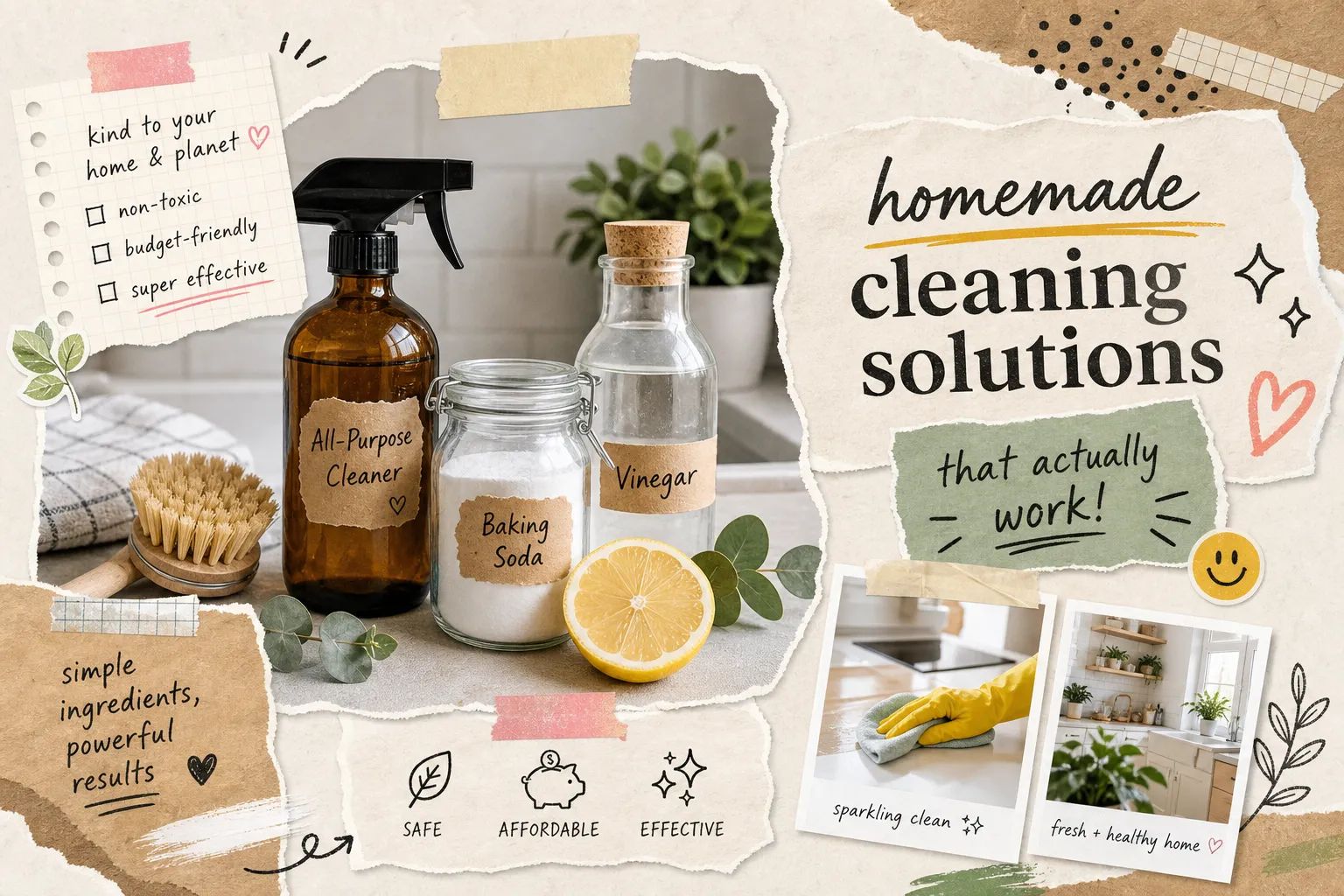
The most efficient cleaning supply setup for a small home fits in one portable caddy. You need: an all-purpose spray cleaner, white vinegar in a labeled spray bottle, baking soda, dish soap, microfiber cloths, a scrub brush, and a sponge. That combination handles counters, glass and mirrors, bathroom surfaces, stovetop messes, and most floor spills without requiring a cabinet full of specialized products. Keeping everything in one caddy also eliminates the “I need to find the cleaner first” delay that kills momentum before a session even starts. For product recommendations, check this roundup of the best multi-purpose cleaners for every surface.
For storage, go vertical. An over-door organizer, a hanging caddy mounted under the kitchen sink, or a slim rolling cart lets you store supplies without sacrificing shelf or cabinet space. You don’t need a separate product for every room, one good all-purpose cleaner handles most surfaces throughout the apartment. That said, keep separate cloths or sponges for kitchen and bathroom surfaces to avoid cross-contamination on food-prep areas. Fewer bottles mean less storage pressure, faster setup, and less time spent hunting for what you need. If you want a concise list of essential gear, consider this basic cleaning supplies checklist for small homes.
Decluttering habits that cut your actual cleaning time down
Clutter is the single biggest factor in how long cleaning actually takes. In a small space, every item on the floor or counter has to be moved before you can clean underneath or behind it. The one-in-one-out rule addresses this directly: any new item that comes into the home means something leaves. It keeps your total volume of stuff stable over time, which directly reduces how much there is to move, sort, and return during each cleaning session.
Vertical storage and multi-use furniture are cleaning strategies as much as they are organizational ones. Wall-mounted shelves, pegboards, and under-bed drawers lift items off the floor and surfaces, making sweeping and wiping dramatically faster. Multi-use pieces like ottomans with internal storage and bed frames with built-in drawers reduce the number of standalone items that become cleaning obstacles over time. Fewer items on the floor means every vacuum pass is faster. Fewer items on the counter means wiping surfaces takes seconds instead of minutes. For additional ideas on maximizing small spaces, see these small-space living hacks.
Once your cleaning routine is locked in, the natural next step is structuring your storage so the routine stays easy week after week. Qurabox’s home organization guides cover that deeper layer, from maximizing under-bed storage to building a kitchen setup that practically cleans itself.
Build the habit first, then fine-tune the schedule
If you’re asking what is the best way to organize a cleaning routine for a small home, the honest answer is: start simpler than you think you need to. The core system is a 10 to 15 minute daily reset built around five key tasks, a weekly rotation that spreads chores across the week so no day feels overwhelming, a condensed room-by-room checklist that removes decision fatigue, and a minimal supply kit that stores vertically and travels with you through the apartment. For a practical, manageable routine you can adapt week to week, see this manageable, realistic cleaning routine.
The goal isn’t a spotless apartment every day. It’s a system that keeps your small home livable without consuming your evenings or your weekends. Once the routine takes hold, you stop noticing the effort because it becomes background maintenance rather than a recurring project, which is exactly what a well-built small-space cleaning schedule should feel like.
Start with just the daily reset this week. Do the five tasks every day for seven days before layering in the weekly rotation. Building the habit comes first; perfecting the schedule comes second. Once both are in place, you’re likely to find that you’re spending less time cleaning overall, and your home will consistently feel more like a retreat than a project.
Frequently asked questions about cleaning routines for small homes
How often should I mop a small apartment?
For most small apartments, a weekly mop is a solid baseline. If your floors genuinely see light foot traffic, think a home office setup where you’re barefoot most of the day, every one to two weeks may be enough. High-traffic entryways and kitchen floors benefit from more frequent attention.
What is the best daily cleaning routine for a studio apartment?
Five tasks, done daily in 10 to 15 minutes: make the bed, handle the dishes, wipe kitchen counters, do a quick sweep or vacuum of main floors, and return clutter to its home. That’s the full daily reset for a small space.
How do I keep a small apartment clean without spending hours on it?
The key is frequency over intensity. Short daily resets prevent buildup so you never face a major cleaning project. Pair that with a spread-out weekly rotation, one or two tasks per day, and the total time investment stays manageable even during busy weeks.