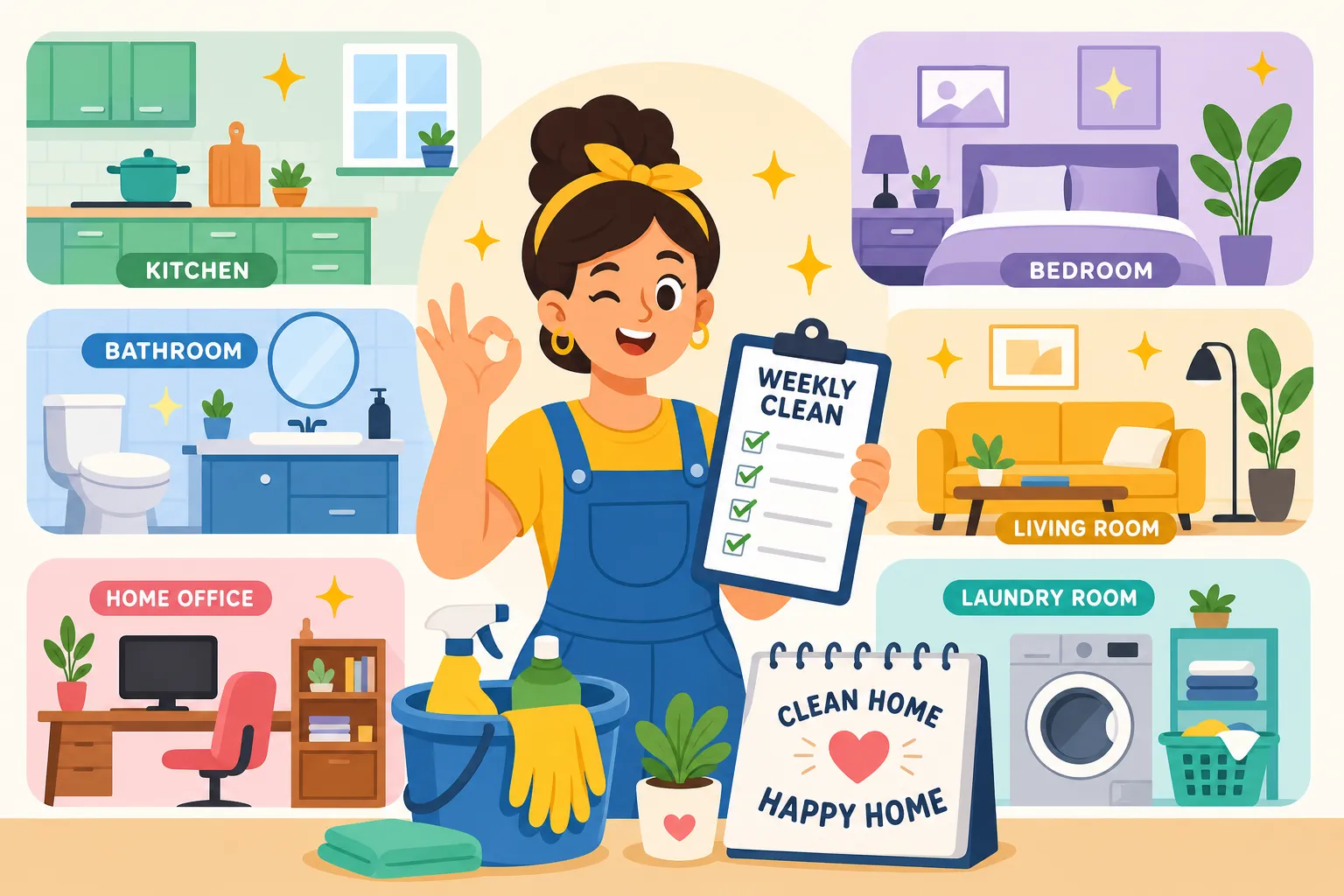
Without a system, cleaning a home is just wandering from room to room doing whatever catches your eye. You finish an hour later, the house still doesn’t feel clean, and you have no idea what you actually did. A solid weekly clean checklist changes all of that. By the time you finish reading, you’ll have a room-by-room weekly cleaning plan with time estimates you can print out, assign to household members, and start using this week. This guide is part of Qurabox’s library of practical household checklists.
The key to making any weekly cleaning routine stick is keeping it realistic. That means knowing which tasks belong on the weekly list, which ones belong on a monthly schedule, and roughly how long the whole thing should take based on your home size.
How long a realistic weekly clean actually takes
Time expectations by home size
For a 1, 2 bedroom home, plan on 1.5 to 2 hours for a maintenance-level clean. A 2, 3 bedroom home typically runs 2 to 3 hours when you’re working solo. “Maintenance level” means surfaces are already reasonably clean and clutter isn’t out of control. If you’re starting from scratch after a couple of skipped weeks, expect the job to take significantly longer than these estimates.
These numbers give you a real benchmark for scheduling. For many people, a 2.5-hour block is far easier to fit into a Saturday morning than a 4-hour block, which usually requires deliberate calendar planning. Knowing your home’s realistic time range lets you treat the clean like any other commitment rather than leaving it as a vague intention.
Why working from a weekly clean checklist cuts cleaning time
The biggest time-waster in any weekly house cleaning schedule is random room-hopping. You wipe the kitchen counter, walk to the bedroom to grab laundry, notice the mirror, clean the mirror, go back to the kitchen for a cloth, and before long a half hour is gone. A room-by-room checklist keeps momentum and prevents that kind of doubling back.
A two-person team using a focused task list can clean a 3-bedroom home in about 2.5 to 3 hours. Without structure, that same job takes considerably longer. The checklist organizes the tasks, but more importantly it eliminates the mental load of deciding what to do next, which is where most of the time actually goes.
The one thing that makes cleaning take longer than it should
Clutter. Picking up items before you can wipe a surface adds significant time and mental fatigue to any weekly cleaning routine. Before you start the actual clean, do a quick tidy pass through every room: grab anything that’s obviously out of place and put it where it belongs. That small step can save a meaningful chunk of time overall and makes the actual cleaning feel far less overwhelming.
Kitchen and bathroom: where to start your weekly clean checklist every week
Your kitchen weekly task list
The kitchen earns top priority on any weekly cleaning plan because it’s the highest-traffic, highest-bacteria zone in the home. Plan for roughly 20 to 30 minutes as a general guideline, actual time will vary based on kitchen size and how well it’s been maintained between cleans. Here’s what to cover each week:
- Wipe countertops and backsplash
- Clean stovetop surfaces
- Sanitize the sink and faucet
- Wipe cabinet doors and handles
- Clean inside the microwave
- Wipe dishwasher exterior and unload it
- Take out trash and recycling
- Purge expired or spoiled food from the fridge
- Sweep and mop the floor
For a more detailed, room-specific approach you can reference the ultimate kitchen cleaning checklist which expands on each task and timing suggestions. Notice that deep appliance cleaning, scrubbing inside the oven or descaling the faucet, is not on this list. Those tasks belong on your monthly schedule. Keeping the weekly kitchen list focused on surfaces and floors is what makes it consistently doable.
Your bathroom weekly task list
Each bathroom in your home should get its own dedicated time weekly, 15 to 25 minutes is a reasonable guideline, though it will vary by bathroom size and condition. The core tasks: scrub the toilet bowl and wipe the seat and handle, clean the sink and faucet, scrub the tub or shower walls, wipe mirrors and counters, empty the trash, sweep and mop the floor, and toss the bath mat in the wash. Disinfecting the toilet handle and faucet knobs with a disinfecting wipe is a quick, high-impact step that takes under a minute and addresses some of the most frequently touched surfaces in the home.
If you want a step-by-step bathroom checklist to follow, check the ultimate bathroom cleaning checklist which lists products and order-of-operations for the fastest results. If you have two bathrooms, budget 30 to 50 minutes total rather than treating it as a quick add-on. Bathrooms that get a consistent weekly reset never become the dreaded deep-clean project they turn into when ignored for three weeks.
Time-saving moves for both zones
Spray surfaces and let the cleaner sit while you tackle another task in the same room. Dwell time does the scrubbing work for you, which means less elbow grease and faster results. A foaming bathroom cleaner sprayed on the tub while you wipe the mirror gives the product time to break down soap scum, making the scrub noticeably faster when you get back to it.
Keep a cleaning caddy stocked and stored in each bathroom permanently. No hauling a basket from room to room, no forgetting supplies in another part of the house. This habit makes bathroom cleaning faster and more likely to actually happen.
Living spaces, bedrooms, and the entry reset
Living room tasks that actually make a visual difference
The living room produces the biggest visual return per minute spent. Budget roughly 15 to 20 minutes, actual time depends on room size, for: dusting shelves, the TV stand, and any visible surfaces; vacuuming carpets and area rugs including under couch cushions; wiping the TV screen, remote, and speakers with a microfiber cloth; fluffing and rotating cushions; and folding or washing throw blankets. These tasks don’t take long, but they’re the reason a home feels genuinely clean rather than just tidied.
One thing to keep off the weekly list: moving furniture to vacuum underneath or cleaning behind the entertainment center. That belongs on a monthly or quarterly schedule. Keep the weekly living room clean strictly at the surface and floor level.
Bedroom weekly clean checklist basics
The most skipped bedroom task in any weekly tidy-up checklist is washing sheets. Sheets collect sweat, dead skin cells, and allergens within days, and yet most households stretch the wash interval far too long. Wash sheets and pillowcases every single week. Beyond that, the weekly bedroom list covers dusting furniture and headboards, vacuuming or sweeping the floor, wiping mirrors, and clearing the nightstand. One bedroom runs approximately 15 to 20 minutes including the time to strip and reload the laundry, though your setup and laundry arrangement will affect that range.
For mattress-specific care, see How to Clean a Mattress at Home (Step-by-Step) for guidance on stain removal and odor control between weekly sheet changes.
The entry zone: the two-minute task that changes the whole home’s feel
The entryway is the first thing guests see and the last thing you pass on the way out in the morning. Sweep or vacuum the rug, wipe the door handle, organize shoes and coats, and clear the catch-all tray or key bowl. It’s a minimal time investment, just a couple of minutes of actual work.
A clean entryway creates an immediate “this house is under control” signal, even if the guest bedroom hasn’t been touched in weeks. It’s disproportionately important for the time it takes, which is exactly why it belongs on every weekly home reset checklist.
The laundry room and the spots most people skip
Laundry room weekly tasks
The laundry room takes under 10 minutes when maintained consistently. Wipe the washer and dryer exteriors, clean the lint trap and the slot around it, sweep and mop the floor, wipe the shelves and detergent area, and remove any stray laundry items. Skip this room for a month and you’ll deal with lint buildup in the vent, musty odors from detergent residue, and a floor that’s significantly harder to clean. Ten minutes weekly prevents the lint buildup, the odors, and the floor situation entirely.
The overlooked zones that quietly collect the most buildup
Light switches, door handles, baseboards near high-traffic thresholds, and kitchen cabinet knobs rarely make anyone’s weekly cleaning plan, but they tend to harbor more germs and visible grime than many surfaces people do clean regularly. A quick wipe-down with a damp microfiber cloth across all of these takes roughly 5 minutes. That small addition keeps deep-clean intervals longer and makes the home noticeably cleaner without adding significant time to the weekly routine.
Weekly, daily, and monthly tasks: how to sort them correctly
What belongs on the daily list
Daily tasks are the quick, visible hygiene jobs that prevent the weekly clean from becoming a disaster: doing dishes, wiping kitchen counters after meals, tidying clutter, and spot-cleaning obvious spills. These take 5 to 15 minutes per day and should not appear anywhere on your weekly chores checklist. When daily tasks stay daily, the weekly clean stays fast.
What to move to your monthly or deep-clean schedule
These tasks do not belong on any weekly cleaning plan: cleaning inside the oven or refrigerator, wiping baseboards and ceiling fans, washing windows, deep-cleaning carpets, descaling faucets, and organizing closets. Overloading the weekly list with these jobs leads directly to burnout. When the list takes four hours instead of two, it gets abandoned.
A realistic weekly routine covers only the maintenance layer: surfaces, floors, bathrooms, bedrooms, and high-touch areas. Everything else gets a monthly or seasonal slot. This distinction is what makes a routine sustainable over months rather than just the first week you try it.
How to print and use your weekly clean checklist
The best printable format for a weekly clean checklist
Two formats work best for home printing on standard 8.5×11 paper. The first is a single master page with all rooms listed in columns with checkboxes alongside time estimates. The second is a room-specific format where each room gets its own half-page sheet. For solo cleaners, the master page is more efficient. For families, the room-by-room format works better since each sheet can be handed to a different person without overlap or confusion.
You can also find ready-made cleaning checklist templates on Canva if you’d prefer a polished printable without designing your own layout.
Customizing the checklist to fit your home
Start with the full task list from this article, remove any rooms that don’t apply to your home, and add recurring household-specific items like a pet area, home office, or garage. Then label each task with a realistic time estimate based on your own experience. The goal is a weekly clean checklist you can honestly finish in a single weekend morning or spread across two days without dreading it.
A checklist that fits your actual home is far more useful than a generic one that covers every possible scenario. Customize it once and it becomes a system you’ll use every week without thinking about it.
Qurabox: your home for practical household checklists
Qurabox covers home cleaning schedules, car maintenance checklists, outdoor prep guides, and more, all formatted in the same practical, printable style as this article. If you found this weekly cleaning plan useful, bookmark Qurabox and browse the home cleaning section for related guides, and read How to Build Good Habits That Stick: 6 Science-Backed Steps to make the routine stick. The site is built for the capable, DIY-minded homeowner who prefers reliable instructions over hiring out every task or sifting through vague advice.
Frequently asked questions about weekly home cleaning
How long should a weekly clean take?
For a 1, 2 bedroom home, a maintenance-level weekly clean typically takes 1.5 to 2 hours. A 2, 3 bedroom home generally runs 2 to 3 hours when working solo. These estimates assume surfaces are reasonably maintained between cleans and clutter is under control. Larger homes or those that have gone several weeks without a full clean will take longer.
What should be on a weekly clean checklist?
A weekly clean checklist should cover the maintenance layer of your home: kitchen surfaces and floors, bathrooms, living room dusting and vacuuming, bedroom floors and sheet washing, and high-touch areas like light switches and door handles. Daily tasks like dish washing and nightly wipe-downs don’t belong on the weekly list, and deep-clean jobs like oven scrubbing or window washing belong on a monthly schedule.
Is it better to clean all at once or spread it across the week?
Both approaches work. Doing the full weekly clean in one block, typically a weekend morning, is efficient because you have all supplies out and can maintain momentum room to room. Spreading tasks across two or three days works well for larger homes or households where scheduling a single long block is difficult. The key is that every task on the weekly list gets done each week, regardless of how you split it up.
How do I make a weekly clean checklist printable?
Use the room-by-room task lists in this article as your starting point. Choose between a single master page with all rooms and checkboxes or individual half-page sheets per room. Remove rooms that don’t apply to your home, add any household-specific tasks, and include a time estimate next to each section. Print on standard 8.5×11 paper and keep it somewhere visible, on the fridge or inside a kitchen cabinet door.
Put the checklist to work this week
A weekly clean checklist works best when it’s honest about what your home actually needs, not what a generic template assumes. Start with the kitchen and bathrooms since those rooms drive the most hygiene impact. Use time estimates to plan the clean around your schedule. Keep weekly tasks weekly and monthly tasks monthly. Print the format that fits how you live, whether that’s a single master page or room-specific sheets.
The goal isn’t a perfect home. It’s a consistent routine that keeps the home at a level you’re comfortable with without burning out after two weeks. Pick one room this week, run through the list for that room, and see how it feels. Once the system clicks, adding the rest of the home takes almost no extra effort. For additional perspective on keeping a weekly cadence, read about the power of a weekly cleaning schedule. Head back to Qurabox whenever you need your next household guide.