Natural cleaners are an effective, non-toxic alternative to the conventional products most of us store under the kitchen sink. Flip over almost any one of those bottles and you’ll find an ingredient list that reads like a chemistry exam. Conventional cleaners get the job done, but for a growing number of households, the appeal of something simpler and safer has never been stronger. Many people assume non-toxic alternatives are a trade-off, weaker, messier, and more effort than they’re worth.
That assumption is wrong, but only when you understand how these ingredients actually work. Green cleaning solutions aren’t just diluted vinegar and good intentions. They’re specific ingredients used at the right concentrations, on the right surfaces, for the right amount of time. That context is everything.
This guide covers the fundamentals: which ingredients clean versus disinfect, the DIY natural cleaners recipes that work, what you should never mix together, how to store what you make, and when a quality store-bought plant-based product is the smarter call. At Qurabox, this is the starting point for our full natural cleaning series, with room-by-room guides for kitchens, bathrooms, and floors coming next. By the end, you’ll have working knowledge you can actually use today.
What natural cleaners actually are (and why the distinction matters)
Before you grab a spray bottle, you need to understand one critical difference: cleaning and disinfecting are not the same thing. Cleaning removes dirt, grease, and grime from a surface. Disinfecting kills bacteria and viruses on that surface. Not every natural ingredient does both, and choosing the wrong one for the job leaves you with a surface that looks clean but isn’t sanitized.
Baking soda is a great example. It scrubs beautifully, neutralizes odors, and lifts grime from sinks and tubs. But it does not kill germs. Hydrogen peroxide, on the other hand, kills bacteria, mold, and mildew at the standard 3% drugstore concentration. Vinegar has some antimicrobial activity against specific organisms but is not a reliable broad-spectrum disinfectant, despite what a lot of DIY content claims. Knowing this upfront saves you from applying a cleaner to a surface that actually needs a disinfectant.
Conventional products rely on synthetic surfactants, ammonia, and bleach derivatives to get the job done. Homemade natural cleaners use plant-derived acids, mild abrasives, and naturally antimicrobial compounds. Neither category wins across every situation. The real advantage of going non-toxic is transparency: you know exactly what’s in the bottle, and you can match the ingredient to the surface with confidence.
Natural cleaners: the five ingredients that do most of the work
You don’t need a cabinet full of specialty products. Five core ingredients handle the overwhelming majority of household cleaning jobs, and most of them cost next to nothing. Once you know what each one does, and what it doesn’t, you can build recipes for almost any surface in your home.
White vinegar and hydrogen peroxide are your primary options when you need antimicrobial action, though they work differently. Hydrogen peroxide at 3% (the standard drugstore bottle) is used full strength directly on surfaces and is effective against bacteria, mold, and mildew. White vinegar, used in a 50/50 mix with water, has demonstrated activity against some bacteria and works well as a cleaning agent for hard surfaces, but it’s not a reliable broad-spectrum disinfectant and shouldn’t be treated as one. One absolute rule: never mix vinegar and hydrogen peroxide in the same bottle. They form peracetic acid, which is corrosive and harmful to skin, eyes, and lungs.
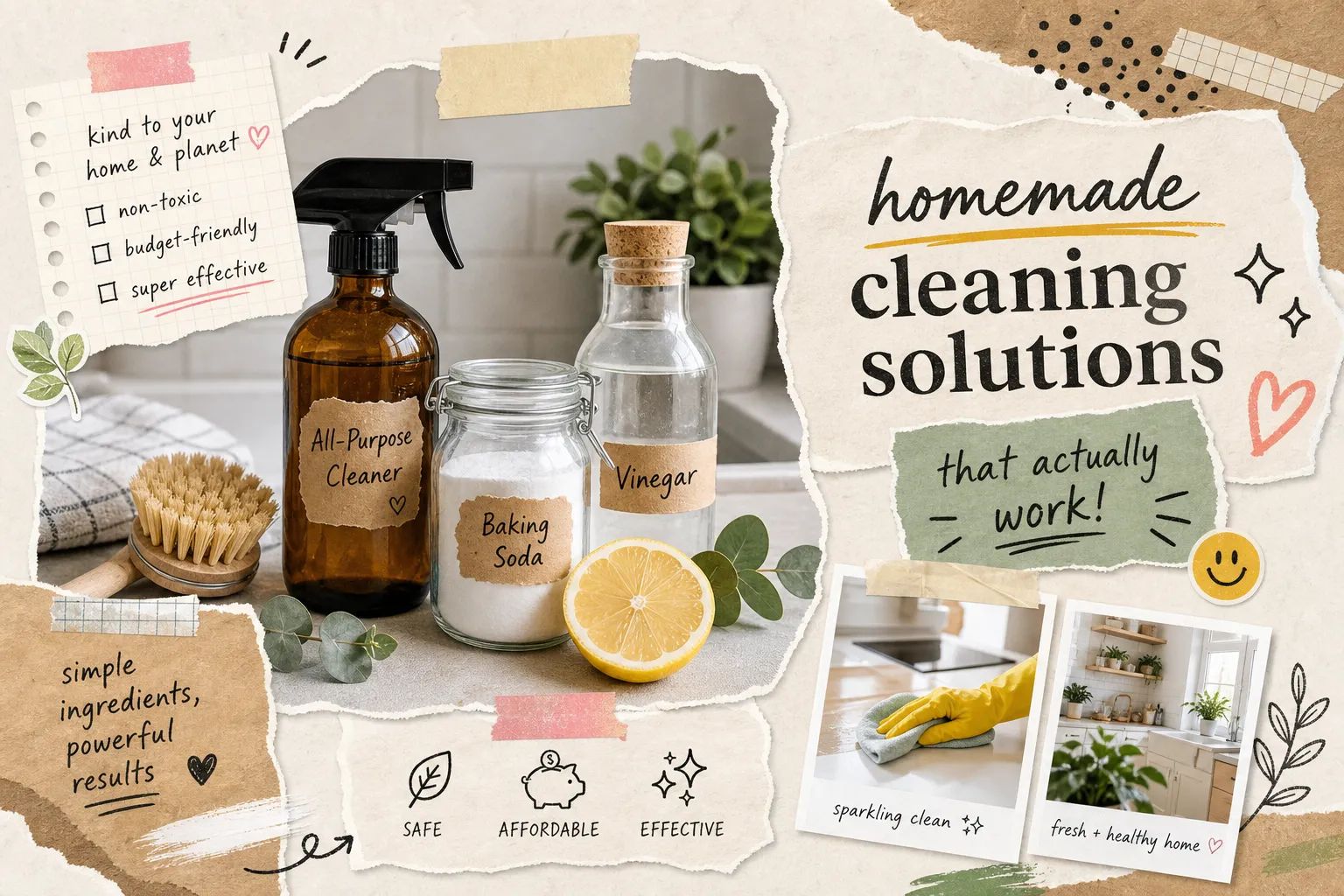
Baking soda and castile soap handle the physical work. Baking soda is a mechanical abrasive and odor neutralizer that lifts grime from sinks, tubs, and tile without scratching. Castile soap is a plant-based surfactant and the cleaning agent behind most homemade natural cleaner recipes. Together, they cover most of the scrubbing and degreasing needs in a home.
Rubbing alcohol and essential oils round out the toolkit. Isopropyl alcohol (commonly sold at 70%) is widely used as a surface disinfectant and as the key ingredient in streak-free glass cleaners, follow product labels for recommended contact time and surface guidance. Essential oils, especially tea tree, add mild antimicrobial properties, but they’re a complement to the formula, not the active ingredient. The right ratio is 12 to 20 drops per quart of solution. Using more doesn’t make the cleaner stronger; it just makes it more expensive.
Natural cleaners recipes for every room in your home
Each recipe below uses ingredients you either already have or can find at any grocery store for a few dollars. They’re organized by surface type so you can go straight to what you need.
Kitchen and bathroom surfaces
For everyday kitchen and bathroom counters, a basic all-purpose spray works well: combine 1 cup water with 1 cup white vinegar and 10 to 15 drops of essential oil in a spray bottle. Shake before use and wipe clean. For tougher grease or a more robust formula, mix 1 tsp borax, 1 tsp castile soap, and 1/2 tsp washing soda in a spray bottle, then top with distilled water.
For the toilet bowl, add 1/2 cup baking soda followed by 1/2 cup vinegar. Let it fizz for a few minutes, scrub, and flush. For grout, mix baking soda with just enough water to form a paste, apply directly with an old toothbrush, and scrub.
Glass and wood surfaces
Glass needs a specific formula to avoid streaking. Mix 1/4 cup white vinegar, 1/4 cup rubbing alcohol, 1 tablespoon cornstarch, and 2 cups water. The cornstarch is what cuts streaks, but it settles fast, shake the bottle before every use. For wood floors, combine 1/2 cup lemon juice, 1/4 cup water, 1/2 tsp liquid soap, and a few drops of olive oil. Apply with a damp cloth and wipe dry immediately.
Each of these surfaces has more nuance than a single recipe can cover. If you want exact ingredient ratios for oven grime, bathroom mold, or hardwood-specific care, the room by room Qurabox natural cleaning guides go into detailed walkthroughs. These recipes are your starting point, not your ceiling.
Combinations that can hurt you
This section matters more than any recipe. Dangerous reactions from mixed cleaners happen in ordinary homes every year, and most of them are entirely avoidable with one guiding principle: if a cleaner contains bleach, keep it away from everything except water.
Here’s what goes wrong with the most common dangerous pairings:
- Bleach and ammonia produce chloramine gas, which causes respiratory distress and chest pain.
- Bleach and vinegar release chlorine vapors that burn the eyes and lungs.
- Bleach and rubbing alcohol form chloroform byproducts, which cause dizziness and nausea at sufficient concentrations.
- Hydrogen peroxide and vinegar, as mentioned earlier, create peracetic acid when combined in the same container.
These are not rare chemistry accidents. They’re easy mistakes when you’re cleaning quickly and grab two bottles without checking. For a practical reference on common household cleaning products you should never mix, consult a trusted guide before you experiment.
Safe habits for making and storing homemade natural cleaners are simple but non-negotiable. Always mix in a well-ventilated area. Label every bottle with its contents and the date you made it. Never store a cleaner in a food or drink container. Keep all solutions out of reach of children and pets. Test any new recipe on a small, hidden spot before using it on a full surface. Use distilled water when possible, tap water introduces minerals and microbes that shorten shelf life and reduce effectiveness.
How long your homemade cleaners actually last
Most water-based sprays made with tap water stay effective for two to four weeks. Switch to distilled water and store the bottle in a cool, dark place, and you can extend that to a few months. Dry powder formulas like a baking soda scrub or homemade laundry powder last several months as long as you keep them dry and sealed. Any recipe that includes lemon juice or fresh plant material should be made in small batches and used within a few days.
Hydrogen peroxide deserves special attention because it loses potency when exposed to light. Always store hydrogen peroxide-based cleaners in dark or opaque containers, and don’t transfer the liquid to a clear spray bottle if you want it to stay effective. Dark-colored or opaque containers extend the potency of light-sensitive ingredients significantly, which is why the original brown drugstore bottle exists in the first place.
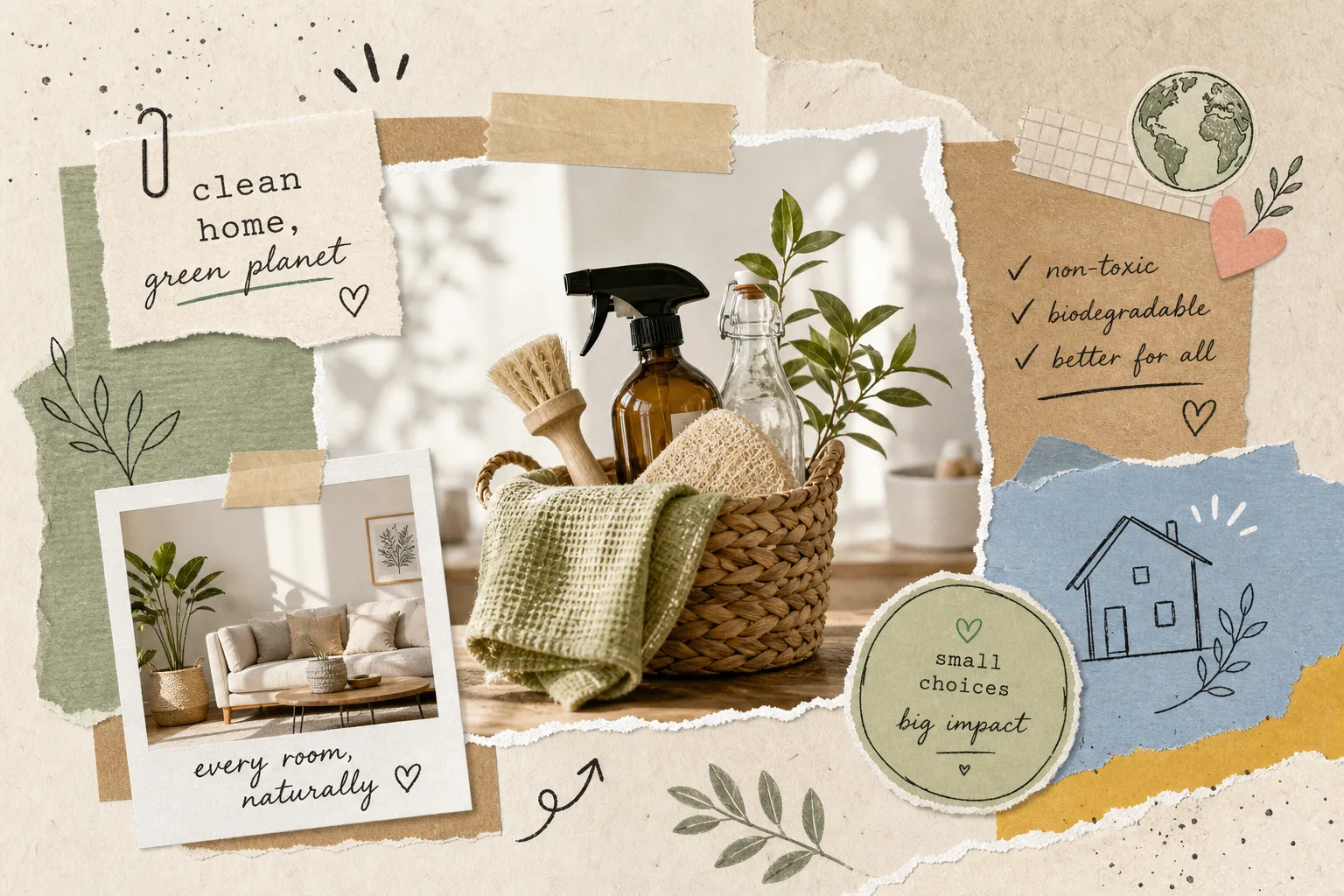
Glass is widely recommended as a container material for most liquid natural cleaners. It doesn’t leach chemicals into the solution, it’s easy to sterilize between batches, and it holds up well with vinegar and essential oil-based formulas; some plastics may be affected by acidic or oil-based solutions over time. Keep a marker near your cleaning supplies and date every bottle when you make it. Two weeks goes by faster than you expect, and an expired cleaner is no longer doing its job.
When a store-bought eco-friendly cleaner makes more sense
DIY natural cleaners are practical and cost-effective for most situations, but there are times when a reliable pre-made product is the smarter choice: busy weeks, travel, or tasks that need a specific formulation you don’t have ingredients on hand for. Several brands produce genuinely effective non-toxic products worth keeping around.
Branch Basics offers a fragrance-free, plant-based concentrate that dilutes into cleaners for nearly every surface in the house, a reasonable option for sensitive skin. Blueland’s tablet-based system reduces plastic waste and suits households that want a low-waste setup. Bon Ami scouring powder holds an A rating from the Environmental Working Group and costs almost nothing at most grocery stores. Seventh Generation’s unscented all-purpose cleaner is widely available and a practical everyday option for households that want something accessible without hunting for specialty products.
Not every product labeled “green” or “eco-friendly” earns that description. Look for full ingredient disclosure, third-party certifications like EPA Safer Choice or EWG Verified, and fragrance-free options if you have kids or pets at home. A lot of “natural” marketing is surface-level. The label certifications are where the real accountability lives.
Start here, then go deeper
Natural cleaners work when you match the right ingredient to the right surface at the right concentration. Hydrogen peroxide disinfects. Baking soda and castile soap tackle dirt and grease. Rubbing alcohol handles glass without streaks. None of these ingredients are magic, but used correctly, they cover the majority of household cleaning jobs without synthetic surfactants, ammonia, or bleach derivatives.
This guide covers the foundation. The room-specific content goes further, exact recipes for oven grime, bathroom mold, hardwood floors, and grout that needs more than a quick wipe. Bookmark the Qurabox natural cleaning series so the next time you’re staring at a grimy stovetop or soap-scummed tub, you know exactly where to start and which ingredient to reach for first.