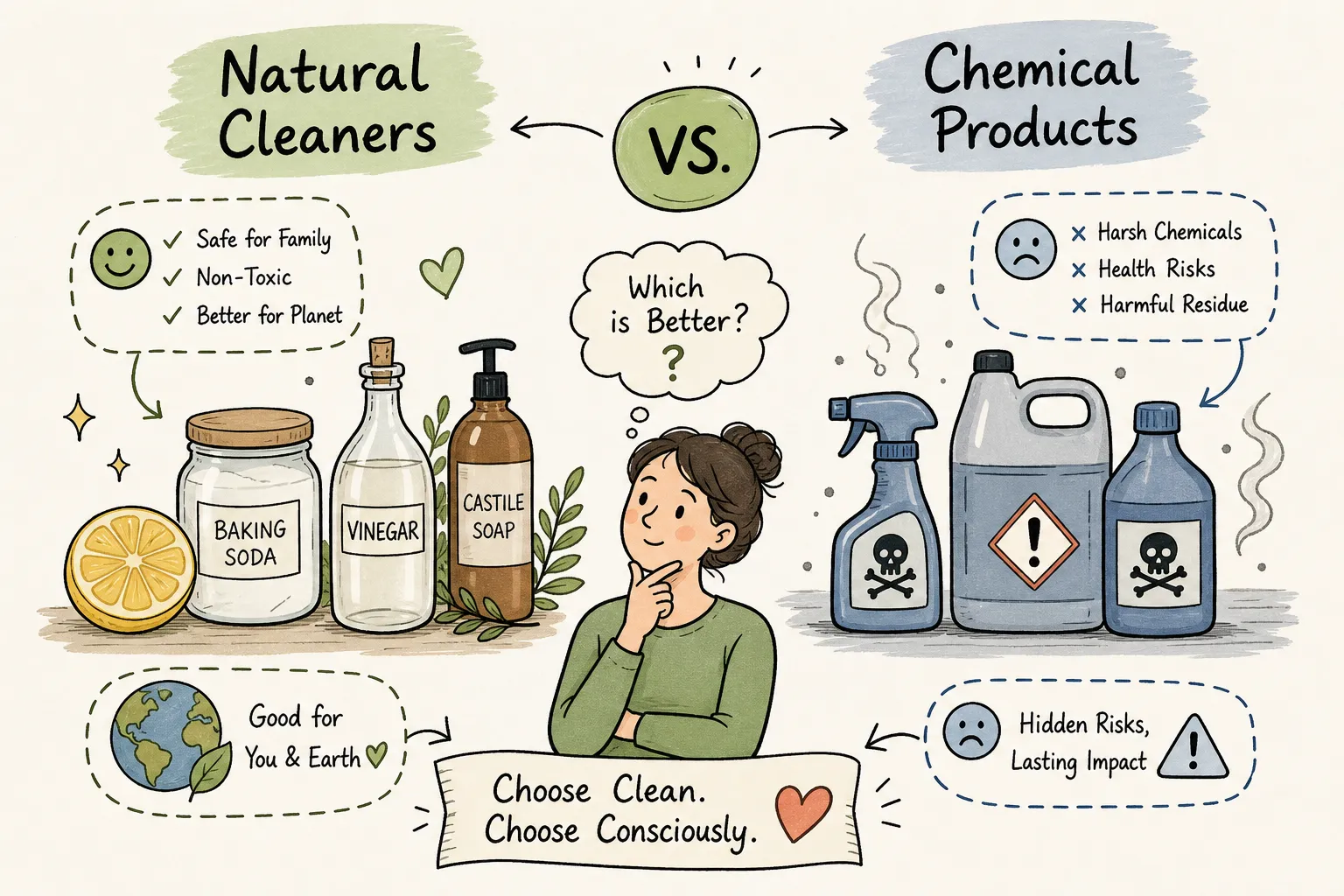
When weighing natural home cleaners vs chemical products, which is better for your household comes down to one thing: what the job actually requires. The debate gets oversimplified fast. On one side, you hear that natural cleaners are always safer. On the other, skeptics insist that only bleach kills germs. Neither version is fully accurate. If you’re making cleaning decisions based on either extreme, you’re likely either over-relying on products that can harm you or under-using ones that could protect you when it counts.
This article compares natural and chemical cleaners across four criteria: cleaning and disinfecting effectiveness, health risks, environmental impact, and cost per use. The goal isn’t to pick a winner. The goal is to give you a clear decision framework so you know which product to reach for in any situation. At Qurabox, our home care series cuts through the marketing noise and looks at what the evidence actually says. This article is part of that series.
Natural Home Cleaners vs Chemical Products: How Well Do They Actually Work?
The most honest answer depends on which natural cleaner you’re talking about. A PubMed-indexed study comparing bleach, a commercial hydrogen peroxide-based cleaner, and a DIY vinegar-based formula found that results varied significantly by product and surface type. On ceramic surfaces, the DIY vinegar formula actually outperformed bleach for soil removal. On stainless steel, only bleach and the hydrogen peroxide cleaner met the standard for cleaning effectiveness. Vinegar failed on stainless steel entirely.
Disinfection results told a sharper story. Bleach and hydrogen peroxide each achieved 5-log microbial reductions (a 99.999% kill rate) against both E. coli and S. aureus under all tested conditions. Fresh vinegar solution at 50% concentration also hit that 5-log threshold against E. coli, but it underperformed against S. aureus. The critical caveat: vinegar-based cleaners must be made fresh daily to maintain that level of effectiveness. A 24-hour-old batch showed measurable decline in antimicrobial performance. Baking soda, one of the most popular “natural” cleaning staples, has essentially no peer-reviewed evidence supporting antimicrobial activity on hard surfaces. It’s a decent deodorizer and mild abrasive, but it doesn’t meaningfully reduce bacteria like E. coli, S. aureus, or Salmonella.
What About Ammonia and Quats?
Ammonia deserves a specific mention because many people treat it interchangeably with disinfectants. It’s a strong degreaser and effective for removing soil, but ammonia is not a disinfectant. It lacks the kill claims needed to count as one. Quaternary ammonium compounds (quats) are effective disinfectants, but they come with documented health concerns covered in the next section. The research points to a clear practical takeaway: hydrogen peroxide is the most effective natural disinfecting option, bleach remains the most reliable disinfectant overall, and vinegar is a useful cleaner on the right surfaces when prepared fresh.
Natural Home Cleaners vs Chemical Products, Health Risks Compared
Conventional cleaning products carry real, documented health risks. Bleach is a known irritant that can burn skin, cause eye irritation, and trigger respiratory distress. Mixing it with ammonia, even accidentally, produces toxic chlorine and chloramine gases that can cause severe lung damage. Ammonia itself worsens asthma symptoms and causes immediate irritation to the throat, eyes, and airways, especially in poorly ventilated spaces.
Quaternary ammonium compounds, found in many household disinfectant sprays and wipes, are linked to occupational asthma, allergic respiratory reactions, and skin sensitization with prolonged exposure. Animal studies have flagged reproductive toxicity concerns, though human evidence is still developing. VOCs released from aerosol sprays and scented products cause headaches and dizziness, with throat irritation common in enclosed spaces. Chronic exposure has been associated with liver, kidney, and central nervous system effects at higher concentrations. Phthalates, hidden in synthetic fragrances, are classified as endocrine disruptors with links to hormonal and reproductive effects.
Risk is dose-dependent and heavily tied to ventilation. Most household harm from these products comes from frequent use in enclosed, poorly ventilated spaces, not from occasional cleaning with normal precautions. Still, understanding which ingredients you’re using regularly matters a great deal over time.
Natural cleaners aren’t automatically risk-free, and this point gets glossed over constantly. Vinegar in concentrated form irritates the eyes and airways. Essential oils, added to countless DIY recipes for their supposed disinfectant properties, have no credible evidence behind those claims and can trigger allergic reactions. Borax, often marketed as a natural alternative, carries its own safety concerns. The real advantage of plant-based and non-toxic household cleaners is the absence of the most harmful synthetic compounds, not zero risk across the board.
Environmental Impact: Where Eco-Friendly Cleaning Products Have a Clear Edge
Many conventional cleaning products contain surfactants, phosphates, and synthetic fragrances that don’t fully break down in wastewater treatment. Phosphates contribute to nutrient loading in rivers and lakes, which drives algal blooms. When those algae die and decompose, they consume dissolved oxygen and create dead zones that kill fish and aquatic life. Some synthetic surfactants, particularly alkylphenol ethoxylates, have shown endocrine-disrupting effects in aquatic wildlife. VOCs from aerosol cleaners contribute to both indoor and outdoor air pollution.
Biodegradable cleaning products built around vinegar, baking soda, hydrogen peroxide, and castile soap break down readily in water and soil. EPA Safer Choice-certified products like ECOS have every ingredient screened for aquatic toxicity, carcinogenicity, reproductive toxicity, VOC content, and pH levels. That level of independent review matters because a third party has confirmed the safety claims the manufacturer did not self-certify.
How to Spot Legitimate Green Cleaning Products
One important caveat: the word “green” or “natural” on a product label means nothing on its own. It’s a marketing term with no regulatory standard. Look for EPA Safer Choice certification or NSF third-party review to confirm that a product’s ingredient safety claims have actually been vetted. Without one of those markers, you’re taking the manufacturer’s word for it.
Cost Comparison: What Natural Cleaners Actually Save You
Commercial multi-surface sprays typically run between $3 and $6 per bottle. EPA Safer Choice-certified green cleaning products are often in a similar price range, though some run slightly higher. A basic DIY all-purpose spray using white vinegar, castile soap, and distilled water costs a fraction of either. When you factor in that a single bottle of white vinegar and a bar of castile soap yield dozens of cleaning batches, the per-use cost drops well below $0.10 per spray bottle batch.
The hidden costs on both sides are worth acknowledging. Chemical cleaners sometimes require gloves or better ventilation, adding minor but real recurring cost for some households. Homemade cleaning recipes take a few minutes to prepare and, in the case of vinegar-based disinfecting mixtures, need to be made fresh daily for maximum effectiveness. That’s a real time cost for busy households. For budget-conscious families or anyone managing multiple cleaning tasks, though, homemade cleaning recipes built around pantry staples deliver genuine savings without sacrificing results on everyday surfaces.
When Natural Cleaners Aren’t Enough
This is the most critical distinction in the entire debate: cleaning and disinfecting are not the same thing. Cleaning removes dirt, grease, and most surface germs using soap, detergent, or a cleaner and water. Disinfecting kills remaining pathogens and requires a product with a proven kill claim, a specific active ingredient at the right concentration, and a defined contact time. CDC’s Cleaning and Disinfecting guidance is consistent on this point: in most everyday situations, routine cleaning is all you need. Disinfection is warranted after illness, on high-touch surfaces during flu season, or after handling raw meat.
Most natural cleaners, including vinegar-based sprays and baking soda scrubs, are not proven disinfectants for high-risk situations. After a household member has had vomiting, diarrhea, or a confirmed contagious illness, reach for an EPA List N-registered disinfectant and follow the labeled contact time precisely. If you don’t have one available, properly diluted bleach (1/4 cup per quart of water, with a 15-minute contact time before rinsing) or a 70% alcohol solution are the recommended fallback options according to public health guidance. These are not situations for improvisation.
- Daily countertop and surface cleaning: vinegar-based cleaner or castile soap and water
- Glass and mirrors: white vinegar diluted 50:50 with water
- Greasy buildup: soap-based cleaner or ammonia-free degreaser
- Post-illness disinfection: EPA List N-registered product with correct contact time
- Stone, waxed wood, cast iron, or aluminum: avoid vinegar entirely, it etches and damages these materials
A Practical Framework and DIY Recipes to Get Started
The clearest way to use this information is to match the cleaner to the job. For routine grime on compatible surfaces, a vinegar-based or castile soap cleaner handles the work without unnecessary chemical exposure. For genuine disinfection after illness or in high-risk situations, use a product with a proven kill claim and follow the contact time on the label. Don’t expect DIY sprays to do a job they haven’t been proven to do.
Two Reliable All-Purpose Spray Recipes
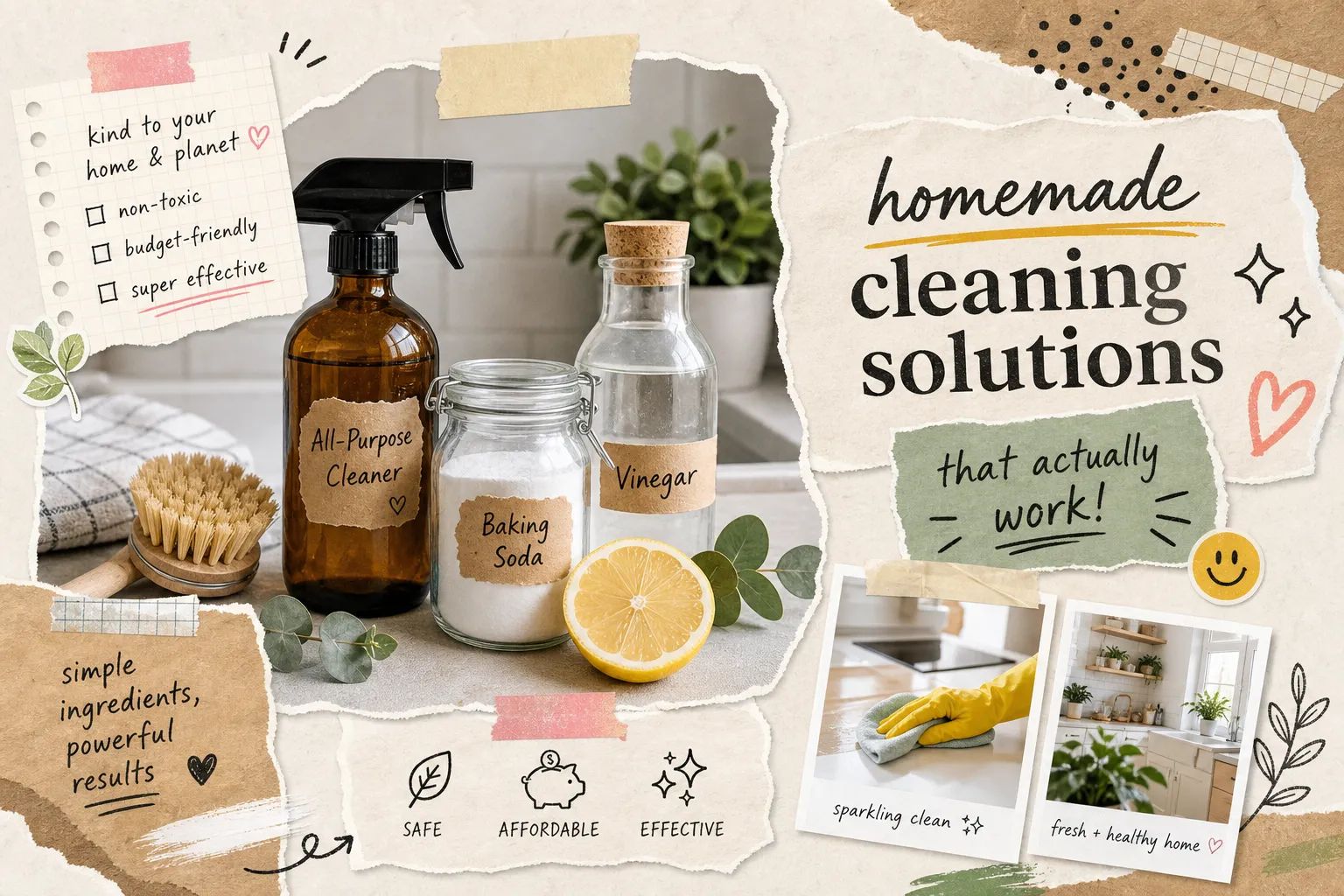
Here are two homemade cleaning recipes to keep on hand. The basic version: 1/4 cup white vinegar, 1 teaspoon castile soap, and 2 cups distilled water. The stronger version: 3 tablespoons white vinegar, 1/2 teaspoon washing soda, 1/2 teaspoon castile soap, and 2 cups hot water. Both should be prepared fresh, especially if you’re using them for anything beyond routine surface wiping. Store in a labeled spray bottle and shake before use.
Surface Exceptions Worth Knowing
Remember the surface exceptions. Vinegar will etch natural stone like marble or granite, strip wax from wood, and react poorly with cast iron and aluminum. On those surfaces, a plain dish soap and water solution is the safer, more reliable choice. For drain deodorizing, a combination of baking soda followed by vinegar and hot water works well for odor and light buildup, though it’s not a substitute for actual cleaning or disinfection.
The Bottom Line
Neither side wins across all criteria, and anyone claiming otherwise is working from a marketing frame, not evidence. When comparing natural home cleaners vs chemical products, chemical options, particularly bleach and hydrogen peroxide-based products, remain superior for true disinfection when it’s required. Natural and eco-friendly cleaning products are genuinely effective for routine cleaning, carry lower health risks at everyday exposure levels, leave a smaller environmental footprint, and cost significantly less when you make your own. The practical approach is to use each type where it’s actually needed rather than committing to one camp entirely.
For most of what you clean every day, a well-made vinegar spray or a castile soap solution is all you need. For the situations where pathogens are a real concern, reach for the right tool and use it correctly. That combination keeps your home clean without unnecessary chemical exposure and without leaving you underprotected when it matters.
Qurabox covers the full range of home care topics with the same research-backed approach. Browse the home care section for guides on deep cleaning specific rooms, building a weekly cleaning schedule, and tackling stubborn messes on tricky surfaces. Every guide is built around what actually works. For tips on adapting these strategies to tight quarters, see our guide: Best Way to Organize a Cleaning Routine for a Small Home, Qurabox.