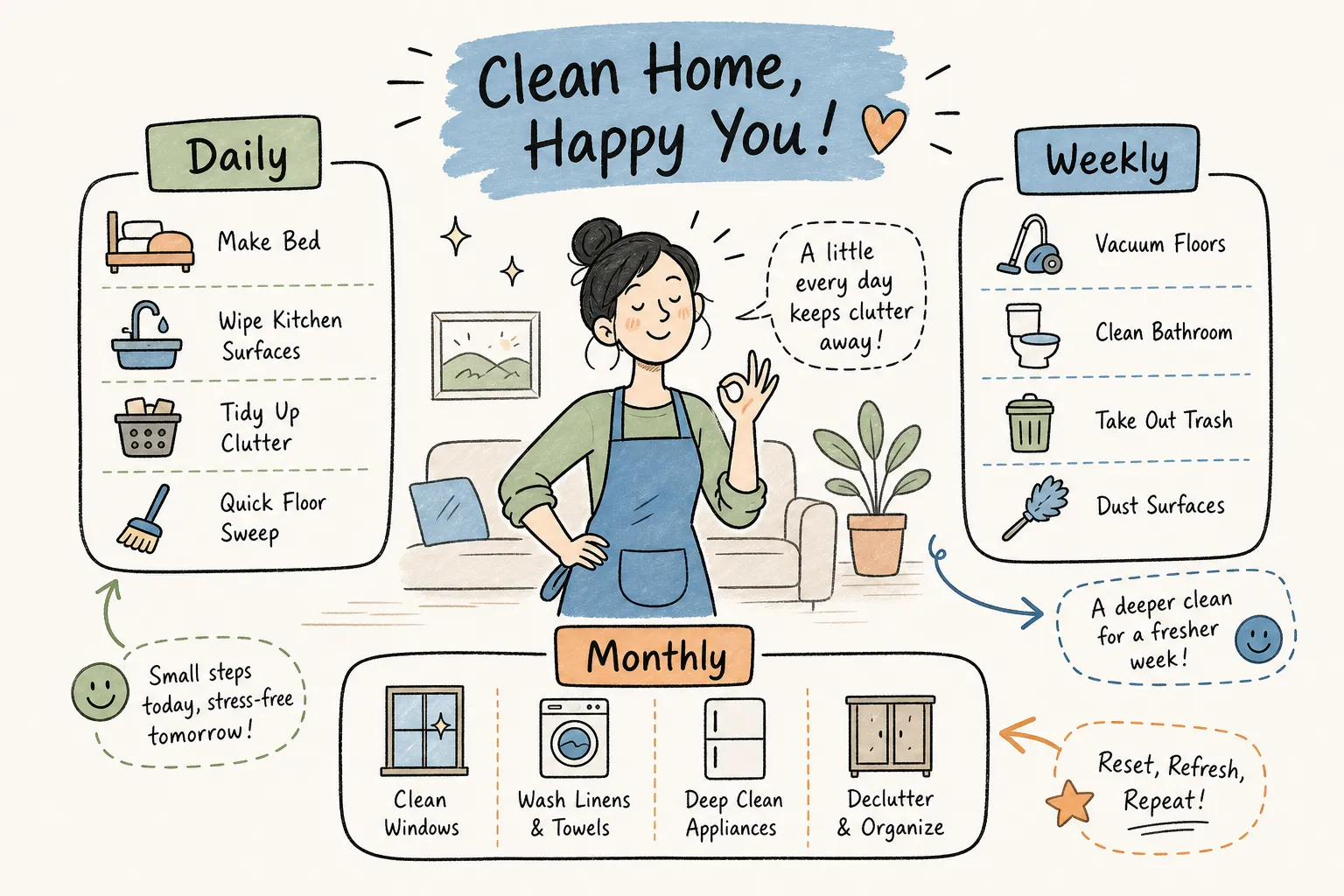
You scrub the bathroom, wipe down the kitchen, and vacuum the living room. Two days later, the place already feels like it needs cleaning again. Sound familiar? The problem isn’t your effort. It’s that you’re cleaning reactively, room by room, with no clear system telling you what actually needs attention and how often. Use this house cleaning checklist to move from reactive cleaning to a frequency-based system that keeps your home consistently tidy.
A well-organized cleaning routine built around frequency, daily, weekly, and monthly, is what separates a consistently tidy home from one that always feels one step behind. At Qurabox, we’ve put together this complete room-by-room guide along with free downloadable templates in PDF and Google Docs format so you can get the system out of your head and onto paper today.
By the end of this guide, you’ll have a daily upkeep checklist, a full weekly room-by-room reset, a monthly deep-clean plan, and a supplies list to back it all up. Here’s how to build it.
Why most cleaning routines fall apart before the weekend
The “no system” problem keeps your home perpetually behind
Most people clean reactively. Something looks dirty, so they clean it. That approach means the kitchen gets wiped down three times a week while the bathroom vents go untouched for months. Without a structured plan assigning tasks by frequency, you end up over-cleaning some spaces and completely ignoring others. The buildup wins by default.
Professional housecleaners don’t clean harder than you do. They clean to a system. They know exactly which tasks need to happen every day, which ones reset the home each week, and which ones handle the deeper maintenance that protects surfaces and appliances over time. The difference is entirely structural, not effort-based, and that’s a gap any homeowner can close with the right framework.
How frequency-based cleaning cuts your total effort in half
The daily/weekly/monthly framework is the backbone of every professional cleaning checklist worth following. Daily tasks take 10, 15 minutes and prevent buildup before it starts. Weekly tasks run 30, 90 minutes and handle the real reset across every room. Monthly tasks cover the maintenance work that most homeowners skip until something looks truly bad.
When you stack these three layers correctly, you never face a catastrophic cleaning session again. Each frequency tier handles its role so nothing accumulates past the point of a quick fix. That’s the logic behind everything in this article.
House Cleaning Checklist: Daily Tasks That Take 15 Minutes or Less
Kitchen daily tasks
The kitchen daily routine isn’t about perfection. It’s about preventing the kind of mess that takes three times longer to deal with later. Wipe counters and appliances after use, wash dishes or run the dishwasher, sweep the floor, wipe the sink, and take out trash as needed. That entire pass takes 10, 20 minutes and keeps the kitchen functional every single day.
The critical habit here is wiping up spills and crumbs immediately after they happen rather than letting them sit. Dried grease and stuck-on food are where time gets lost during cleaning. Keep a damp microfiber cloth within reach while you cook and the daily reset becomes nearly automatic.
Bathroom and living space daily resets
For bathrooms, the daily tasks are quick: wipe the counter, sink, and faucet; do a mirror spot check; hang towels to dry; and tidy toiletries back into place. None of these take more than three minutes, but skipping them for a week means the weekly scrub takes twice as long.
In living areas, tidy surfaces, straighten cushions, put away stray items, and handle crumbs from the couch or coffee table. In the bedroom, make the bed, clear bedside clutter, and put away any clothes left out. At the entryway, put away shoes and bags and shake out the mat. The full daily pass across all rooms runs 15, 25 minutes for most homes, far less time than dealing with the buildup later.
Weekly House Cleaning Checklist: The Full Room-by-Room Reset
Kitchen and bathroom: the weekly tasks that matter most
The kitchen weekly reset goes deeper than the daily wipe-down. Mop the floors, disinfect the sink and faucet, clean appliance exteriors, wipe cabinet fronts and handles, sanitize sponges, and empty and wipe out trash bins. This full kitchen weekly clean runs about 20, 30 minutes and targets exactly the surfaces that accumulate grease and bacteria fastest.
The bathroom is where the real work happens each week: scrub the toilet, tub, and shower; clean the sink and counters; mop the floor; wipe all mirrors; and wash bath mats and hand towels. A full bathroom weekly reset takes 30, 45 minutes, but done consistently, it never escalates into a full-day project.
Bedrooms, living areas, and entryways
Weekly bedroom tasks: change the sheets, dust furniture surfaces, vacuum or sweep floors, clear the closet floor, and launder pillowcases. Living areas need dusting on furniture and electronics, vacuuming of rugs and upholstered surfaces, mopping of hard floors, and a wipe-down of remotes and coffee tables. These tasks together take roughly 30, 45 minutes and handle the dust and grime that daily tidying doesn’t touch.
At the entry, sweep or vacuum floors and mats, wipe door handles and light switches, and sort any mail or recycling that’s piled up. It takes under 10 minutes and makes a real difference in how the home feels when you walk in.
Home office and laundry room
These two rooms get skipped more often than any others in a standard weekly routine, and they show it. The home office needs dusting on the keyboard, monitor, shelves, and desk surfaces, plus vacuuming the floor, organizing papers and cords, and emptying the trash. The laundry room requires cleaning the lint trap, wiping the washer and dryer exteriors, sweeping or mopping the floor, and folding and putting away any lingering laundry.
Skipping these rooms consistently is how offices turn into clutter disasters and laundry rooms develop the distinct smell of trapped moisture. Give each one 15 minutes per week and they stay manageable without issue.
Monthly Deep-Clean Checklist: What Pros Check That You Probably Skip
Kitchen and bathroom monthly maintenance
The monthly kitchen deep clean covers the tasks no weekly routine touches. Clean the refrigerator inside and out, a monthly wipe-down of shelves prevents odors and spills from hardening between thorough annual cleanings, scrub the oven interior or run the self-clean cycle, clean the microwave and toaster, deep-clean cabinet interiors and drawers, clean the dishwasher filter, scrub grout, and launder kitchen rugs. These tasks protect your appliances and prevent the kind of buildup that shortens their lifespan. For a thorough approach to fridge and appliance care, consult an ultimate kitchen cleaning checklist.
For bathrooms, the monthly home cleaning checklist adds: scrub grout, wash the shower curtain and liner, deep-clean drains and exhaust vents, wipe inside the medicine cabinet, and give the tub and shower surround a thorough scrub beyond the standard weekly pass. These are exactly the tasks a professional cleaning checklist marks as add-ons because they require more time and attention than routine maintenance, see a sample professional house cleaning checklist to understand how pros package these extras.
Bedroom, living areas, and the spots people forget
Monthly bedroom tasks: inspect or rotate the mattress, vacuum under the bed, clean baseboards and vents, and wash pillow protectors. Living areas benefit from deep-cleaning upholstery, washing throw blankets and cushion covers, cleaning windows, dusting ceiling fans and light fixtures, and moving furniture to vacuum underneath. These are the tasks that separate a home that looks clean from one that actually is clean.
The specific items that distinguish a real monthly deep-clean from a thorough weekly sweep are baseboards, ceiling fans, the inside of appliances, and anything behind or under furniture. Most homeowners hit these surfaces only when they’re visibly bad. Doing them monthly takes 20, 30 minutes and prevents the kind of buildup that becomes a multi-hour project when ignored.
Cleaning Supplies Checklist: What You Actually Need
Essential tools for every room
You don’t need a closet full of specialty products. The core toolkit covers every room: microfiber cloths, a vacuum cleaner with attachments, a mop and bucket, a broom and dustpan, scrub brushes, a squeegee for windows and mirrors, a telescoping duster for ceiling fans and high shelves, rubber gloves, and a set of spray bottles. Function matters more than brand. Microfiber cloths alone handle the majority of flat surfaces without scratching, and they’re reusable, one of the best investments in any cleaning supply kit.
Cleaning solutions: what works and what you can skip
The complete solution list is shorter than most people expect: all-purpose cleaner, a disinfectant, glass cleaner, a degreaser for the stovetop, toilet bowl cleaner, bathroom-specific cleaner, and a limescale remover for faucets and showerheads. White vinegar and dish soap genuinely handle a wide range of tasks naturally, particularly mineral buildup and general surface cleaning. One important note: vinegar is not an EPA-registered disinfectant, so for kitchen surfaces after raw food contact or bathroom sanitation, use a proper disinfectant instead (see Is vinegar a disinfectant?). For research on disinfectant efficacy and how long pathogens can persist on surfaces, consult the scientific literature such as research on disinfectant efficacy and surface persistence.
For readers who want to lean into natural alternatives, companion guides on DIY cleaning solutions and homemade cleaner recipes organized by room are available from Qurabox, a practical next step once you have this frequency-based system running.
How to Build Your Personal Cleaning Schedule and Stick to It
Combining daily, weekly, and monthly tasks into one working system
The practical framework is straightforward: assign weekly tasks to specific days rather than treating the entire weekly clean as one overwhelming session. Bathrooms on Tuesday, floors on Thursday, laundry room on Saturday. Daily tasks work best when tied to a consistent time trigger, the morning kitchen wipe-down after breakfast, the evening tidy before you sit down for the night. Monthly tasks go directly on the calendar like any other appointment so they don’t quietly slide until the next month. If you want a step-by-step plan for getting started, see Why You Need a Cleaning Schedule (And How to Start One), Qurabox.
A realistic weekly time budget looks like this: 15, 25 minutes daily, one 60, 90 minute block for the weekly room-by-room reset, and 2, 3 hours once a month for the deeper maintenance pass. That’s roughly 3, 4 hours of total cleaning per week for most homes, distributed across days so no single session feels overwhelming. If you need a version tuned for packed schedules, check out the Best Weekly Cleaning Routine for Busy Adults in 2026, Qurabox.
Printable House Cleaning Checklist: Download and Use It Today
The formats that work best for home use are a printable cleaning checklist (PDF) for posting in the kitchen or laundry room where you’ll actually see it, and an editable Google Docs version for customizing the task list to match your specific home layout. Standard letter-size (8.5×11) prints cleanly and fits a sheet protector if you want to reuse the same housekeeping checklist template with a dry-erase marker each week.
Qurabox offers free downloadable versions of this room-by-room cleaning schedule, formatted for standard letter-size printing and fully editable, along with additional guides for seasonal deep cleans and natural DIY home care routines. Download the free house cleaning checklist (PDF) to take it from something you read about to something that actually runs your home.
Start with today, build from there
A house cleaning checklist works because it removes the decision-making from the process. When you know exactly what needs to happen daily, weekly, and monthly, you stop starting from scratch every time you look around and think “this place needs cleaning.” The structure does the thinking for you.
Here’s the recap: daily 15-minute resets prevent buildup before it starts, while weekly room-by-room sessions handle the real work and monthly deep cleans protect your home and appliances long-term. None of these layers are complicated on their own. Stacked together, they create a home that stays clean without requiring a full Saturday to maintain.
Start with the daily checklist today. Run it for a week, then add the weekly tasks. Download the printable house cleaning checklist from Qurabox to get the full system on paper and posted where you can actually use it. A clean home isn’t about cleaning more, it’s about cleaning smarter, with the right tasks happening at the right frequency.