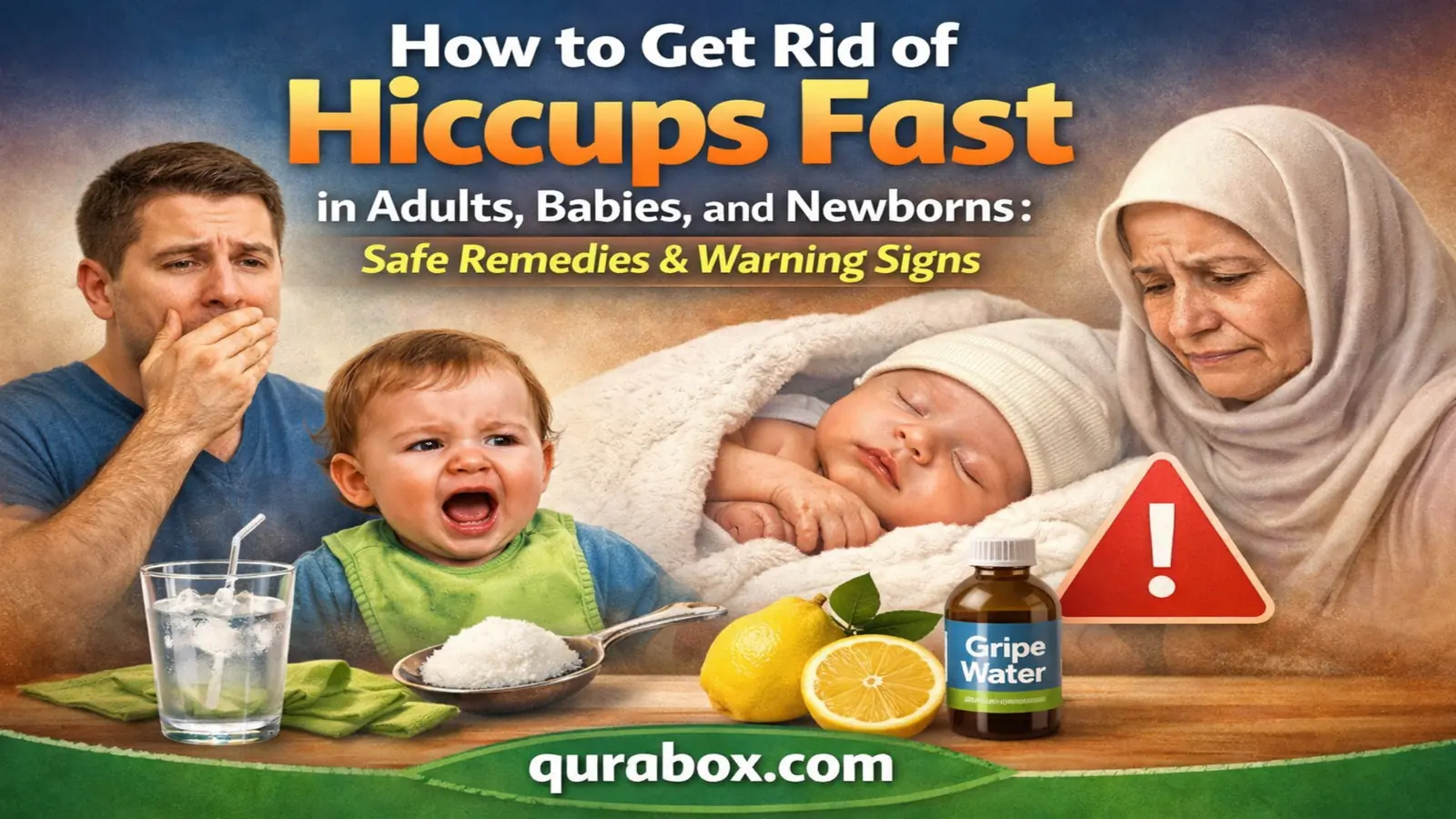
Hiccups are very common. Almost everyone gets them sometimes. In most cases, they are harmless and go away on their own after a few minutes. Still, they can feel annoying, uncomfortable, and sometimes worrying—especially if they happen to a baby or do not stop for a long time.
This guide explains hiccups in simple language. You will learn what hiccups are, what causes them, how to stop them safely, what works for adults, what to do for babies and newborns, and when hiccups may be a sign of a health problem.

What Are Hiccups?
Hiccups happen when the diaphragm suddenly tightens or spasms. The diaphragm is the muscle under your lungs that helps you breathe. When it tightens suddenly, air rushes in quickly, and your vocal cords close. That makes the familiar “hic” sound.
In simple words, a hiccup is a sudden jump or spasm in your breathing muscle. Most of the time, it is not dangerous.
What Causes Hiccups in Adults?
Adults can get hiccups for many simple reasons. Common causes include:
- Eating too fast
- Eating too much
- Drinking fizzy drinks
- Drinking alcohol
- Eating spicy food
- Swallowing air
- Stress or sudden excitement
- Very hot or very cold foods and drinks
Sometimes hiccups may happen again and again because of acid reflux or another health problem. Reflux can irritate the body and may lead to repeated hiccups in some people.

How to Get Rid of Hiccups Fast in Adults
Most adult hiccups stop on their own. But if you want to try to stop them faster, there are some simple home remedies that may help.
Best Simple Remedies for Adults
Try these one at a time:
- Hold your breath for a short time
- Sip ice-cold water slowly
- Pull your knees up to your chest and lean forward
- Swallow a little sugar
- Taste a small amount of lemon or vinegar
- Breathe into a paper bag briefly
Important: Never put the paper bag over your head.

A Simple Step-by-Step Method
If you get hiccups, do this:
Step 1 — Stop eating or drinking for a moment
Sometimes the trigger is food, fizzy drinks, or alcohol. Give your body a short break.
Step 2 — Try holding your breath or drinking cold water
These are simple, safe, and commonly used methods.
Step 3 — Change your position
Leaning forward or pulling your knees to your chest may help relax the muscle spasm.
Step 4 — Wait a few minutes
Many hiccups stop naturally without any treatment.
Things That Can Make Adult Hiccups Worse

Some habits can make hiccups more likely. If you get them often, try to reduce:
- Eating too quickly
- Consuming carbonated drinks
- Overeating or heavy meals
- Drinking alcohol
- Sudden temperature changes
How to Get Rid of Hiccups in Babies
Baby hiccups are very common. In most cases, they are normal. Babies often get hiccups during or after feeding, and usually they are not in pain.

Safe Ways to Help a Baby with Hiccups
Here are the best things to do:
- Pause the feeding
- Burp your baby gently
- Hold your baby upright
- Let your baby relax
- Start feeding again after a short break if needed
Burping Helps a Lot
Burping during and after feeding can help reduce swallowed air. This may lower the chance of hiccups.
- For bottle-fed babies, burp after every few ounces
- For breastfed babies, burp when switching sides
Feed Baby in a Calm Way
A calm feeding routine can also help. Babies may hiccup more if they are very hungry, crying hard, or drinking too fast. Slower and calmer feeding may reduce hiccups.
How to Get Rid of Hiccups in Newborns
Newborn hiccups are also common. Many newborns hiccup after feeding. This is usually normal and not a sign of illness.

Best Things to Do for Newborn Hiccups
For newborns, keep it simple:
- Burp gently
- Hold the baby upright after feeding
- Feed slowly
- Stay calm
- Let the hiccups pass if the baby seems comfortable
In many cases, newborn hiccups stop on their own without any treatment.

What You Should Not Do for Baby or Newborn Hiccups
Do not try strong adult-style tricks on babies or newborns. Do not try to scare them, force water into them, or use unsafe home remedies. Gentle feeding support is the safest approach.
Also, babies with reflux should still sleep flat on their backs on a firm mattress. Safe sleep rules are still important, even if the baby spits up or gets hiccups.
When Hiccups Can Be a Warning Sign in Adults
Most hiccups are harmless. But adults should pay attention if hiccups last a long time or start causing problems.

Warning Signs in Adults
See a doctor if:
- Hiccups last more than 48 hours
- You cannot eat or drink properly
- You cannot sleep because of them
- You feel short of breath
- They keep coming back again and again
Long-lasting hiccups can sometimes be linked to acid reflux, nerve problems, certain medicines, alcohol problems, or other illnesses.
When Hiccups Can Be a Warning Sign in Babies and Newborns
Baby hiccups are usually normal. The main concern is not the hiccup sound itself, but other symptoms that happen with it.

Warning Signs in Babies
Get medical advice if your baby has hiccups and also:
- Seems very upset or in pain
- Coughs a lot during feeds
- Spits up very often
- Arches their back often
- Feeds poorly
- Is not gaining weight properly

Urgent Warning Signs in Newborns
Get urgent help if your baby:
- Has trouble breathing
- Turns blue or dusky
- Vomits repeatedly
- Has signs of dehydration
- Seems very weak or unusually sleepy
Quick Comparison Table
| Person | What Usually Helps | When to Worry |
|---|---|---|
| Adult | Hold breath, sip cold water, lean forward, avoid fizzy drinks and alcohol | If hiccups last more than 48 hours or affect eating, sleeping, or breathing |
| Baby | Pause feeding, burp, hold upright, feed more calmly | If baby is upset, coughing, spitting up a lot, or not feeding well |
| Newborn | Burp gently, hold upright after feeding, slow feeding | If baby has breathing trouble, turns blue, vomits repeatedly, or seems dehydrated |
Key Takeaways
- Hiccups are common and usually harmless
- In adults, hiccups often come from food, drink, or swallowing air
- In babies and newborns, hiccups usually happen during or after feeding
- Burping and upright feeding position are the best simple helpers for babies
- Adults should see a doctor if hiccups last more than 48 hours
- Babies need medical advice if hiccups come with poor feeding, distress, or breathing problems
FAQ
1. How do I stop hiccups quickly at home?
Try holding your breath for a short time, sipping cold water, or leaning forward with your knees pulled in. These are common home remedies for adults.
2. Are hiccups dangerous?
Usually no. Most hiccups are harmless. They become more serious if they last more than 48 hours or affect breathing, eating, or sleeping.
3. Why do babies get hiccups so often?
Babies often get hiccups because of feeding, swallowed air, and their developing digestive system. This is especially common in newborns and babies under 1 year old.
4. Should I stop feeding if my baby gets hiccups?
You can pause for a moment, burp your baby, and then continue feeding if needed. A short break often helps.
5. Can acid reflux cause hiccups?
Yes, repeated hiccups can sometimes be linked to acid reflux in adults. Babies with reflux may also have hiccups along with spit-up or discomfort.
6. Are newborn hiccups normal?
Yes. Newborn hiccups are very common and usually happen after feeding. Most of the time, they are not harmful.
7. When should I take hiccups seriously?
Take hiccups seriously if they last too long, come back often, or happen with breathing problems, pain, poor feeding, dehydration, or repeated vomiting.
Conclusion
Hiccups are usually nothing to fear. In adults, they often stop with simple home remedies or a little time. In babies and newborns, they are usually linked to feeding and often go away with burping, upright holding, and slower feeding.
The main thing to remember is this: short hiccups are common, but long-lasting hiccups or hiccups with other symptoms should not be ignored. Adults should get checked if hiccups last more than 48 hours. Babies and newborns should be seen if hiccups come with distress, poor feeding, breathing trouble, or repeated vomiting.