Finding effective eco-friendly cleaning alternatives for every room in your home starts with one honest observation: most homes that look clean aren’t clean in the way you think. The counters are wiped, the toilet is scrubbed, the floors are mopped, but common cleaning products often leave behind synthetic solvents, quaternary ammonium compounds, and artificial fragrances that can linger on surfaces and in indoor air. Research on indoor air quality suggests these residues are more widespread than most people realize. The “clean” smell is often just a chemical cover.
Switching to non-toxic household cleaners doesn’t mean accepting a dirtier home or scrubbing twice as hard. It means understanding which natural ingredient handles which job, and applying the right one to the right surface. A bottle of white vinegar won’t do everything. Neither will baking soda. But used correctly in combination, green cleaning alternatives handle routine maintenance in nearly every room, and for everyday soils and general cleaning tasks, they hold up well against most conventional sprays. Where high-risk disinfection is the priority, certified green products step in to close that gap.
This guide is part of Qurabox’s practical home care series, designed to sit alongside our weekly cleaning schedule and deep-clean guides. Here, you’ll get a room-by-room breakdown of sustainable cleaning solutions: exact DIY recipes with proportions and contact times, certified green product picks backed by independent standards, and clear rules about which surfaces punish the wrong ingredient.
What actually works in a green cleaning toolkit
Before you go room by room, you need to understand what each core ingredient actually does. This distinction matters because a lot of green cleaning advice treats all natural products as interchangeable, and they’re not.
White vinegar (1:1 with water) is an effective degreaser and routine surface cleaner. The acetic acid cuts everyday grease and can reduce some common pathogens when the surface stays wet, research suggests contact times of 10 minutes or more for reliable antimicrobial action, and it’s worth noting that 1:1 vinegar is not an EPA-registered disinfectant for all pathogens. Use it confidently for everyday cleaning; reach for hydrogen peroxide when true disinfection is the goal. Hydrogen peroxide at 3% (straight from the drugstore bottle) is a more reliable disinfectant option; it needs 10 minutes of contact time to work against organisms like E. coli and Salmonella. Baking soda and castile soap clean and deodorize effectively, but neither kills pathogens on their own. Tea tree oil, diluted at ¼ teaspoon per quart of water, adds antifungal and antibacterial properties to soap-based mixes, use it carefully, as it can be a skin sensitizer and should be kept away from people with chronic respiratory sensitivities. Knowing which ingredient disinfects versus which one cleans prevents you from using the wrong tool in a high-risk spot like a cutting board or a toilet bowl.
For readers who prefer ready-made eco-friendly cleaning products, look for items carrying EPA Safer Choice or Green Seal certification. These aren’t just marketing labels: EPA Safer Choice requires a review of each ingredient against human health and environmental criteria, while Green Seal is an independent nonprofit standard with ongoing compliance monitoring, both programs include performance requirements as part of their certification. Reliable certified picks include ECOS for kitchen and all-purpose use, Clorox Green Works Glass and Surface Cleaner (EPA DfE) for glass, Brulin TerraGreen Kick Plus RTU Bowl Cleaner (Green Seal) for bathroom bowls, and Boardwalk Neutral Floor Cleaner (EPA Safer Choice) for hard floors. These products appear on government-approved green procurement lists, and their certifications require that they meet defined performance standards.
Eco-friendly cleaning alternatives for your kitchen
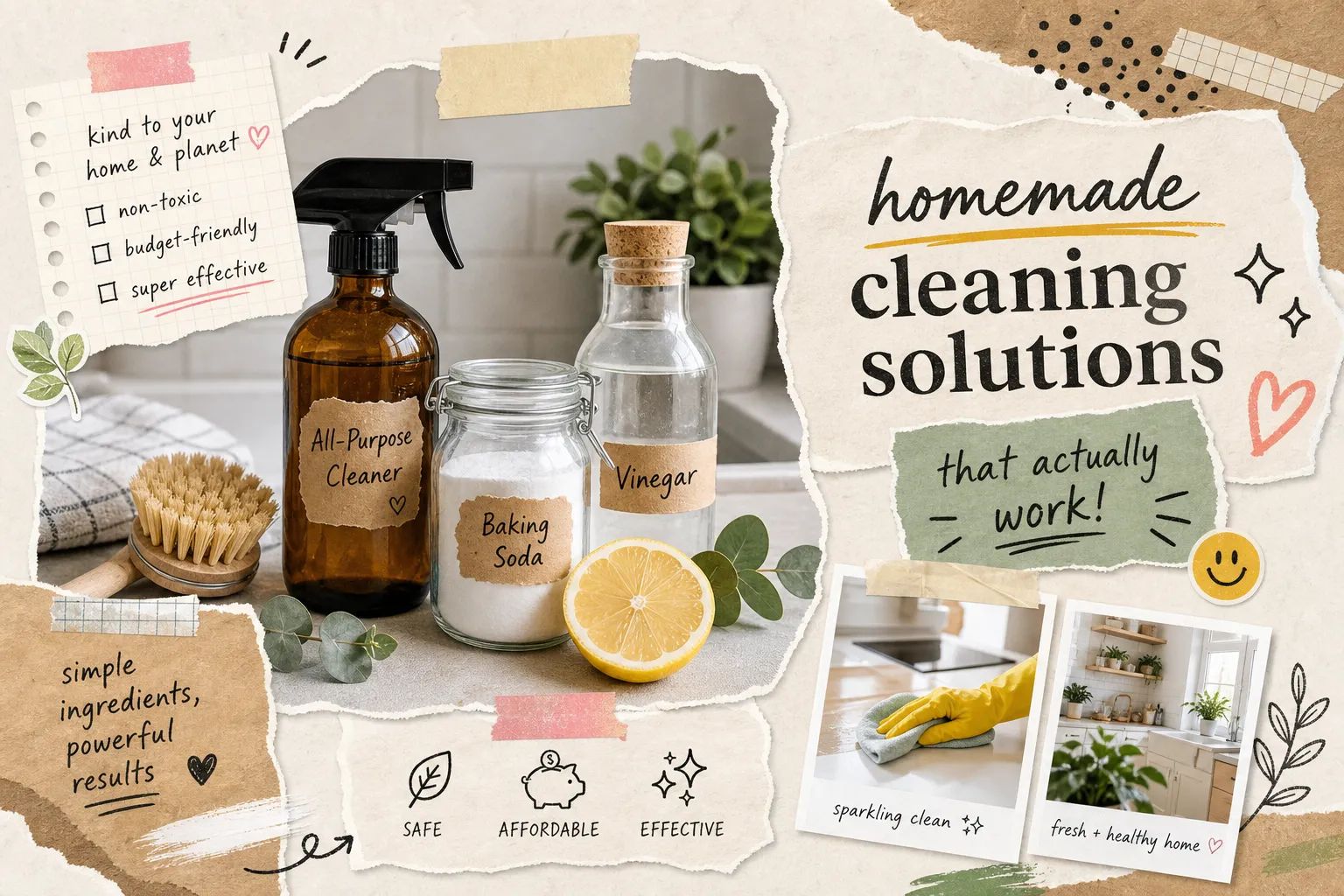
The kitchen handles the most varied types of soil in the house: cooking grease, protein residue, food acids, and bacteria from raw meat. One DIY spray handles most of it. Combine 1 cup of distilled white vinegar with 1 cup of distilled water in a labeled 16-oz glass spray bottle, and add 15 to 20 drops of essential oil if you want fragrance. Spray it on counters and stovetop surfaces, let it sit briefly, and wipe with a microfiber cloth. The acetic acid cuts everyday grease without leaving toxic film. Using distilled water extends the shelf life; label and date the bottle, and plan to use it within four weeks. Shelf life may be shorter if you add essential oils.
For heavier grease or protein buildup on sinks, cutting boards, and tile, swap to a castile soap mix: 2 tablespoons of liquid castile soap in 2 cups of water. Give it 20 seconds of contact time before wiping. For cutting board disinfection specifically, spray 3% hydrogen peroxide directly on the surface, leave it for 10 minutes, then rinse. Castile soap alone won’t kill pathogens; the hydrogen peroxide follow-up is what does that job.
Three direct product swaps for the kitchen
- Dish soap: unscented castile soap diluted 1:10 with water
- Antibacterial counter spray: vinegar-water spray for cleaning, followed by a hydrogen peroxide spray for disinfection
- Commercial degreaser: 1:1 vinegar-water with a drop of castile soap worked in for stubborn grease
For baked-on grease on stovetops and oven interiors, a basic DIY spray won’t be enough. Qurabox’s oven deep clean guide covers a complete non-toxic method for carbonized grease and food residue, using ingredients that are far safer than commercial oven cleaners, which rank among the most chemically aggressive products in any conventional cleaning kit.
Bathroom eco-friendly cleaning alternatives: grout, mold, and hard water
The bathroom is where most eco-cleaning attempts fall short because it combines three different problems: soap scum and mineral deposits, surface grime in porous grout, and ongoing mold risk from moisture. Each one needs a different approach.
For grout cleaning, make a thick paste from 1⅔ cups baking soda, ¼ cup castile soap, and ¼ cup water. Apply it to grout with an old toothbrush, scrub, and rinse thoroughly. Store any leftovers in an airtight container. The baking soda provides mild abrasion that lifts surface grime without scratching tile, and the castile soap emulsifies the residue so it rinses clean rather than smearing.
For mold and mildew, hydrogen peroxide at 3% is one of the more effective non-bleach options available. Spray it directly on affected grout or tile, leave it for 10 minutes, then scrub and rinse. For light mold and ongoing prevention, tea tree oil (¼ teaspoon in 1 quart of water with a few drops of castile soap) works well. Spray after showering and leave it without rinsing. That said, no cleaner replaces airflow. A bathroom that doesn’t ventilate will grow mold regardless of what you spray on it.
If you prefer a certified ready-made product for toilets and contact surfaces, Brulin TerraGreen Kick Plus RTU Bowl Cleaner carries Green Seal certification and is listed on government-approved green cleaning rosters. Clorox Green Works Bathroom Cleaner (EPA DfE-listed) is widely available at major retailers and provides a low-barrier starting point for households switching away from conventional bathroom chemicals. For high-contact disinfection points like toilet bowls and flush handles, EPA-reviewed certified formulas are likely to deliver more consistent, regulated pathogen kill rates than homemade recipes, which is why they’re worth keeping on hand for those specific tasks.
Living room and bedroom: floors, glass, and fabric surfaces
Hard floors, mirrors, and upholstered surfaces each have a specific vulnerability. Use the wrong cleaner and you’ll either dull a finish, leave streaks, or soak fabric deep enough to cause mold under the surface.
For sealed hardwood, use a pH-neutral floor cleaner like Boardwalk Neutral Floor Cleaner (EPA Safer Choice) applied with a slightly damp microfiber mop, never a saturated one. Avoid vinegar-heavy mixes on sealed hardwood: repeated use strips the finish and leaves the wood dull and exposed. For tile and vinyl floors, the 1:1 vinegar-water spray works well, but wring your mop thoroughly so moisture doesn’t sit on grout lines. For area rugs, sprinkle baking soda, leave it 15 minutes, and vacuum it up to eliminate odors without any chemical spray. For independent testing and product recommendations on caring for hardwood, see the best hardwood floor cleaners guide.
DIY glass cleaner recipe
The best DIY glass cleaner is a four-ingredient mix: ¼ cup white vinegar, ¼ cup isopropyl alcohol, 1 tablespoon cornstarch, and 2 cups water. Shake before each use because the cornstarch settles. Apply with a microfiber cloth in a Z-pattern rather than circles, moving in one direction prevents you from redistributing residue back across the surface. This formula handles fingerprints, dust film, and cooking splatter on mirrors, glass furniture, and sliding doors without a streaky finish.
For upholstered fabric surfaces, keep it minimal. Spot-treat with a diluted castile soap solution (a few drops in a cup of water), applied with a damp cloth and blotted dry rather than rubbed. For odors on mattresses or fabric headboards, baking soda is a reliable low-residue option: sprinkle it on, leave it for 20 minutes, and vacuum it up. Always test on a hidden area first; the main risk with fabric isn’t chemical damage but over-wetting, which can cause mold under the surface.
Surfaces that punish the wrong eco cleaner
This is where most green cleaning guides skip the detail that actually protects your home. Not every natural ingredient is safe on every surface, and some of the most common DIY cleaning instincts cause permanent damage.
Marble, limestone, travertine, and cultured marble are calcium-based stones. White vinegar, lemon juice, and other acidic ingredients dissolve calcium carbonate on contact, causing etching and permanent dulling that no amount of polishing reverses. Ammonia, which appears in some products marketed as green glass cleaners, is equally destructive on natural stone: it degrades protective seals and opens the surface to deep staining. Sealed hardwood floors are also vulnerable to vinegar over time; repeated use strips the finish, even when the initial results look fine.
For marble, granite, and natural stone, use a pH-neutral stone cleaner labeled for the specific material. Simple Green Granite and Stone Cleaner and Granite Gold Daily Cleaner are both safe options. For oil or grease stains on stone, a poultice of baking soda and hydrogen peroxide draws the stain out without etching: apply the paste, cover it with plastic wrap, leave it overnight, then rinse. For sealed hardwood, stick strictly to products labeled pH-neutral and floor-finish-safe, and always wring your mop nearly dry before it touches the surface.
Building a complete green home cleaning routine
These room-specific swaps work best as part of a consistent routine rather than a one-time experiment. Sustainable cleaning solutions reduce exposure to harsh chemicals, but they also depend on regular application to prevent the kind of heavy buildup that drives most people back to industrial cleaners.
Qurabox’s approach to organizing a cleaning routine breaks the full house into manageable daily and weekly tasks, giving you a framework to apply the room-specific swaps from this guide without missing surfaces or doubling up effort. Using that structure alongside the DIY recipes here creates a complete, top-to-bottom green cleaning system, no guesswork, no gaps, and no reason to keep harsh sprays under the sink.
Your green clean starts with one room
Switching to eco-friendly cleaning alternatives for every room in your home isn’t a compromise. It’s a matter of matching the right natural ingredient or certified product to each surface and each type of soil. Vinegar and hydrogen peroxide each bring cleaning and disinfecting power to the table, with important distinctions: vinegar excels at routine cleaning and degreasing, while hydrogen peroxide at 3% provides more reliable disinfection when given adequate contact time. Baking soda and castile soap clean and deodorize. pH-neutral products protect marble, natural stone, and sealed hardwood. That’s the whole framework, and it covers the overwhelming majority of what you’ll encounter room by room.
Start with one room, the kitchen or bathroom, using the DIY recipes in this guide. The vinegar-water spray, the castile soap mix, and the hydrogen peroxide follow-up cover most of what you’ll encounter. Once those feel automatic, use Qurabox’s cleaning schedule to build the full routine across the rest of the house, surface by surface, room by room.
Bookmark this guide and pull it up on your next cleaning day. Every recipe, product pick, and surface rule is in one place, no more mid-clean searches.