Home car upkeep is one of the most cost-effective habits any driver can build, yet most people hand off tasks to a shop that they could easily handle in their own driveway. According to AAA, many drivers spend hundreds of dollars per year on car maintenance and repairs, and a significant portion of that total goes straight to labor costs for jobs any capable adult can manage at home. Routine at-home car care isn’t about becoming a mechanic. It’s about knowing your vehicle well enough to handle the basics yourself and show up at the shop only when the job genuinely requires one. At Qurabox, we cover everything that keeps your life running smoothly, from home cleaning schedules to seasonal maintenance checklists, and your car is absolutely part of that picture.
This guide is specifically designed for the driveway-level DIYer, no lift required, no advanced mechanical knowledge assumed. By the time you finish reading, you’ll have a clear toolkit list, a realistic car maintenance schedule, and a solid understanding of what to handle yourself versus what belongs at a shop.
Why regular home car upkeep saves you real money
Routine upkeep isn’t a chore you do out of obligation. It’s a financial decision with a measurable return. The numbers make a strong case for spending a Saturday afternoon in the driveway rather than waiting in a shop lobby.
The actual cost gap between DIY and a shop visit
A synthetic oil change at a shop runs $70 to $100, while doing it yourself costs roughly $40 in materials, a savings of $15 to $60 per change depending on local shop prices. Tire rotations at a shop run $20 to $40. DIY costs nothing if you already have the tools. Run those numbers across a full year: two oil changes and two rotations at a shop can add up to $180 or more. Doing both at home may nearly cover the cost of a solid starter toolkit within the first twelve months, depending on how often you change your oil and what shops charge in your area. If you want a third-party take on whether it’s worth it to handle oil changes yourself, see this discussion on whether to change your oil yourself.
The savings compound further when you factor in upsells. Shops frequently recommend additional services during routine visits, and not all of them are urgent. Handling the basic tasks yourself keeps you informed and in control of what actually needs attention.
Preventive upkeep versus reactive repair
Fluid neglect and clogged filters accelerate engine wear over time. A quick monthly check that costs you nothing can help you avoid repair bills that run into the hundreds of dollars. A useful rule: ten minutes of attention today prevents an expensive problem later. Preventive car maintenance doesn’t require expertise. It requires consistency, and that’s something any homeowner can build with a simple schedule.
What to keep in your garage before you start
You don’t need a professional-grade setup to handle driveway-level tasks. A lean, well-chosen starter kit covers the majority of what this guide recommends, and you can assemble it for under $150. This is the foundation of practical home car upkeep, having the right tools on hand before you need them.
The lean starter kit (under $150)
Start with these five items, which cover nearly every basic task in this guide:
- Tire pressure gauge (~$5)
- Portable tire inflator (~$30)
- Portable jump pack (~$60)
- Basic socket and screwdriver set (~$40)
- LED trouble light (~$5)
Total: approximately $140. That’s your first-year investment, and it may pay for itself within the first year if you handle even a couple of oil changes at home rather than paying shop rates. Your actual savings will depend on local shop prices and how frequently you change your oil. For a roundup of essential items and the must-have tools every car owner should consider, check that resource before you shop.
Two upgrades worth adding later
Once the basics are covered, an OBD-II code reader and a multimeter are worth adding to the kit. The code reader lets you pull check-engine light codes before walking into a shop in the dark, and the multimeter handles battery voltage checks. Combined, they run roughly $50 to $80, and neither is urgent on day one. Add them as tasks come up and the need becomes clear.
Home Car Upkeep: Monthly Fluid Checks in Under 10 Minutes
Fluid checks are the foundation of good DIY car maintenance. They’re fast, require no tools, and give you an accurate picture of your engine’s health between service visits. Every step here is verifiable against your owner’s manual.
Checking and topping off engine oil the right way
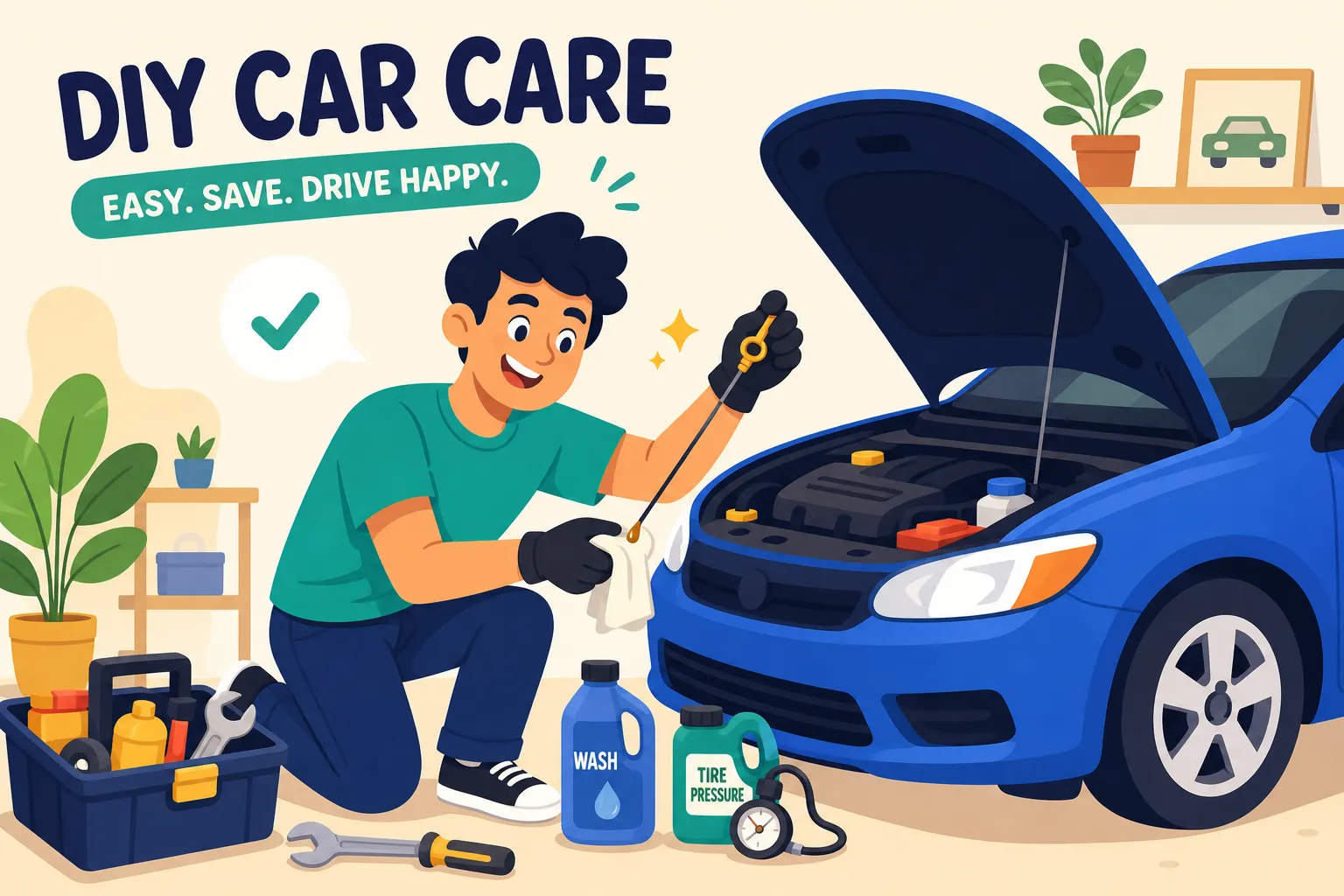
Park on level ground and wait for a cool or warm-but-not-hot engine. Pull the dipstick (usually yellow or orange), wipe it clean with a rag, reinsert it fully, then pull it out again to get a clean reading. The oil level should sit between the two marks on the dipstick. If it’s low, add the oil type specified in your owner’s manual in small increments, then recheck before adding more. Never overfill, because excess oil causes its own set of problems.
One safety note: avoid opening oil fill areas or removing the dipstick on a very hot engine, as hot oil can spray and cause burns. Follow your owner’s manual for specific guidance on when it’s safe to check. If the dipstick shows no oil at all, add a quart, wait a few minutes, and recheck before driving anywhere. For a visual step-by-step on how to check engine oil, see this how to check engine oil guide.
A quick scan of your other fluids
Windshield washer fluid is the easiest check and the lowest-stakes one. Brake fluid and coolant have clearly marked reservoirs with min and max lines that you can read visually without opening anything, as long as the engine is cold. Power steering fluid, where applicable, follows the same dipstick or reservoir logic. If any fluid is significantly low, look for a leak before simply topping it off. A recurring low level is a symptom, not a maintenance task.
Filter replacements and tire care that don’t need a shop
These three tasks are among the most commonly delayed DIY jobs, and they deliver some of the most consistent savings when done on schedule. None of them require specialized tools or a lift.
Replacing engine and cabin air filters
Both filters live in accessible housings that open with clips or a single screw. The engine air filter should be replaced every 15,000 to 30,000 miles; a gray or black filter is overdue. The cabin air filter follows the same general interval, and a clogged one reduces airflow noticeably from your AC and heat vents.
The procedure is straightforward: locate the housing using your owner’s manual, release the clips, swap the filter with attention to orientation, and secure the housing back in place. The whole job takes about ten minutes and costs under $25 in parts for most vehicles.
Tire pressure monitoring and wiper blade swaps
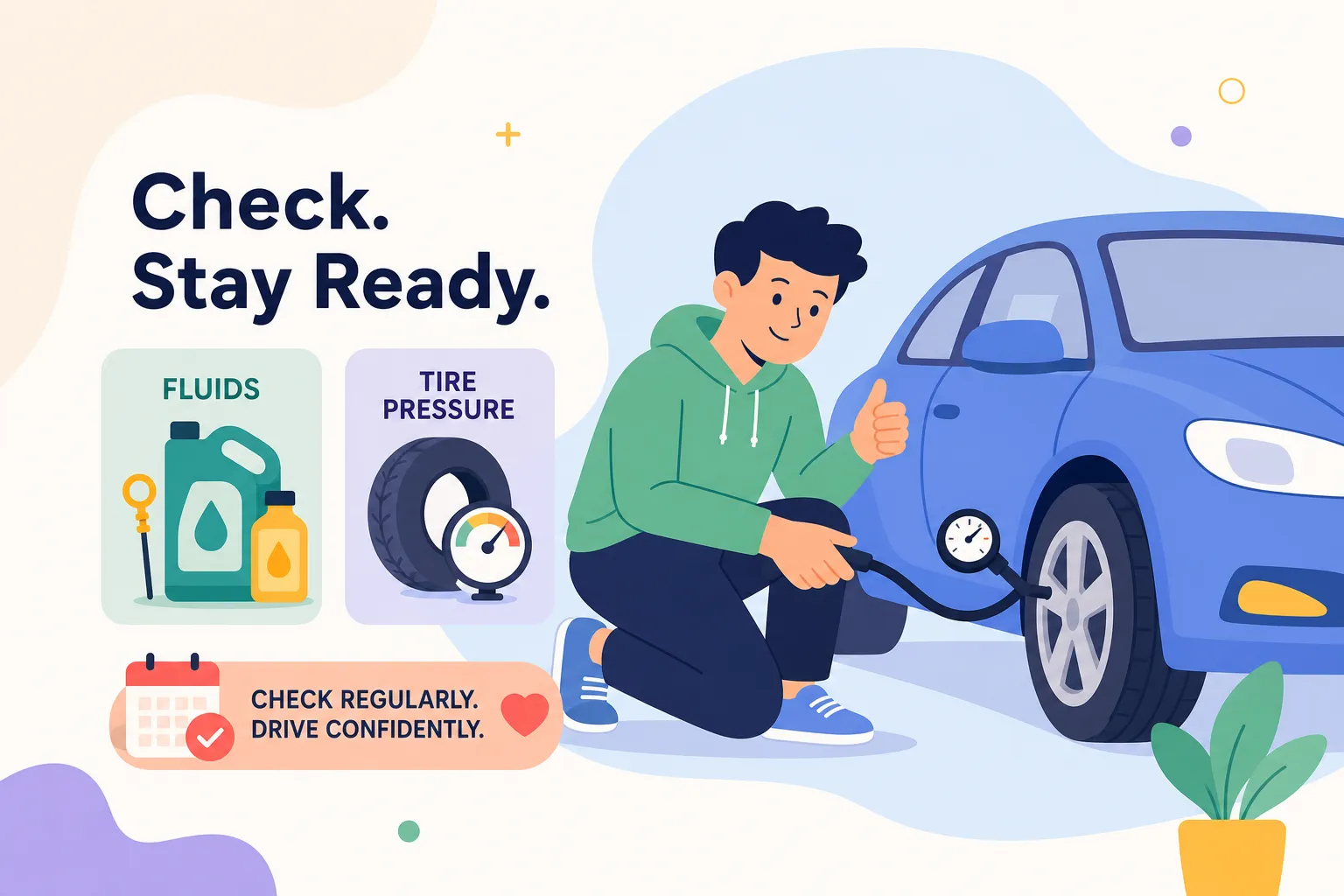
Check tire pressure monthly and before any long drive. Use the PSI listed on the vehicle door placard, not the number printed on the tire sidewall, those are two different figures with different purposes. Inflate with your portable inflator to the exact recommended pressure, then recheck with the gauge. Don’t forget the spare.
Wiper blades are a five-minute job per side. Lift the arm, place a cloth on the glass so the bare arm can’t snap down and crack the windshield, release the blade lock, swap in the new blade, and click it firmly into place. Replace both sides at the same time since they age at the same rate.
A simple car maintenance schedule that keeps your car on track
A vehicle upkeep checklist only works if it’s actually usable. The schedule below is organized by frequency and built around the service intervals that apply to most modern vehicles in 2026. Your owner’s manual is the final authority for your specific make and model. For an organized, time-stamped checklist to compare with your own schedule, see AAA’s maintenance checklist.
What to check every month and every 5,000, 7,500 miles
Monthly tasks take less than fifteen minutes and require no tools beyond a pressure gauge: check engine oil level, check tire pressure on all four tires including the spare, and do a quick visual inspection of your lights and wiper blades. These checks catch problems before they become repairs.
Every 5,000 to 7,500 miles, or roughly every six months, schedule an oil change and a tire rotation together. These two tasks pair naturally, and batching them saves time. If you’re doing one at home and sending the other to a shop, that’s a reasonable compromise that still cuts annual costs significantly.
Longer-interval items to put on your calendar now
Engine and cabin air filters land at 15,000 to 30,000 miles. Mark them in your phone at each oil change milestone so they don’t slip through. Transmission fluid exchange comes at 30,000 to 60,000 miles and belongs at a shop. Spark plugs run 60,000 to 100,000 miles depending on type, and coolant hits around 100,000 miles on most modern vehicles.
Keep a maintenance log. A simple note in your glove box or a phone app with the date and mileage of each service takes ten seconds to fill out and prevents genuine confusion at every future visit. It also protects your vehicle’s resale value when you can demonstrate a documented service history.
Tasks that belong at a shop, not your driveway
Knowing your limits is part of what makes basic car care for homeowners both credible and safe. Not everything belongs in the driveway, and recognizing that line keeps you from turning a small problem into an expensive one.
Safety-critical systems to never skip on
Brake work beyond a visual inspection belongs at a shop, period. If the car pulls under braking, makes grinding sounds, or a brake warning light appears, that’s a mechanic’s job. Calipers, hydraulic lines, and rotor resurfacing require both the right tools and professional diagnosis. Coolant flushes, transmission fluid exchanges, suspension components, and timing belt replacement all involve precision procedures that a driveway setup can’t safely support.
When a warning light means call today, not next week
A persistent check-engine light paired with rough idling, an overheating gauge, or a brake warning light is not a situation to monitor and see. Use an OBD-II reader to pull the code first, a P0420 catalytic converter code is a very different situation from a P0300 misfire. But if you pull a code you don’t understand, take it to a mechanic rather than guessing. Diagnostic clarity is worth the cost of one shop visit.
Start with one task this weekend
Consistent home car upkeep isn’t about mastering automotive repair. It’s about staying ahead of problems, handling the straightforward tasks yourself, and spending shop money only where it genuinely matters. Check fluids monthly, pair your oil change and tire rotation every 5,000 to 7,500 miles, swap filters on schedule, and keep a maintenance log. Those four habits alone put you well ahead of most drivers on repair costs and vehicle longevity.
This article is part of Qurabox’s broader series on keeping your home and everything in it running well. The same practical approach behind our home cleaning schedules and seasonal maintenance guides applies directly to the vehicle sitting in your driveway. Every system benefits from a little regular attention.
Pick one task from this guide and do it this weekend. Check your oil, verify your tire pressure, or replace a cabin filter that’s probably overdue. One small action builds the habit, and the habit is what drives real savings over time. For more routines you can borrow from your household maintenance rhythm, see our pieces on house cleaning routines and the best weekly cleaning routine for busy adults.