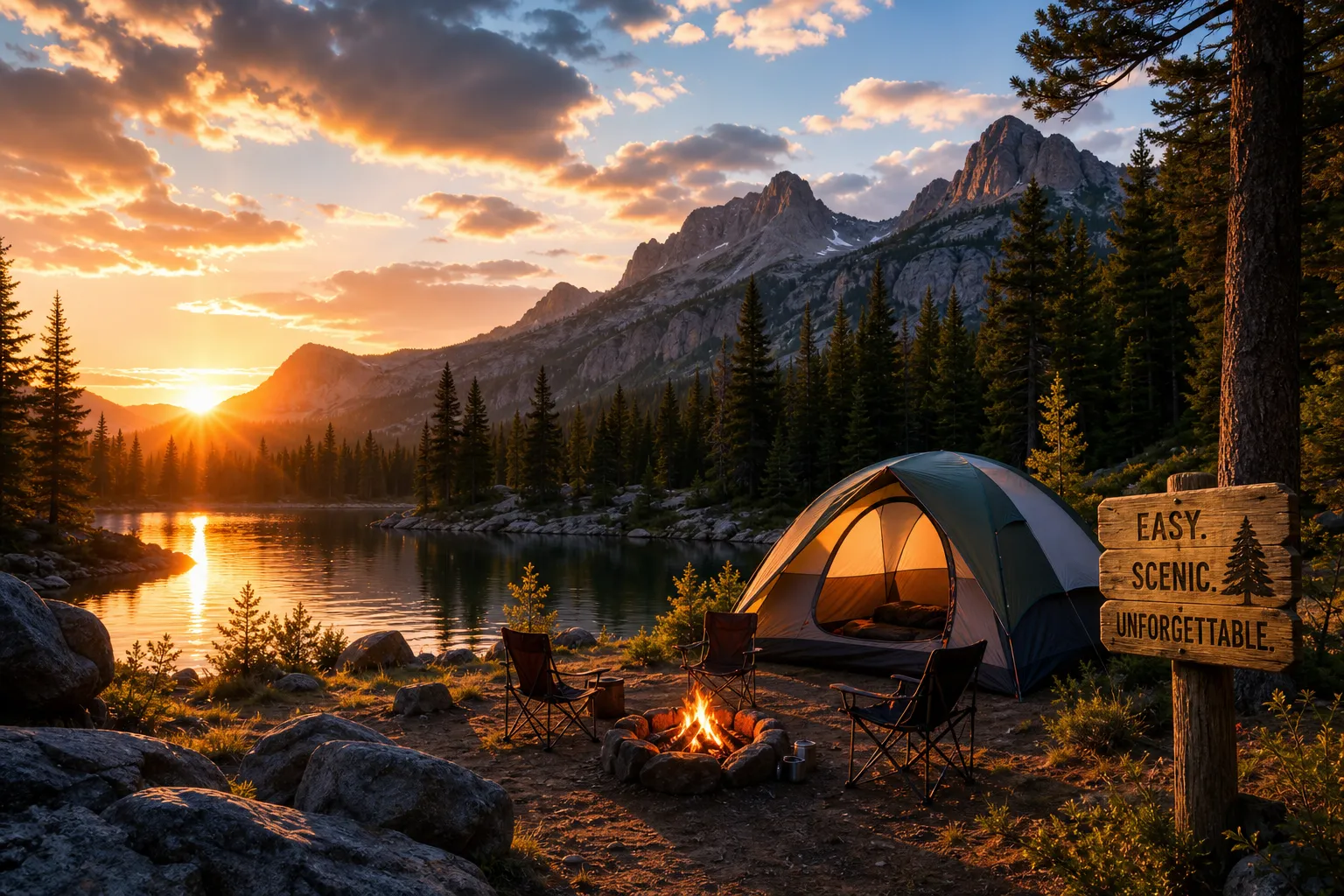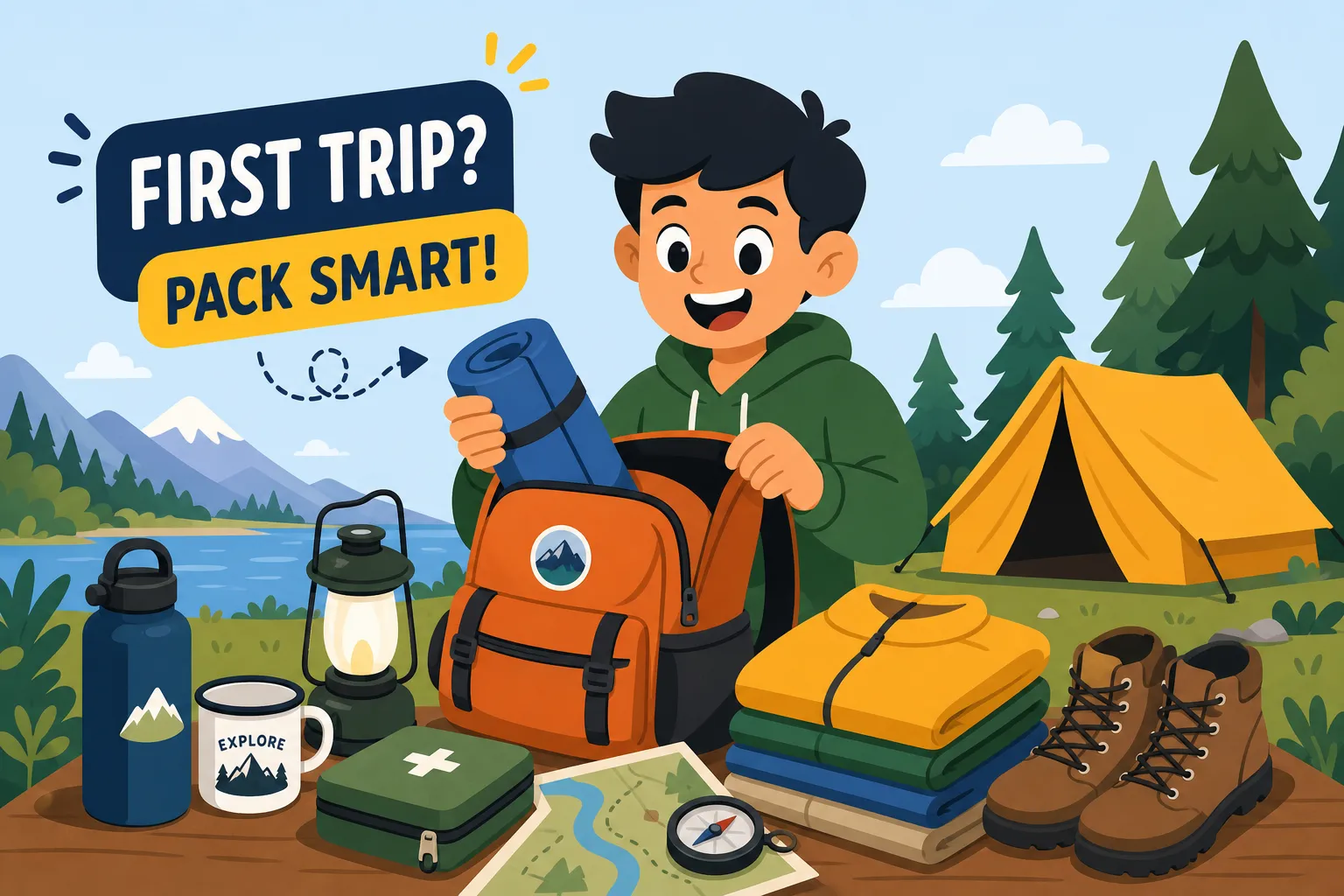
Planning your first camping trip and not sure what to bring? This camping packing list for beginners in the USA breaks down exactly what you need, organized by sleep system, water, food, regulations, and clothing, so you can pack for where you’re actually going, not some generic campsite that doesn’t exist.
Here’s why that matters: a first trip to Great Smoky Mountains means humidity, mild summers, and active black bear country. A desert campground in southern Utah means heat, limited or unreliable water access, and a different set of park rules. Neither of those trips looks anything like a lakeside site in Minnesota in early June. At Qurabox, we build guides around how Americans actually camp, factoring in regional weather patterns, terrain differences, and the specific U.S. campground regulations that catch first-timers off guard.
This guide covers everything you need for a 1, 3 night tent camping trip, whether you’re car camping from a trailhead lot or carrying everything on your back. You’ll walk away with a confident packing plan across six areas: your sleep system, water and food, campground regulations, car camping versus backpacking gear differences, clothing and personal care, and a complete checklist you can screenshot or print before your trip.
Camping packing list for beginners in the USA: shelter and sleep system
Choosing the right tent for U.S. camping
A 3-season tent handles the vast majority of U.S. campsite conditions from spring through fall. Look for a full rainfly that extends close to the ground, solid waterproofing, and enough interior space for your gear as well as your body. Tight conditions inside a wet tent are miserable, especially on a multi-night trip.
Pay attention to stakes. Many U.S. forest and desert campsites have rocky or hard-packed ground, and the cheap stakes bundled with budget tents often bend or fail to hold. Bring several extra heavy-duty stakes appropriate to the ground conditions you expect, you’ll be glad you did the first time a wind picks up overnight.
Sleeping bag ratings by region and season
Temperature ratings are one of the most commonly misunderstood pieces of sleep-system gear for beginners. The practical breakdown: a 30°F+ bag works for summer and warm lowland camping; a 20, 30°F bag covers spring and fall across the Midwest, Pacific Northwest, and Mid-Atlantic; a 10, 20°F bag handles higher elevations and cold shoulder seasons. For Rocky Mountain and Pacific Northwest trips even in summer, a 20, 30°F bag is a safer choice because mountain nights drop near freezing regularly.
Every sleeping bag has two ratings: a comfort rating and a lower limit. Cold sleepers should always buy toward the comfort rating, not the lower limit. If the forecast low is 40°F and you already run cold, a 20°F bag will feel better than a 35°F bag priced the same. For more background on how manufacturers define these numbers, see sleeping bag temperature ratings explained.
Why your sleeping pad changes everything
The sleeping bag alone won’t keep you warm. Cold ground pulls heat from your body far faster than cold air does, and the pad’s R-value is what blocks that transfer. For warm summer ground, R1, 2 is sufficient. For most shoulder-season camping, R2, 4 is the right range. For colder elevations and late fall trips, look for R4, 5 or higher.
Insulated air pads are the best all-around option for most U.S. campers because they compress well and perform reliably across a range of conditions. Foam pads are simple and nearly indestructible, making them a solid backup or budget option for summer trips.
Water, food, and cooking gear for your first campsite
How much water to pack by terrain and climate
Here’s the practical formula: plan for 1 gallon per person per day for easy car camping at a site with reliable water access. Bump that to 2 gallons per person per day if your campsite doesn’t guarantee clean water nearby, or if you’re camping in summer heat. For desert sites in Utah and Arizona specifically, 2 gallons per day is the safer baseline, not the maximum.
Backpacking changes the math because you can’t carry two gallons on your back. Start at 2 liters per day as a drinking minimum, then factor in altitude and exertion: above 8,000 feet, add 1, 2 liters per person per day on top of your baseline. High altitude accelerates dehydration in ways that sneak up on people who don’t expect it. For a deeper planning reference, see this guide on how much water for a camping trip.
Simple camp kitchen essentials
For car camping, your core cooking kit is a camp stove with extra fuel canisters, a pot and a small pan, utensils, a plate and bowl, a cutting board, and a can opener. Add a cooler and your food options expand significantly: fresh eggs, pre-marinated proteins, fresh produce. A small wash-up kit rounds it out: a collapsible basin, biodegradable soap, and a sponge.
For trailside camping, dehydrated and shelf-stable meals replace the cooler. They pack light, rehydrate with boiling water, and generate minimal waste. The taste trade-off is real, but the weight savings are significant enough that many backpackers accept the compromise and move on.
Food storage basics
How you store food is as important as what food you bring. In U.S. campgrounds, this isn’t a suggestion: it’s a regulation with real consequences. The next section covers this in detail, but understand now that your food storage plan is part of your packing list, not an afterthought. Get it wrong and you risk a citation, a ruined trip, or worse, a wildlife encounter that harms the animal.
U.S. campground regulations every first-timer must know
Bear safety and food storage rules across park types
Food storage rules vary by park, zone, and season. Some national parks require approved hard-sided bear canisters in specific backcountry zones: North Cascades, parts of the Sierra Nevada corridor, and Isle Royale are examples where canisters are mandatory, not optional. Many developed campgrounds provide metal food lockers at the site, which simplifies things. But you can’t assume a locker will be there unless you’ve confirmed it for your specific campsite. This aligns with general National Park Service guidance for camping and what to bring.
What counts as a “food storage item” surprises most beginners. It includes food, trash, wrappers, cookware with food residue, toiletries, sunscreen, and insect repellent, essentially anything with a scent. Sequoia and Kings Canyon and other parks require all odorous items to be stored any time they’re not actively in use, which is a stricter standard than many first-timers expect.
The beginner-safe rule: if you’re unsure about your specific campground’s setup, pack a bear canister and treat all scented items as food-storage items. It’s easier to bring a canister you don’t end up needing than to improvise storage on arrival. And food never sleeps in the tent with you. Cook and eat at least 200 feet from your sleeping area, that’s a standard recommendation across multiple park systems, including National Park Service guidance for bear-active zones.
Leave No Trace principles that affect your packing list
Pack-in/pack-out trash policy is enforced at most U.S. backcountry and dispersed sites, which means you need extra garbage bags in your kit. Biodegradable soap is required near water sources in most backcountry zones, so standard dish soap doesn’t cut it if you’re camping off a trail. Check your specific park’s current fire restrictions before you pack any fire-starting gear: many western states maintain fire bans during dry summer months that make a lighter or fire kit irrelevant. Most park websites post current restriction status under a “alerts” or “fire restrictions” tab. If you do plan to build a fire where permitted, review a step-by-step resource like How to Build a Campfire Safely: Step-by-Step Guide for Beginners (Very Easy) so you follow local rules and leave no trace.
Car camping vs. backpacking: two very different packing approaches
What car camping allows you to bring
When your car carries the weight, comfort stops being a trade-off. That means a larger tent, a real pillow, a full cooler, a camp chair, and extra clothing layers without guilt. Car camping is where you can bring items that genuinely improve the experience: a lantern instead of just a headlamp, a hammock, real plates, and a full-sized first aid kit instead of a stripped-down trail kit.
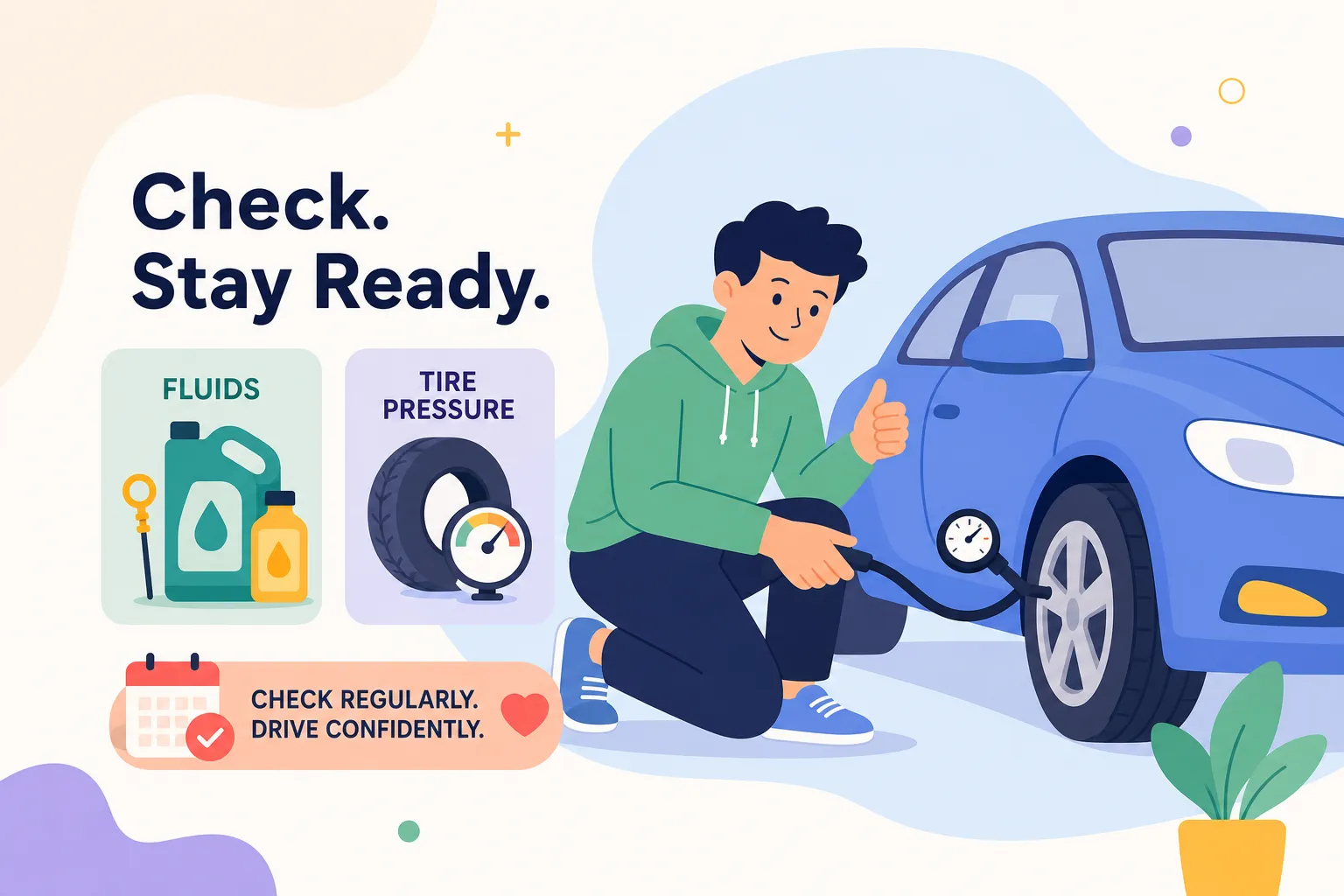
For most beginners, car camping is the right starting point. The barrier to entry is lower, the gear requirements are less specialized, and mistakes in packing are easier to recover from when your vehicle is 50 feet away. If you’re driving to remote campgrounds, brush up on basic roadside skills like How to Change a Flat Tire (Step-by-Step Guide for Beginners 2026), Qurabox.
The leaner backpacking packing list
Every item in a backpacking kit earns its weight or gets cut. The core differences from a car camping setup: a lightweight tent (one- to two-person ultralight models often fall in the 2, 3 lb range, though weight varies by brand and design), a compact insulated sleeping pad, a water filter since you can’t carry two gallons on your back, and dehydrated meals instead of a cooler. Clothing gets trimmed to essential layers only, with one spare base layer as the standard backup.
Bear canisters are more likely to be required on backpacking routes because you’re often camping farther from facilities that provide lockers. Factor the weight of a canister (typically around 1.5, 2 lbs) into your pack planning. A water filter is non-negotiable on trail-based trips where water sources exist but aren’t treated: a compact squeeze filter or gravity filter handles most U.S. backcountry water needs.
Clothing and personal care: what most beginners leave out
Layering strategy for U.S. regional weather
The three-layer system works across every U.S. camping region: a moisture-wicking base layer, an insulating mid-layer (fleece or lightweight down), and a waterproof outer shell. Southeast summer campers can skip the heavy mid-layer. Pacific Northwest and Rocky Mountain campers need all three even in July, because weather changes rapidly at elevation and afternoon thunderstorms are common.
Non-negotiables regardless of region: closed-toe shoes, a rain jacket, and a warm hat for nights. Temperatures at higher elevations drop significantly after sunset, often by 20, 30°F from the afternoon high. Many beginners pack for the daytime forecast and underestimate how cold a clear mountain night actually feels.
Personal hygiene and the items beginners consistently forget
Your basic hygiene kit: biodegradable soap, a quick-dry towel, toothbrush and toothpaste, toilet paper, hand sanitizer, and a small trowel for cathole digging if you’ll be in a backcountry area without restrooms. Most beginners pack the first four and forget the last two entirely.
Toiletries count as scented items under bear safety rules in most parks. That means your sunscreen, insect repellent, lip balm, and toothpaste belong in your food storage system, not loose in your pack or tent. Consolidating everything scented into one odor-resistant bag before your trip makes bear-safe storage much easier at camp.
Beginner camping checklist for the USA: complete gear at a glance
Core items for any U.S. camping trip
Use this as your minimum kit for a 1, 3 night trip, not the ceiling. This camping checklist for beginners covers what to pack for camping across all major terrain types:
- Shelter and sleep: 3-season tent with rainfly and stakes, sleeping bag (rated for your region and season), sleeping pad (R-value matched to conditions), pillow
- Water: 1, 2 gallons per person per day for car camping; water filter plus 2+ liters for backpacking
- Food and cooking: camp stove, fuel canister, pot, pan, utensils, plates, cutting board, can opener, cooler (car camping) or dehydrated meals (backpacking), biodegradable soap, collapsible wash basin
- Fire and light: headlamp with extra batteries, lantern (car camping), lighter or waterproof matches (check fire restrictions first)
- Safety and first aid: first aid kit, any personal medications, emergency whistle, phone with downloaded offline maps
- Clothing: moisture-wicking base layer, insulating mid-layer, waterproof shell, closed-toe shoes, warm hat, rain jacket
- Hygiene and food storage: biodegradable soap, quick-dry towel, toothbrush and toothpaste, toilet paper, hand sanitizer, trowel (backcountry), odor-resistant bag or bear canister, extra garbage bags
Regional and trip-type additions to customize your list
Layer on top of the core kit based on where you’re going: a bear canister for backcountry routes in bear-active parks; a water filter for any trail-based trip without confirmed treated water access; extra insulation layers for mountain and high-elevation sites; sun protection and a wider-brimmed hat for desert camping in Utah, Arizona, or New Mexico.
A packing list that accounts for your specific destination is always more useful than a generic one. Qurabox publishes location-specific guides for regional camping trips across the U.S., from beginner-friendly campground breakdowns to seasonal trail prep, if you want to go deeper on a particular area. Learn more on the About Us, Qurabox page.
Pack for where you’re actually going
The gear doesn’t have to be expensive or perfect. Getting the essentials right is what separates a great first trip from a rough one: a sleep system rated for actual conditions, enough water for your terrain, food storage that keeps you compliant with park rules, and clothing that handles nights as well as days.
Use this camping packing list for beginners in the USA to work through five decisions before any trip: what sleep system matches your region and season, how much water your terrain and climate require, what food storage your specific park or campground mandates, whether car camping or backpacking drives your gear priorities, and which personal care items most first-timers overlook. These five decisions cover the most common beginner mistakes, work through them before you load the car and you’ll avoid the vast majority of first-timer problems.
When you’re ready to plan a specific destination, Qurabox’s beginner camping guides cover the best first-time campgrounds across the U.S., campsite cooking basics, and gear recommendations by region. Start with the destination, build your camping packing list for beginners around it, and you’re ready to go.