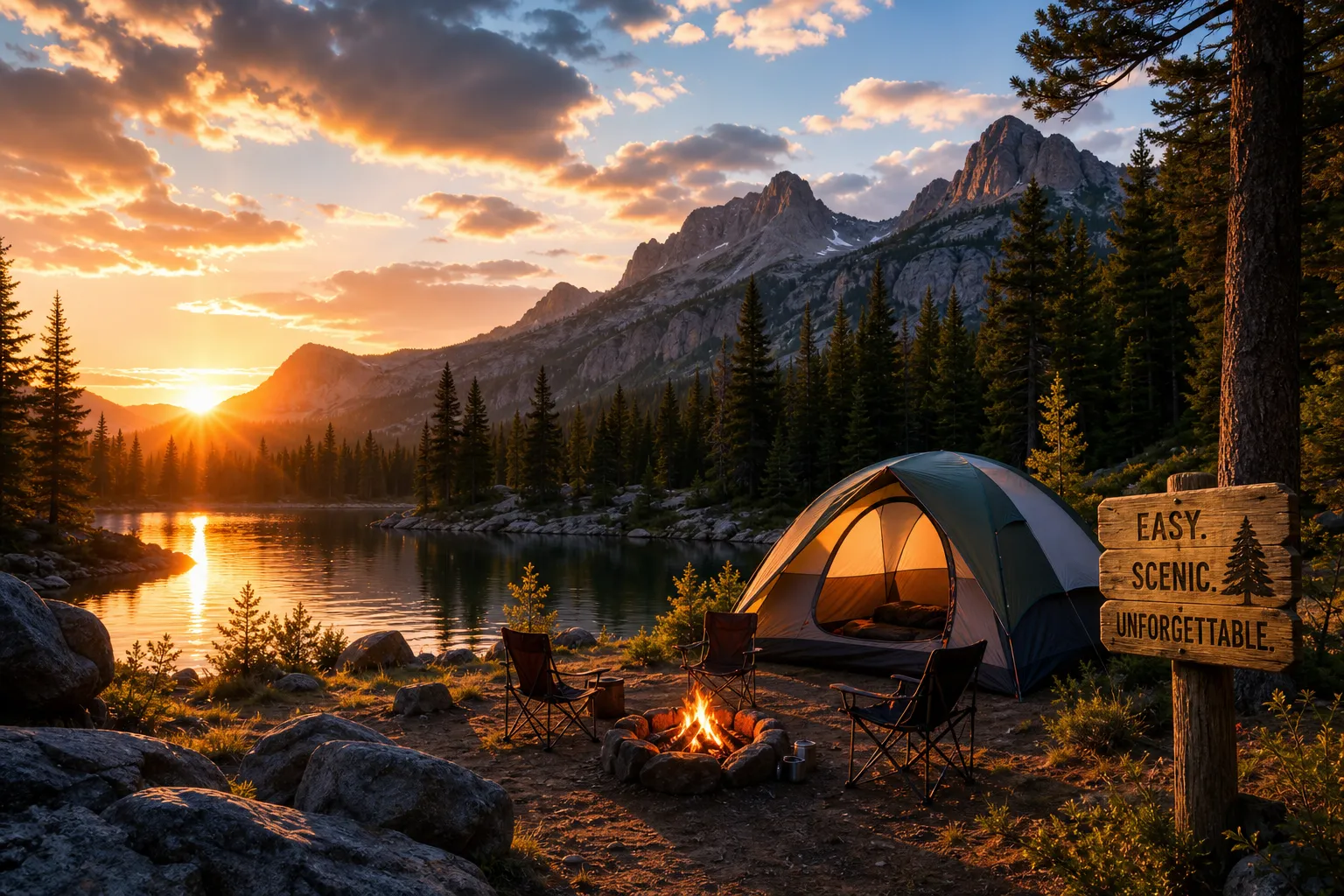
Essential camping gear for first-time campers on a budget is the difference between a genuinely great first trip and an expensive mistake that ends with a garage full of equipment you barely use. Most beginners fall into one of two traps: they spend $800 on gear before their first night out, or they show up underprepared and spend a miserable night shivering on hard ground, deciding camping “just isn’t for them.” Neither outcome reflects what camping actually feels like when you do it right.
The principle at Qurabox is simple: spend money where it protects you from a bad experience, and skip everything else until you know what you actually use. That’s exactly how this guide is structured. You’ll find a prioritized starter kit built around real price expectations, a clear buy-versus-borrow framework, and a beginner camping checklist you can take straight to the store. No fluff, no gear-industry upselling.
This guide is written for car camping specifically, which means you don’t need ultralight or backpacking-grade gear. You need something functional, weatherproof enough to protect you, and affordable enough to not regret if you only camp twice a year.
The buy vs. borrow decision: your first essential camping gear call
This is the single most important call a first-time camper makes before opening any product page. The wrong move is treating every item on a camping checklist as something you need to buy new. The right move is separating “items that affect my safety and sleep” from “items someone in my social circle probably already owns.”
Tents, sleeping bags, and sleeping pads are the three most expensive items in any starter kit, and they’re also the items most likely to exist in your friend group. Borrowing just these three items for a single trip keeps your first-trip cost under $100 and lets you test the experience without a financial commitment. After one night outside, you’ll know whether you want a two-person dome tent or a four-person family shelter, a 30°F bag or a 20°F bag, and a foam pad or an inflatable one. That information is worth more than any gear review.
REI’s rental program is the backup option if borrowing isn’t available. They stock tents, sleeping bags, sleeping pads, and even camp stoves for short-term rental, which makes a trial trip genuinely affordable. Geartrade and Out&Back also carry used name-brand gear at 30% to 50% off retail for when you’re ready to own your own kit.
The items worth buying new before trip one are limited to safety and personal hygiene gear: a headlamp, a basic first aid kit, a reusable water bottle, and weather-appropriate clothing. These are either hygiene-sensitive or low enough in cost that buying used doesn’t make practical sense. A headlamp runs $15 to $30 and is the most consistently underrated piece of cheap camping gear you’ll buy, your hands need to be free after dark, and a flashlight that requires one hand just doesn’t cut it.
Essential camping gear on a budget: shelter and sleep picks that actually work
Once you’ve exhausted the borrow option and are ready to buy, shelter and sleep gear deserve the biggest share of your budget. For car camping, you don’t need ultralight construction or technical weatherproofing rated for alpine conditions. You need something that keeps you dry and warm enough to sleep through the night at a standard campground.
Three tents consistently earn strong beginner reviews without breaking $150. The River Country Trekker Tent 2V runs around $66 and delivers impressive space and durability for the price. The Clostnature Polaris 2 is a freestanding dome at roughly $85, which makes setup easier for first-timers who have never pitched a tent before. The Kelty Wireless 2 at about $120 adds a large vestibule, which matters more than most beginners expect once rain arrives at 2 a.m. For groups or families, the Coleman Sundome 6 is the standard affordable car-camping pick and regularly shows up in beginner gear roundups for its easy setup and low cost.
For sleeping bags, a synthetic fill rated at 25°F to 30°F covers the majority of spring and fall camping conditions across most of the United States. Down bags are warmer and lighter, but they cost more and lose insulation when wet, which makes synthetic the smarter first purchase. The Kelty Catena 30 costs around $60 and is one of the lowest-priced 30°F bags worth buying. The Coleman Brazos at $54 handles milder shoulder-season nights well. If you’re camping in northern states, higher elevations, or late fall, step down to a 20°F bag instead, understanding sleeping bag temperature ratings helps you pick the right one for your region.
For the sleeping pad, prioritize insulation over comfort features. Sleeping directly on the tent floor pulls body heat away from you far faster than most first-timers expect. A self-inflating foam pad in the $30 to $50 range solves that problem completely. As for a pillow, skip the dedicated camp pillow on trip one, a stuff sack filled with tomorrow’s clothes works fine and costs nothing.
The minimalist cooking setup for beginner campers on a budget
Camp cooking doesn’t require a full outdoor kitchen. The mistake most beginners make is buying a complete camp cookware set before they know their actual cooking style. Those sets include pieces you won’t touch on a first trip and add unnecessary bulk. Start with the smallest functional setup and add only what a second trip proves you actually need.
For solo trips or two-person outings, a single-burner butane or butane-propane stove handles simple camp meals reliably. The Gas One GS-3400P and the Coleman Classic 1-Burner Butane are both sub-$40 options that cover boiling water, heating soup, and cooking eggs without issues. For family-style car camping where you’re making multiple things at once, a two-burner propane stove like the Coleman Classic 2-Burner is worth the extra cost and runs $50 to $70. If you want a deeper equipment comparison before you buy, check expert evaluations of the best camping stoves to see how entry-level models stack up against pricier options. Most beginners doing weekend car camping fall into this second category.
Keep your kitchen kit short. One medium pot with a lid handles boiling water, pasta, and soup for two people. One nonstick skillet covers eggs and quesadillas. Add a long-handled spoon, one mug per person, and a collapsible wash basin with biodegradable soap. That setup fits in a single bag, costs under $40 to put together with basic cookware, and handles every realistic first-trip meal scenario.
Safety and lighting: cheap camping gear that matters more than you’d expect
No category in a starter camping gear list is cheaper to get right than safety and lighting. A headlamp is non-negotiable because your hands need to be free after dark, whether you’re setting up camp late, navigating to a shared restroom, or dealing with a minor gear problem. A flashlight requires one hand and gets set down; a headlamp doesn’t.
Black Diamond and Petzl both make entry-level headlamps in the $15 to $30 range that are bright, reliable, and simple to use. Pack spare batteries in a zip-lock bag inside the headlamp stuff sack. Headlamps fail most often because batteries die, not because the light breaks. That’s a $3 backup most campers skip and then regret.
For a first aid kit, a pre-assembled option from REI or Amazon in the $15 to $25 range covers cuts, blisters, and minor burns, the injuries most first-timers actually deal with. Add your personal medications and any prescription items on top of that. Combine the kit with insect repellent and sunscreen, and your full safety setup lands under $60 total. That’s a small line item for something that genuinely matters.
Where to find affordable camping gear without overpaying
Knowing what to buy only solves half the equation. Knowing where to buy budget camping essentials at the right price keeps your total first-trip cost under control without sacrificing quality on the items that count.
REI’s Re/Supply section (available both online and in-store) consistently stocks name-brand tents, sleeping bags, and sleeping pads at 30% to 50% off retail. Geartrade is a solid independent used-gear marketplace for camping and hiking equipment. Facebook Marketplace and OfferUp work well for bulkier items like two-burner stoves and coolers, where shipping costs make Amazon less competitive. For new gear, Amazon handles basics like headlamps, first aid kits, and budget tents reliably. CampSaver’s outlet section offers competitive pricing on mid-range sleep gear when it’s in stock.
Late summer and early fall are the two best windows for discounted camping gear. Retailers clear spring and summer inventory aggressively between August and October, which is when you’ll find the deepest markdowns on tents and sleeping bags. Planning a spring trip? Buy in the prior fall and save 20% to 40% compared to buying in-season. If you’re reading this during peak spring and need gear now, compare REI’s Garage section against Amazon’s current pricing before committing; the difference on a $120 tent can be $20 to $30 with five minutes of comparison shopping.
Your first-time camper starter checklist
Use this prioritized list as your shopping and packing guide. The goal isn’t to buy everything at once. Own or borrow every item in Tier 1 before you leave the driveway. Tier 2 items are real upgrades, but you can have a fully successful first trip without any of them.
Tier 1: non-negotiable before your first trip
- Tent (buy or borrow; freestanding dome recommended)
- Sleeping bag matched to your expected nighttime temperature
- Sleeping pad or self-inflating foam mat
- Headlamp with spare batteries
- Basic first aid kit
- Water bottle or jug
- Camp stove and fuel
- How to build a campfire safely (lighter or waterproof matches)
- Weather-appropriate clothing layers
Tier 2: add when budget allows
- Camp chair
- Small cooler for perishables
- Collapsible wash basin and biodegradable soap
- Multi-tool or pocket knife
- Bug spray and sunscreen
- Portable power bank for your phone
Frequently asked questions about camping gear for beginners
What should I buy vs. borrow for my first camping trip?
Borrow the big-ticket items first: tent, sleeping bag, and sleeping pad. These are the most expensive pieces and the ones most likely to exist in your friend group. Buy only what’s hygiene-sensitive or inexpensive, specifically a headlamp, basic first aid kit, water bottle, and clothing layers.
What temperature rating do I need in a sleeping bag?
For most spring and fall car camping across the United States, a synthetic bag rated at 25°F to 30°F covers you in the majority of conditions. If you’re camping in northern states, at higher elevations, or in late fall, look for a 20°F bag instead.
How much should I spend on my first camping kit?
If you borrow the shelter and sleep system, a solid first-trip kit, headlamp, first aid kit, stove, fuel, and basic cookware, runs $100 to $150. Buying your own tent and sleeping bag adds another $100 to $200 depending on the options you choose from the picks in this guide.
Is it worth buying used camping gear?
Yes, especially for tents, sleeping bags, and sleeping pads. REI’s Re/Supply section and Geartrade both carry name-brand used gear at 30% to 50% off retail. For an overview of where to buy used outdoor gear, see expert roundups that compare marketplaces and what to watch for on condition and seller reputation. Avoid buying used sleeping bags if condition is uncertain; insulation degrades and isn’t always visible in photos.
Do I need special gear for car camping vs. backpacking?
Car camping gear doesn’t need to be ultralight or compact. Weight and pack size matter far less when everything lives in your car trunk. That’s why the budget-friendly options in this guide, like the Coleman Sundome or a self-inflating foam pad, work well for car camping but wouldn’t be practical on a backpacking trail.
Your first trip doesn’t need to be expensive to be successful
The essentials come down to four things: solid shelter, a sleep system that keeps you warm, a simple way to cook, and a headlamp. Everything else is optional on trip one. Beginners who try to optimize their entire kit before going outside almost always over-buy and under-use. Beginners who borrow a tent, grab a $60 sleeping bag, and show up with a headlamp usually come home wanting to go again.
At Qurabox, the approach to content like this is rooted in one idea: help readers make confident, practical decisions without spending more than necessary. We also publish other beginner’s step-by-step guides, such as How to Start Surfing for Beginners in 2026, that follow the same practical, no-fluff format.
Bookmark the checklist above, borrow what you can from friends, and set a firm budget before you open a single product page. If you’re the DIY type who likes detailed build guides, you might also appreciate our How to Build a PC: Beginner’s Step-by-Step Guide (2026) as another example of the step-by-step approach. Your first campsite is closer and cheaper than the camping industry wants you to believe.