Many drivers think about car maintenance only when a warning light appears or something makes a noise it didn’t make yesterday. That reactive approach is exactly how a small, inexpensive fix can escalate into a large repair bill if ignored long enough. The good news: a simple car care checklist used consistently, organized by frequency, is all it takes to catch problems before they catch you off guard.
At Qurabox, the editorial philosophy is the same across every category we cover: small, consistent actions organized by frequency outperform frantic one-time fixes every time. The same principle behind Qurabox’s seasonal home cleaning schedules and home upkeep guides applies directly to your vehicle. This article is the automotive companion to that system, built around the same format our readers already use to manage their homes and daily routines.
Here’s what you’ll get: a practical car maintenance schedule broken into four time windows, typical 2026 cost ranges for common services, clear guidance on what’s safe to handle yourself versus what belongs in a shop, and a dedicated section for hybrid and EV owners. Print it, bookmark it, and actually use it.
Daily and weekly checks that take less than five minutes
These aren’t meant to make you paranoid about your car. They’re two quick habits that take about a minute combined and prevent the kind of problems that strand people on the side of the road.
Glance at your dashboard before you pull out
Any warning light that wasn’t there yesterday deserves your attention before you move the car. A flashing check engine light means stop now and call for help. A solid check engine light means schedule a shop visit within a few days. Three commonly overlooked lights include the tire pressure monitoring system (TPMS) indicator, the low fuel warning, and the temperature gauge creeping toward the red zone. None of these take extra time to notice; they just require that you actually look at the dashboard before shifting into drive.
A 60-second walkaround is worth the habit
Before your first drive of the day, glance under the car for new puddles or wet spots, especially if it hasn’t rained. Fresh oil looks brown to black and feels slick; coolant is often green, orange, or pink with a faintly sweet smell; brake fluid is clear to amber and a serious concern if you spot it. A quick walk around the car also catches a noticeably flat tire before you’re on the highway. This isn’t a substitute for a pressure gauge check, but it takes 60 seconds and can head off the kind of morning that derails your entire day.
Your monthly car care checklist
Once a month, set aside about 20 minutes. You need a tire-pressure gauge, a flashlight, and a clean rag. No mechanical skill required. This routine covers the systems most likely to cause breakdowns or safety problems between service visits.
Tires: pressure, tread, and condition
Check pressure with a gauge and compare it to the number on the driver-door placard, the sticker on the door jamb. That number is the recommended operating pressure; the number stamped on the tire sidewall is the maximum, not the target. Underinflated tires wear faster, handle worse, and cut fuel economy. For tread depth, use the quarter test: insert a quarter with Washington’s head pointed down into the tread groove. If you can see the top of his head, you’re at or below 4/32 of an inch, which is the point where wet-weather traction starts dropping off. At 2/32 of an inch (use a penny with Lincoln’s head pointed down), the tire is at the legal minimum and needs replacement. Also inspect for sidewall bulges, cuts, or embedded objects.
Fluid levels, battery terminals, and exterior lights
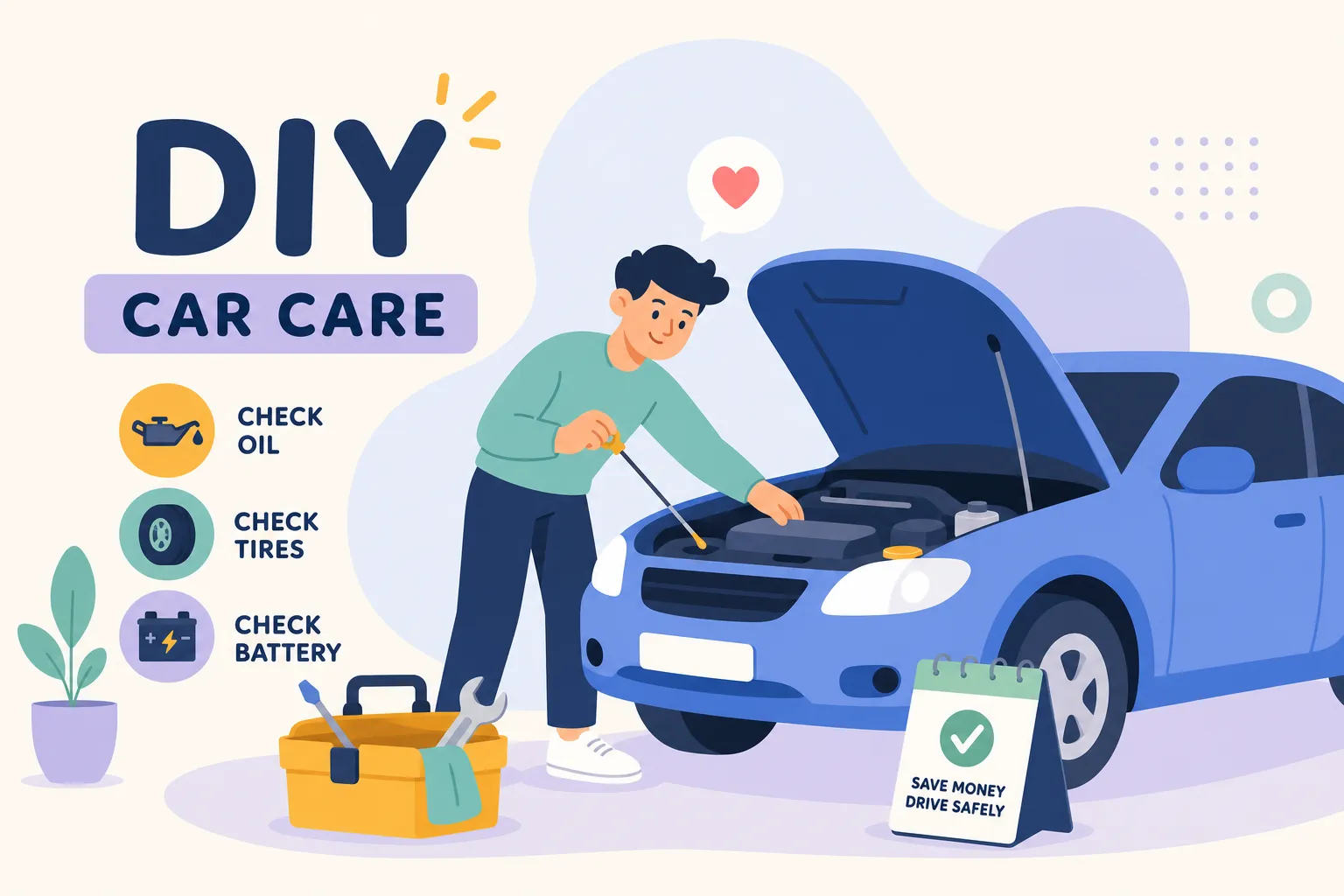
Check the engine oil level and color on the dipstick. Dark brown or black means a change is coming due; milky or foamy means coolant contamination, which requires an immediate shop visit. Also check the coolant reservoir level, brake fluid in the master cylinder reservoir, and windshield washer fluid. None of these require special skills, keep a clean rag handy and budget about five minutes for the whole sweep.
While you’re under the hood, look at the battery terminals for white or greenish corrosion. Loose or corroded cable connections are one of the most common causes of no-start issues, and a wire brush clears light corrosion in seconds. Finish by walking around the car to confirm that headlights, brake lights, turn signals, reverse lights, and hazard lights all work. A burned bulb is typically a $5 to $15 fix (cost varies by bulb type) and a ticket-worthy problem if you let it go.
Every 3 to 6 months: your preventative maintenance checklist
These are the items your shop reminds you about, and they exist on this cycle for a reason. Pair them with your oil change appointment so you don’t have to track them separately.
Oil change and tire rotation
Oil change intervals depend on what’s in your engine. Conventional oil is typically due every 3,000 to 5,000 miles. Full synthetic extends that to 7,500 to 10,000 miles, or whatever your owner’s manual specifies. In 2026, expect to pay $35 to $75 for a conventional oil change and $65 to $130 for synthetic at most U.S. shops (see typical oil change costs in 2026). Skipping regular oil changes is one of the most common ways to shorten engine life, according to manufacturer guidance and automotive industry authorities.
If you prefer to do the job yourself, follow our How to Change Car Oil at Home (Step-by-Step Guide for Beginners) for a safe, complete process and a list of tools and supplies.
Tire rotation should happen every 5,000 to 7,500 miles for most front- and rear-wheel-drive vehicles, and closer to 3,000 to 5,000 miles for AWD vehicles. Uneven tread depth across AWD axles stresses the drivetrain and accelerates wear. Most shops charge $20 to $50 for a rotation, and many include it free with an oil change, though prices vary by region and dealer. For more detail on recommended intervals, see guidance on how often you should rotate your tires.
Brake inspection and cabin air filter check
Have brake pads and rotors inspected at every service visit. Squealing during normal stops means the wear indicators are contacting metal; it’s time to schedule a pad replacement. Grinding means the pad material is already gone and you’re damaging rotors. A proper inspection by an ASE-certified technician covers pad thickness, rotor condition, fluid level, caliper function, and brake lines, not just a glance through the wheel opening.
Check your cabin air filter at least once or twice a year, or follow your owner’s manual for the exact interval. Most manufacturers recommend replacement between 15,000 and 30,000 miles, but a clogged filter noticeably affects air quality inside the cabin and reduces HVAC performance. If you’re comfortable swapping it yourself (usually a 5-minute job once you find the housing), parts run $20 to $50 at any auto parts store.
Annual car care checklist: what to schedule every year
These are the items most drivers skip because the car seems fine. They’re also the ones most likely to produce repair bills of $800 or more when ignored long enough.
Battery test and wheel alignment check
Annual battery testing is strongly recommended, especially before winter. Cold weather reduces battery capacity dramatically, and a battery that tests weak in October frequently dies without warning in January. Replacement cost in 2026 runs $150 to $250 installed at most shops for mainstream vehicles; premium or AGM batteries cost more. Most auto parts stores will test your battery for free while you wait, so there’s no reason to skip this one.
Wheel alignment catches uneven tire wear before it ruins a full set of tires. If your car pulls to one side on a straight road, or the steering wheel sits off-center while driving straight, alignment is overdue. The correction is typically a single shop visit running $75 to $150.
Belt inspection, coolant flush, and brake fluid service
The serpentine belt drives your alternator, power steering pump, and AC compressor. Inspect it annually for cracking, glazing, or fraying. A snapped serpentine belt leaves you stranded immediately and can trigger engine overheating. Replacement is inexpensive; the damage from ignoring it is not.
Coolant flush is commonly due every two years or per the manufacturer’s schedule. Old coolant becomes acidic over time and corrodes cooling system components from the inside. Cost runs $100 to $200 at most shops. Brake fluid follows the same logic: it absorbs moisture over time, which lowers its boiling point and degrades braking performance. Most manufacturers recommend a brake fluid flush every two years, with cost running $80 to $150.
What to handle yourself vs. what always needs a shop
The line between DIY and professional work comes down to two factors: safety risk and technical complexity. Put the right tasks in the right category and you’ll save money without cutting corners on the things that matter.
Safe inspections any driver can do at home
Tire pressure checks, fluid level inspections (not flushes), battery terminal cleaning with a wire brush, exterior light checks, fluid leak detection using cardboard under the car overnight, and the daily walkaround visual check are all safe and skill-free. The full toolkit: a quality tire-pressure gauge, a flashlight, a wire brush, and clean rags. Basic versions of all four are often available for under $20 combined at any hardware or auto parts store, enough to cover every inspection task on this list.
Jobs that belong in a certified shop
Brake fluid flush, timing belt replacement, coolant system repairs, suspension work, AC refrigerant service (which legally requires EPA Section 609 certification), and anything involving the airbag system should always go to a professional.
When choosing a shop, look for ASE-certified technicians. ASE certification means the technician has passed standardized exams and met hands-on experience requirements in specific repair areas; certifications require renewal every five years. Ask specifically which technician will work on your vehicle and confirm their certification area matches your repair. For electric or hybrid systems, ask about EV/hybrid-specific training before you hand over the keys.
Quick notes for hybrid and EV owners
The frequency-based schedule above applies to virtually every passenger vehicle on the road. Hybrid and EV owners have a few additional items worth knowing before assuming their cars need less attention overall.
Battery cooling and regenerative brakes still need attention
Many EVs and plug-in hybrids use liquid-cooled battery systems. The coolant in the battery cooling circuit should be checked periodically for leaks and proper level, just like engine coolant on a gas vehicle. For some EVs, manufacturer guidance states that battery coolant generally does not require routine replacement under normal conditions, but manufacturers typically advise that this coolant should only be checked and serviced by a qualified professional or authorized repair shop. For your specific vehicle, follow your owner’s manual for the exact service interval rather than assuming a generic schedule applies.
Regenerative braking dramatically reduces wear on brake pads, but the brake system still needs regular inspection. Brake fluid condition, rotor condition, calipers, and hardware all degrade over time even when pads last significantly longer than on a conventional vehicle.
What changes and what stays the same
Most full EVs do not need engine oil changes or timing-belt service; hybrids with internal combustion engines still require regular engine maintenance (timing belt or chain per manufacturer guidance). What gets more important on EVs and hybrids, not less, is tire maintenance. Battery weight increases the load on tires, torque delivery accelerates front axle wear, and proper inflation directly affects range and efficiency. For more on specific hybrid considerations, see this hybrid car maintenance overview.
For tire rotation frequency, check your owner’s manual. Many EVs benefit from more frequent rotations than conventional cars due to added weight and torque, some manufacturers recommend intervals similar to AWD guidance (roughly every 3,000 to 5,000 miles), but the right interval depends on your specific vehicle and drivetrain.
Your car care checklist works because you actually use it
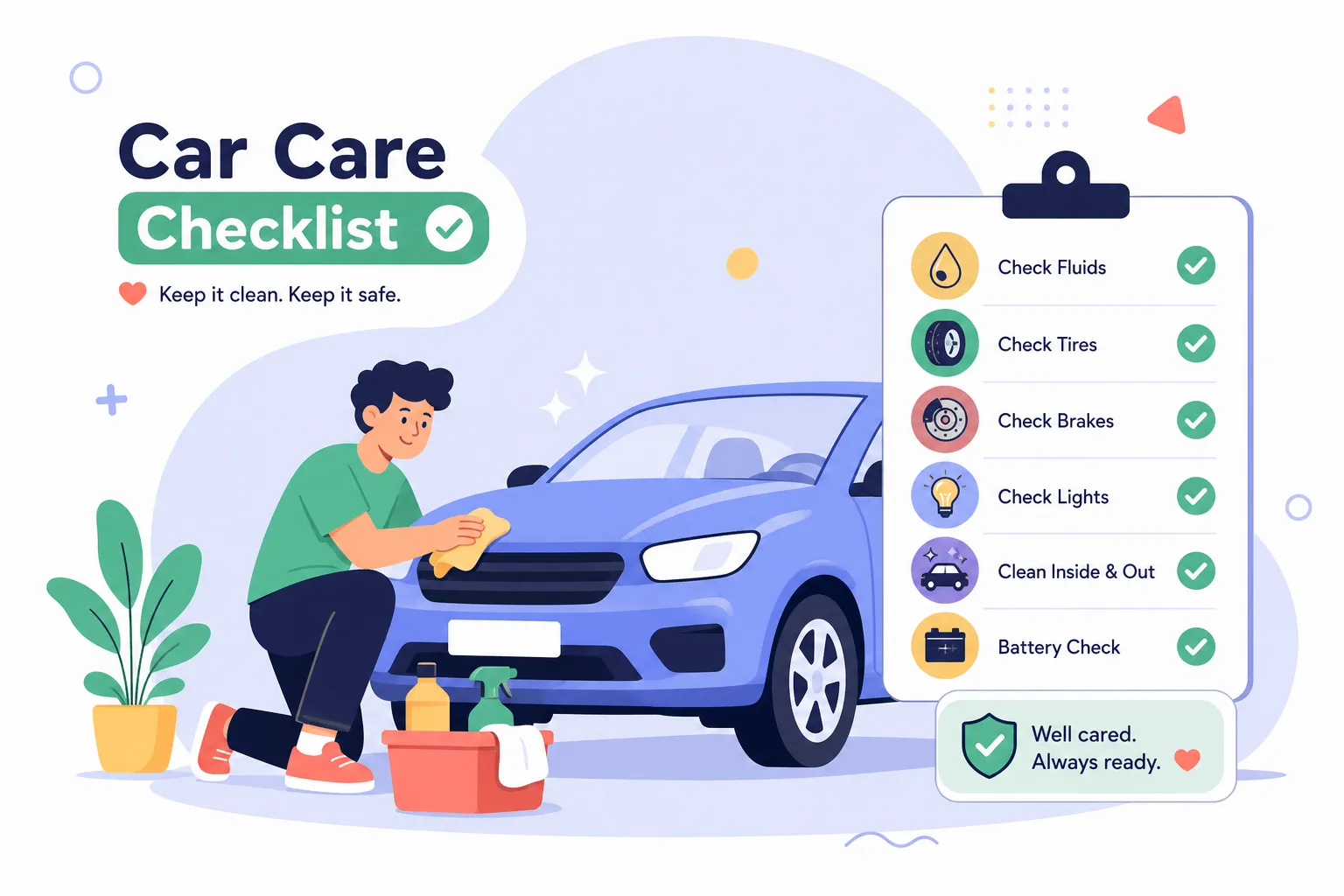
Break car maintenance down and it becomes four manageable time windows: a daily glance, a 20-minute monthly check, a 3 to 6 month service appointment, and one deeper annual inspection. That’s the entire routine. You don’t need to understand how an engine works to follow it.
This is the same principle behind everything Qurabox publishes. A structured, frequency-based auto care checklist, whether it applies to your vehicle, your home, or your daily routines, prevents the expensive surprises that come from ignoring things until they fail. For an example maintenance cadence recommended by industry shops, see a practical guide to the best maintenance schedule for a car.
Bookmark this page, print the checklist, and set a monthly calendar reminder. If you’re prepping for a road trip or an overnight outdoors getaway, consult our How to Camp for Beginners 2026: Complete Gear Checklist to make sure vehicle prep and trip packing work together. Use this car care checklist consistently and surprise repair bills stop being a question of if, they stop happening altogether. The drivers who stay ahead of problems aren’t lucky. They’re just consistent.