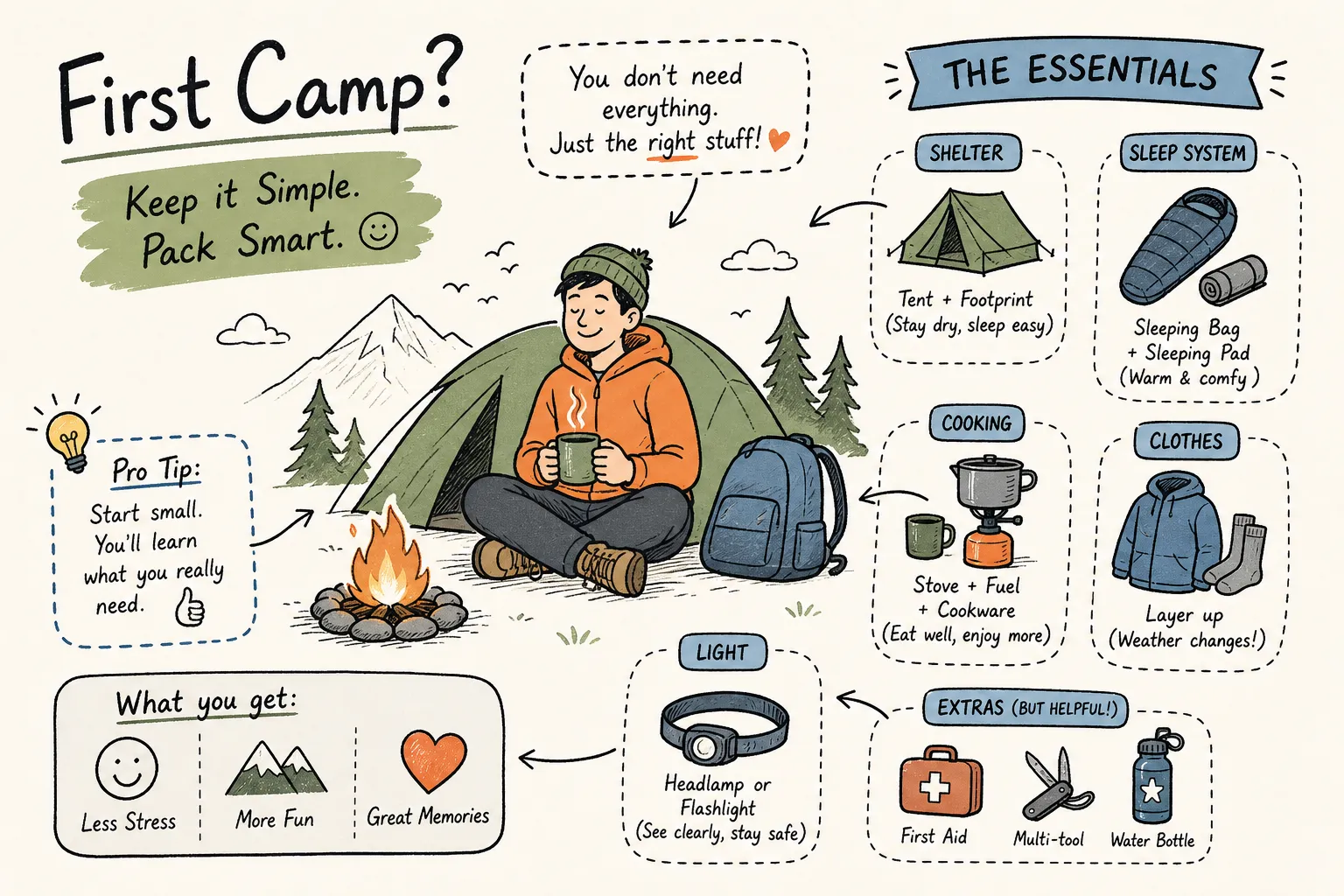
If you’re asking, “what gear do I absolutely need for my very first camping trip?”, the honest answer is far less than most lists suggest. Many beginner camping gear lists run 40-plus items and balloon in cost before you’ve cooked a single meal. It’s enough to make you close the tab and book a hotel instead. Here’s the truth: for your first overnight camping trip, every item on the real list has a specific, non-negotiable job to do, and there are only 10 of them.
At Qurabox, camping guides are built for people doing this for the first time, and they all start in the same place: with the items that actually matter before you add anything else. This article covers those 10 essentials, ranked by priority, with plain-language explanations of what each does and how to buy it without overthinking. Think of it as your first-time camping packing list, start here, and skip everything else until after trip one.
Camping Essentials Checklist: Your 10 Must-Have Items
- 3-season tent (sized up from your headcount)
- Sleeping bag (rated for your expected overnight low)
- Sleeping pad (check the R-value)
- Headlamp with spare batteries
- Water and a compact filter
- Camp stove, fuel canister, lighter, and one pot
- Layered clothing system (base, mid, shell)
- Rain jacket
- Basic overnight first-aid kit
- Multi-tool
That’s your complete basic camping gear for beginners. Everything below explains why each item made the cut and how to choose it.
Shelter and Your Sleep System Are the Non-Negotiables
If you get shelter and sleep wrong, the trip ends early. No great view or campfire story compensates for a wet sleeping bag or a night spent shivering at 2 a.m. These items sit at the top of any beginner camping gear list for a reason: they determine whether the trip is memorable or miserable.
Choosing a Tent That Doesn’t Fight You at Setup
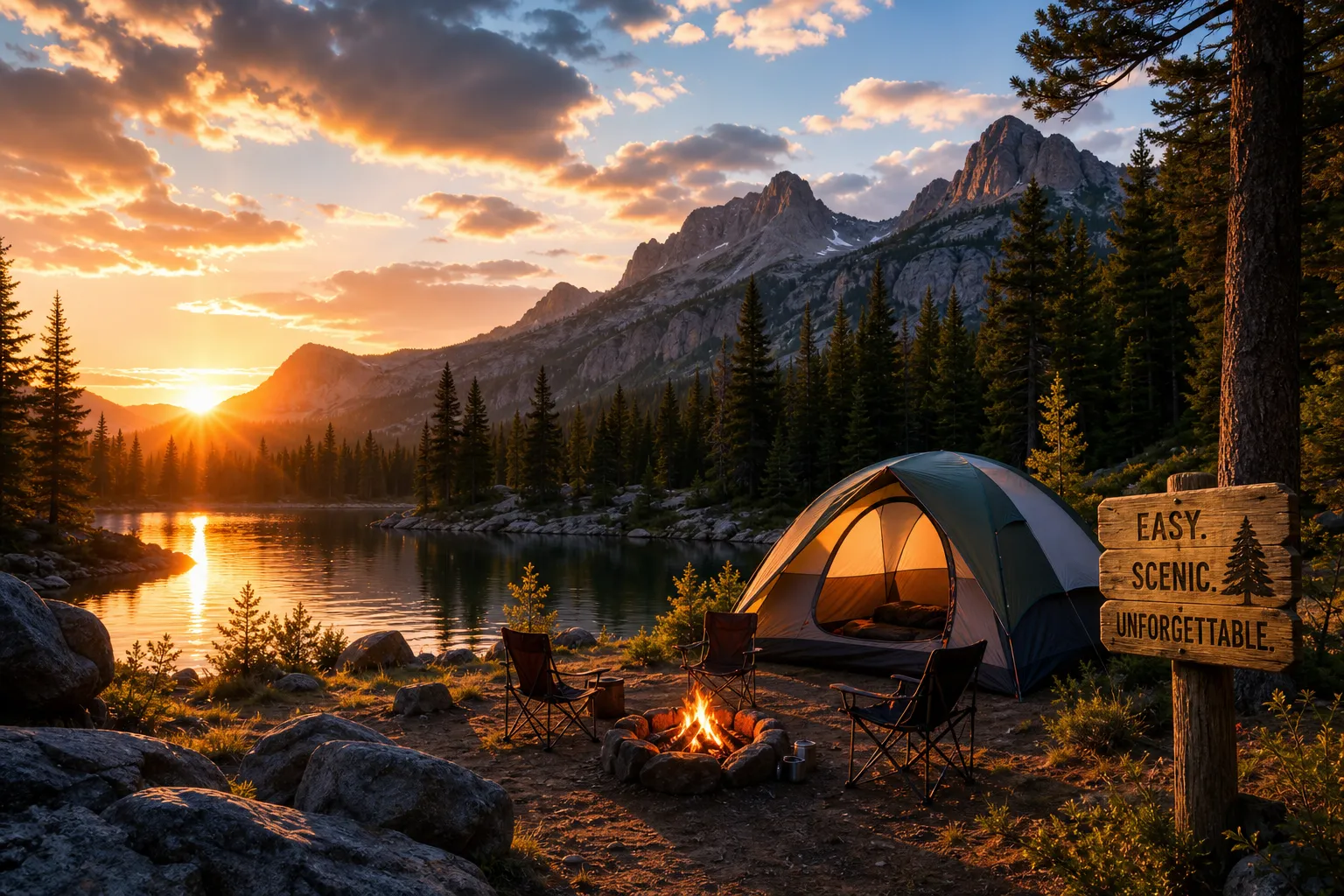
The standard beginner choice is a 3-season tent, and the standard sizing advice is to buy one size up from your headcount. A “2-person” tent fits two adults, but it fits them the way a car fits two adults: functional, but tight, especially once sleeping pads and bags fill the floor. A 3-person tent for two campers gives you room to actually move around. Look for a freestanding design with clip-based poles rather than long sleeve-style poles. It’s easier to set up solo, and you can practice the whole thing in your backyard before you ever arrive at a campsite. That backyard practice run isn’t optional for beginners. It can turn a frustrating first-night ordeal in the dark into a quick, confident routine.
Picking a Sleeping Bag Based on Temperature, Not Price
Sleeping bag temperature ratings work best when you choose a bag rated colder than the coldest overnight low you expect, most guidance suggests 10, 20°F colder, depending on how warm or cold a sleeper you are. For most summer camping in the US at lower elevations, a 30°F bag is a reasonable baseline. For early fall, mountains, or if you tend to sleep cold, step down to a 20°F rating. One practical note for beginners: skip the mummy bag initially. They’re warmer by design, but if you move around in your sleep, you’ll spend half the night fighting the fit. A rectangular bag trades some warmth efficiency for real comfort, and that tradeoff is worth it on trip one.
Why Most Beginners Underestimate the Sleeping Pad
The sleeping pad isn’t primarily there for cushioning. Its main job is to block cold ground from pulling heat out of your body through conduction all night long. A sleeping bag’s insulation compresses under your weight and stops working properly; the pad picks up where the bag leaves off. Check the R-value when you’re shopping: higher R-values mean better insulation, which matters most for spring and fall trips. Even an inexpensive closed-cell foam pad beats sleeping directly on the tent floor. Many experienced campers consider the sleeping pad one item worth prioritizing early, before upgrading other gear, precisely because its impact on sleep quality is so direct.
First-Time Camping Packing List: Light, Water, and a Simple Cooking Setup
Once shelter and sleep are sorted, the next tier makes your campsite actually functional. Without reliable light, water, and a way to cook, you’re fumbling through dark bags eating trail mix and wondering why you left the house.
A Headlamp Beats a Flashlight Every Time
The reason is simple: camping requires your hands. You’re cooking, digging through your pack, adjusting tent stakes, and setting up camp in the dark. A headlamp keeps both hands free for all of it. Bring a spare set of batteries or choose a USB-rechargeable model, and charge it fully before you leave home. For a multi-night trip, two headlamps are a smarter setup than one, if one dies or gets misplaced, you’re not left fumbling in the dark.
How Much Water to Bring and When to Filter
For a beginner at an established US campground with potable water on site, the most practical approach is carrying treated water from home for your first day and using a compact water filter as backup when you refill. It’s worth being clear on one thing: a filter and treated water are not the same thing. Filters remove most microbes but have limits depending on the water source, they may not address certain chemical contaminants or, in some regions, viruses. For a first trip, redundancy is the right strategy. Don’t rely on one source when both options together weigh almost nothing and cover every scenario.
The Case for a Camp Stove Over Relying on a Fire
Campfires are inconsistent. They depend on dry wood, wind conditions, fire ring availability, and whether the campground allows them that day. A small propane stove with one pot handles the vast majority of what you’ll actually want to eat on a beginner camping trip. The minimum kit includes a stove, fuel canister, lighter, and one pot. That setup is faster, more reliable, and far simpler to clean up than any fire-based plan. Once you’ve got a few trips under your belt, cooking over a fire is a great skill to develop. For trip one, use the stove.
Clothing: Layers Matter More Than Warmth Alone
The most common beginner mistake when packing clothes for camping is building a kit around daytime temperatures. The problem is that nighttime temperatures at a campsite can drop substantially from the afternoon high, the shift is especially dramatic near water or at elevation. Pack for 2 a.m., not for noon.
The Layering System Explained Simply
Three layers cover almost every camping condition in the US. Start with a moisture-wicking base layer that pulls sweat away from your skin. Add an insulating mid-layer, like a fleece or lightweight down jacket, for warmth. Top it with a waterproof outer shell that blocks wind and rain. You mix and match depending on conditions rather than trying to predict the exact temperature in advance. And bring more socks than you think you need. Seriously, add at least two extra pairs to whatever number you packed.
What to Pack for the Weather and What to Leave Home
Rain gear is not optional, even in summer. Afternoon thunderstorms are common in many US camping regions during warm months, and getting caught wet without a shell makes the rest of the trip deeply uncomfortable. A packable rain jacket weighs almost nothing and earns its spot on every single trip. The one material to leave home entirely is cotton. Cotton absorbs moisture and holds it, which makes cold nights significantly worse. Wool and synthetic fabrics dry faster and insulate even when damp.
Safety Essentials That Don’t Weigh Much but Matter a Lot
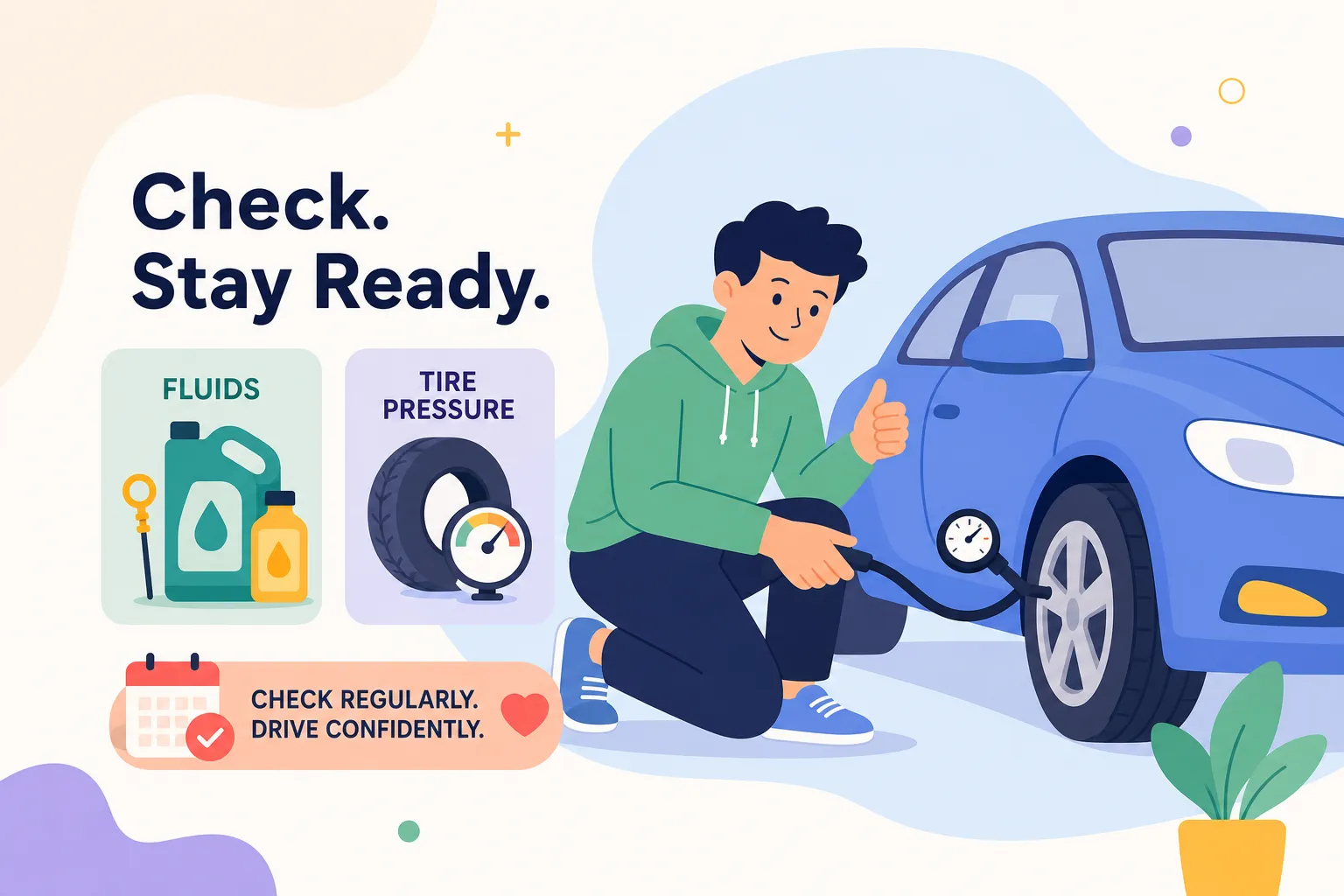
Most beginners skip or underbuild this part of their basic camping gear because it feels unnecessary until something actually goes wrong. Minor injuries and small gear failures are genuinely common on any camping trip. Being prepared for them takes up less space than a water bottle. Basic roadside skills, like how to change a flat tire, are also useful if you’re driving to remote trailheads.
What Goes in a Basic Overnight First-Aid Kit
A solid overnight camping first-aid kit covers: adhesive bandages in multiple sizes, sterile gauze pads, medical tape, antiseptic wipes, antibacterial ointment, moleskin for blisters, tweezers for ticks and splinters, ibuprofen, antihistamine for insect reactions, and disposable gloves. A pre-assembled outdoor first-aid kit from a pharmacy or outdoor retailer is a convenient starting point, check the contents against this list and add any personal prescriptions on top. Don’t skip the moleskin: foot blisters are among the most common camping complaints and are largely preventable with the right preparation and treatment.
Why a Multi-Tool Earns Its Weight Every Time
A multi-tool handles tent repairs, rope cutting, food prep, tightening loose hardware, and at least a dozen small problems you won’t be able to predict in advance. It doesn’t need to be expensive to be useful. A basic model with a knife, pliers, scissors, and a screwdriver covers every first-trip scenario you’re likely to encounter. This one item takes up less space than a banana and solves problems that would otherwise ruin a solid trip.
What Your Campground Already Provides
Before you buy another item, find out what the campground already supplies. Most beginners overpay and overpack simply because they don’t know what a standard US campground includes. Understanding this trims both your list and your budget.
Standard Amenities at Most US Campgrounds
Most established campgrounds provide picnic tables, fire rings or fire pits, potable water access, and restroom facilities. Many also have showers, though not all. This means you don’t need to pack portable furniture, a multi-stage water filtration system, or a portable toilet for your first trip. The campground handles the infrastructure; your job is to handle everything personal.
What You Still Bring Regardless of Campground Amenities
Even at a fully equipped campground, you supply everything personal: all sleeping gear, food, cooking equipment, toiletries, trash bags, bug spray, and sunscreen. The amenities cover the space and basic facilities. The campsite doesn’t provide a sleeping bag, a hot meal, or protection from mosquitoes. That part is entirely on you, which is exactly why this beginner camping gear list exists in the first place.
How to Level Up Your Kit After Your First Trip
The 10 items above are your overnight camping essentials, everything you need to get through your first night safely and comfortably. That’s genuinely the goal. Once you’ve done it, you’ll come back with something no gear guide can give you: direct, personal feedback about what actually worked, what felt wrong, and what you overpacked without ever using.
What One Night Out Will Teach You That No List Can
After a single trip, you’ll know whether you slept warm enough, whether the stove worked easily, whether you wanted a camp chair, and which items you stuffed in the pack and never touched. That experience is the foundation for building a smarter kit the second time. Many experienced campers upgrade one or two specific items per trip rather than overhauling everything at once. That approach is cheaper, more intentional, and far more satisfying than buying gear you haven’t tested against real conditions yet.
Where to Find Reliable Beginner Camping Guides as You Grow
Qurabox’s beginner camping section is designed specifically for this next phase: helping you confidently add gear, understand the needs of different terrain and weather, and avoid the upgrade mistakes most campers make between trips one and three. It’s built as a practical resource, not a product catalog, and it grows with you as the trips get more ambitious. We also publish other outdoor beginner guides, for example, how to start surfing for beginners, if camping becomes your gateway hobby. For alternate gear lists and packing tips, see Little Potatoes’ top 10 camping trip essentials.
Camping Essentials Checklist: Pack and Go
Wondering what gear you absolutely need for your very first camping trip? Now you have the answer. The 10 items in this guide cover shelter, sleep, food, light, water, clothing, and safety. That’s genuinely all a beginner needs to get through one comfortable night outdoors and come back ready to do it again.
The goal of your first camping trip isn’t to have the perfect kit. It’s to go, see how it feels, and return with real experience that no amount of gear research can replicate. Leveling up happens naturally after that, one item at a time.
Bookmark this list, check off what you already own, and identify the gaps. Buy the gaps. Then go. Everything else can wait until after trip one is done.
Frequently Asked Questions
How much does this gear cost?
A functional first-trip kit, tent, sleeping bag, sleeping pad, headlamp, stove setup, and first-aid kit, can be assembled for a few hundred dollars at the low end by shopping entry-level brands. You don’t need premium gear for trip one. Buy what works, go, and upgrade the specific items that let you down.
Can I rent camping gear instead of buying?
Yes. Many outdoor retailers and gear libraries rent tents, sleeping bags, and sleeping pads by the weekend. Renting is a smart option if you’re not sure camping is for you yet, it lowers the financial commitment and still gets you out the door with reliable equipment.
What if it rains?
A 3-season tent with a rain fly handles moderate rain without issue. Pair it with a packable rain jacket, keep cotton out of your bag entirely, and store anything that can’t get wet in dry sacks or zip-lock bags inside your pack. Rain doesn’t ruin a camping trip, being unprepared for it does.