Knowing what to do when you get a flat tire on the highway can mean the difference between a minor inconvenience and a serious accident. You’re cruising at 70 mph when you hear a loud pop and feel the steering wheel pull hard to one side, a tire blowout on the highway is one of the most startling things that can happen behind the wheel, and how you react in the first few seconds can greatly affect the outcome. The good news: you don’t need to be a mechanic to get through this safely. You just need a clear head and the right steps in the right order.
This guide covers what to do from the moment the tire goes to the moment you’re back on the road or safely in a tow truck. Before your next road trip, it’s also worth bookmarking Qurabox’s car maintenance guides, practical, step-by-step coverage of the routine checks that prevent roadside emergencies before they start.
1. How to Control Your Vehicle When a Tire Blows at Highway Speed
The natural reaction to a sudden loud noise and a pulling steering wheel is to brake hard and jerk the wheel. That reaction, on a highway at speed, is genuinely dangerous. Slamming the brakes when a tire has blown can cause the vehicle to spin or fishtail, and a sharp steering correction can flip the car entirely.
NHTSA and AAA are fully aligned on the right response: hold the steering wheel firmly with both hands, keep the car pointed straight, and ease off the gas gradually. Avoid slamming the brakes, take your foot off the gas and allow the vehicle to slow naturally. Once the car feels stable and your speed has dropped to a manageable level, gently apply the brakes if needed and begin a smooth, gradual move toward the shoulder. Turn on your hazard lights as you do. The goal is to coast down, not stop abruptly. This controlled approach is what gives you the best chance of handling a tire blowout on the highway without losing control.
2. Pulling Over Safely: Choosing Where and How Far to Go
A flat tire on the highway is not a reason to try to reach the next exit or make it home. On a standard non-run-flat tire, the practical limit before you risk damaging the wheel rim is roughly half a mile, and that’s at very low speed, ideally under 20 mph. On rough road surfaces, even 200 to 400 feet of driving on a fully deflated tire can cause serious rim damage. If the tire is making a loud, rhythmic thumping sound, it’s already badly damaged and you need to stop as soon as it’s safe to do so.
The safest stopping point is as far off the travel lane as possible. If there’s a wide highway shoulder, get your whole vehicle onto it. If you’re near an exit, aim for that instead. Once stopped, turn your front wheels away from traffic so the car won’t roll back into the lane if bumped. Avoid stopping in the median unless you have absolutely no other option.
3. Setting Up Your Safety Zone Before You Touch the Tire
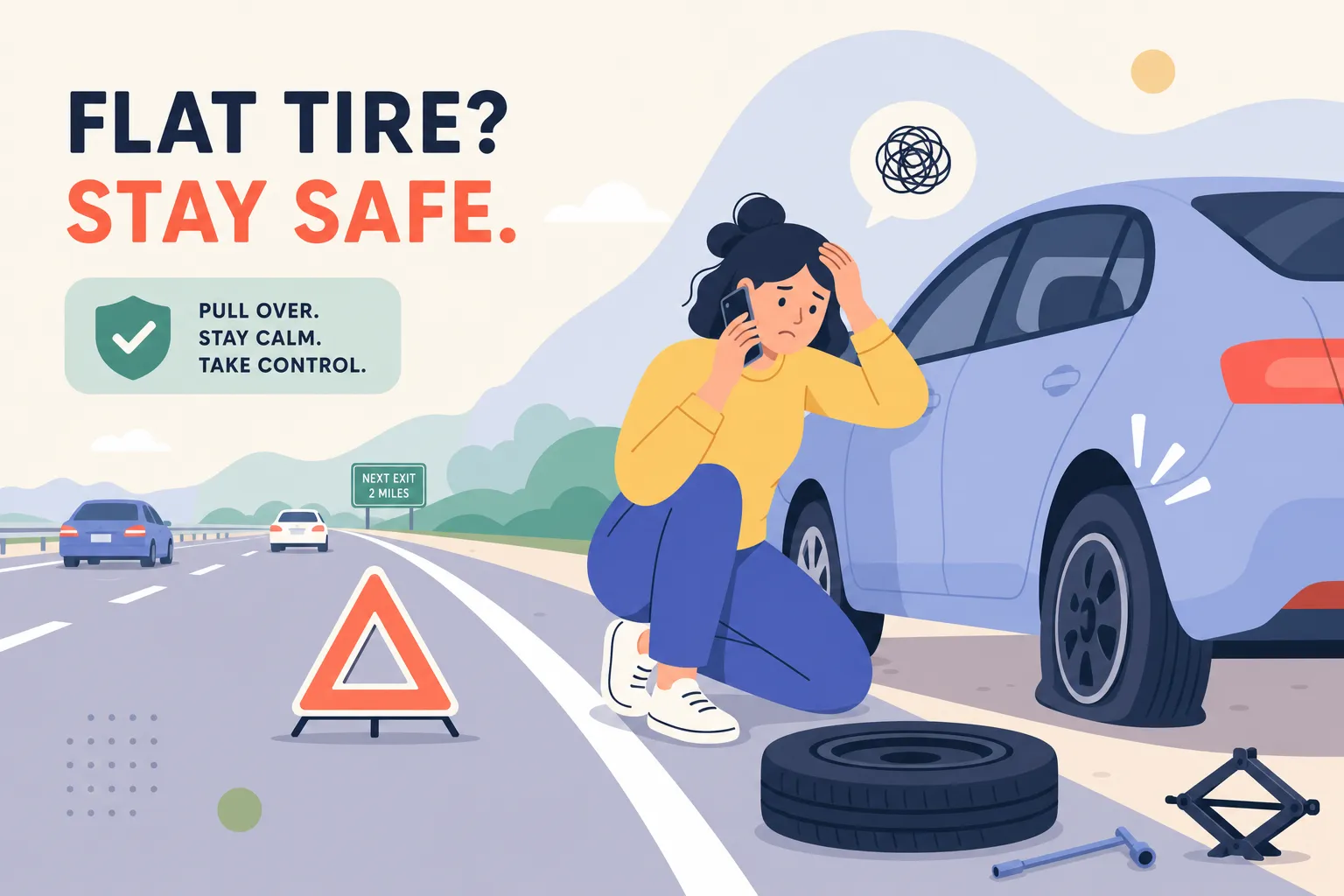
Your hazard lights should be on before you’ve fully stopped, not after. The moment the blowout happens and you begin your controlled pull to the shoulder, flip them on. Once stopped, leave them running the entire time you’re on the shoulder. If you’re in low-visibility conditions, at night or in rain, stay in the car with your seatbelt on until you’ve assessed whether getting out is genuinely safe.
Reflective triangles give approaching drivers the reaction time they need to move over. Place the first triangle about 10 feet directly behind your vehicle and the second at roughly 100 feet back. On a curve or a hill where visibility is limited, push the farther triangle back even more to give drivers extra warning. Consider carrying three triangles so you have coverage at both distances and a backup for trickier road geometry. Never stand between your vehicle and moving traffic when setting up signals. Work from the protected side of the car at all times, and if you have high-visibility clothing in the trunk, put it on before you step out.
4. How to Change a Flat Tire on the Highway Shoulder
This step trips up most first-timers: loosen each lug nut slightly, about one turn, while the tire is still on the ground. If you jack the car up first, the wheel spins freely and you can’t get enough torque to break the nuts loose. Use the lug wrench in a counterclockwise direction, applying firm downward pressure. For stubborn lug nuts, use your body weight rather than just your arm strength.
Position the jack under the vehicle’s designated jacking point (check your owner’s manual if you’re unsure), then raise the car until the flat tire clears the ground by several inches, enough to remove and install the spare comfortably. Swap the tire and hand-tighten the lug nuts in a star pattern before lowering the car. Once the vehicle is back on the ground, torque the lug nuts fully. If your spare is a compact donut, treat it as a temporary fix only. Most donuts are rated for a maximum of 50 mph and 50 to 70 miles. Get to a shop the same day; don’t treat the donut as a long-term solution.
Keep the flat tire in the trunk rather than leaving it on the shoulder. The shop will need it to assess whether the tire is repairable, and leaving debris on a highway shoulder creates a hazard for other drivers.
5. When to Call Roadside Assistance Instead of Going DIY
Situations Where DIY Is the Wrong Call
There are clear situations where changing the tire yourself isn’t the right move. If you’re on a narrow shoulder with traffic passing within a few feet, if it’s dark or raining heavily, if you have young children in the car, or if the vehicle is partially blocking a travel lane, those are all signs to stay put. The same applies if you simply don’t have the physical ability to safely operate the jack and wrench. In any of these situations, stay in the car with your seatbelt on, keep the hazards running, and call for help.
What to Expect When You Call for Help
Many roadside assistance plans, including those from AAA and auto insurance add-ons, include an on-site tire change if you have a usable spare. Coverage varies by provider and plan, so check your policy details. If the spare is also flat or unusable, most plans will arrange a tow, typically to the nearest repair shop, though towing distance and any associated costs depend on your specific plan. Calling 911 is the right choice if your vehicle is creating an active hazard, such as partially blocking a lane or if you’ve been in a secondary accident during the breakdown. Don’t hesitate to make that call. Your safety and the safety of other drivers outweigh any concern about inconvenience.
6. What Every Driver Needs in the Trunk Before Hitting the Highway
None of the steps above work without the right tools. Before any road trip, confirm you’re carrying the basics:
- A properly inflated spare tire (check it every few months, not just when you need it)
- A factory-rated floor jack or scissor jack compatible with your vehicle
- A lug wrench that fits your wheel nuts
- At least two to three reflective warning triangles
- A flashlight with fresh batteries
- A pair of work gloves
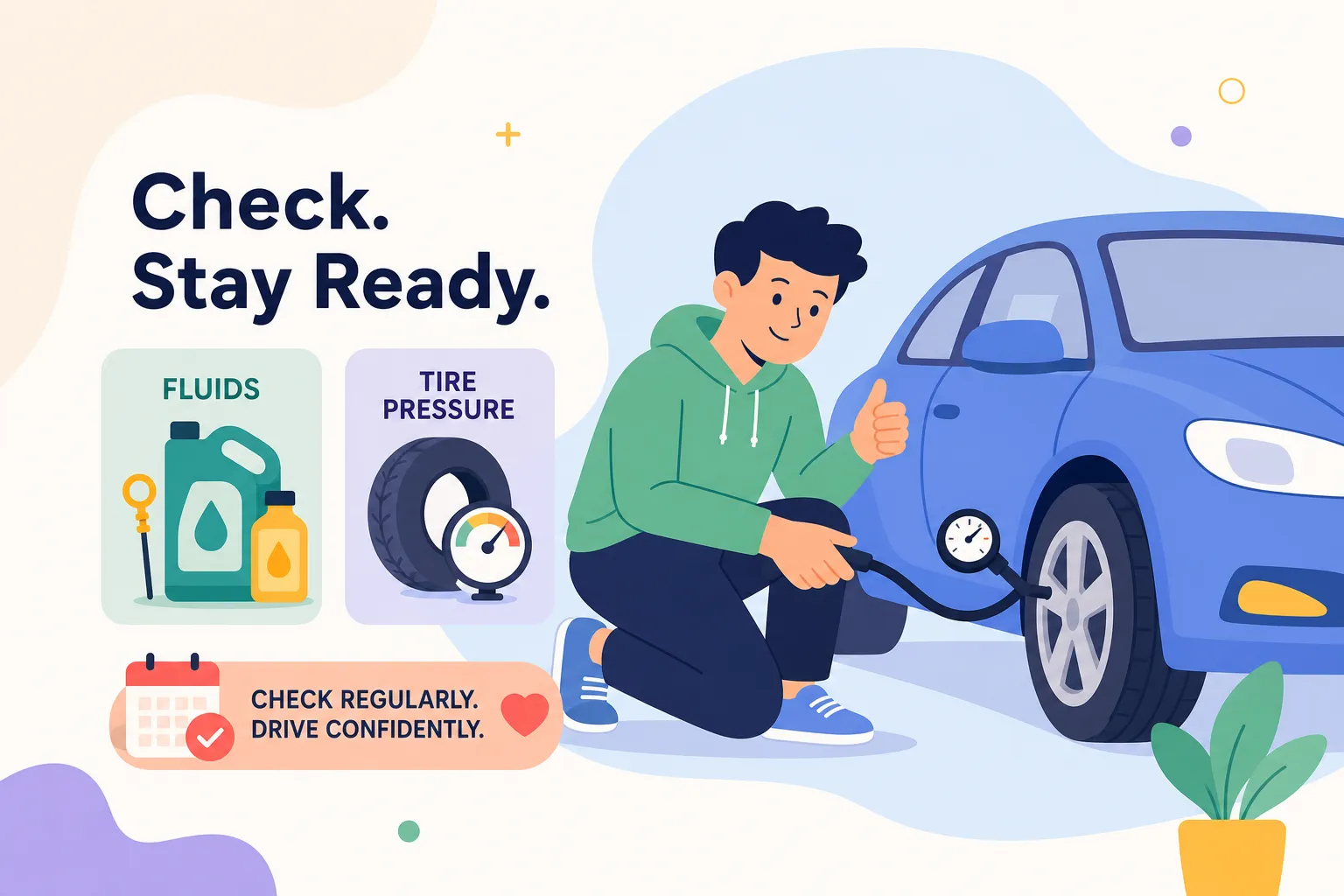
- tire pressure gauge
A tire repair kit or inflator canister is a smart backup if your spare turns out to be unusable. These kits won’t fix a blowout, but they can handle a slow leak in some situations and buy you enough distance to reach a shop safely.
The drivers who handle a flat tire on the freeway calmly are the ones who were already prepared. That means Before any road trip, checking your spare pressure before long trips, knowing exactly where your jack and lug wrench are stored, and having a real sense of your tires’ condition before you ever reach highway speed. Qurabox’s car maintenance guides are built for exactly this kind of prep: straightforward, step-by-step coverage of the checks and habits that keep you from getting stranded. Reviewing that kind of guide takes only a few minutes and pays dividends on every long drive.
The Short Version When It Counts
When you get a flat tire on the highway, the sequence is: stay calm, hold the wheel, ease off the gas, coast to the shoulder, hazard lights on, set your warning signals, then decide whether to change the tire or call for help. The decision between DIY and roadside assistance comes down to one honest question: is this safe to do here, right now, with what I have? If the answer is no, the phone call is the smarter move every time.
The drivers who come through a highway flat tire situation unharmed aren’t necessarily the ones who know the most about cars. They’re the ones who stayed calm and followed a clear process. Now you have that process. Run through it once mentally before your next long drive, so the steps feel familiar if you ever need them.