Many drivers tend to fall into one of two camps: those who hand their keys to a mechanic for everything, and those who attempt repairs without knowing whether it’s actually safe to do themselves. Both approaches cost more than they should. If you’ve been asking yourself what car maintenance tasks you can realistically do yourself without a mechanic, the honest answer is that many routine jobs are genuinely beginner-friendly, and just as many should stay at a shop no matter how confident you feel.
This guide cuts through that confusion with a straight answer. At Qurabox, we publish practical how-to guides built for everyday Americans who want to handle more themselves without walking into trouble. Qurabox covers each of these tasks with vehicle-specific walkthroughs for when you’re ready to get specific. By the end of this article, you’ll know exactly which jobs are beginner-safe, which tools you need, how much you’ll save, and the clear line where professional help becomes non-negotiable.
What car maintenance tasks can I realistically do myself without a mechanic, the beginner list
The best way to build confidence with your car is to start with tasks that have almost no failure mode, then work up to jobs requiring a little more setup and skill. Think of it as three tiers: no-tool checks, simple swaps, and slightly more hands-on work.
The no-tool-required checks every driver should know
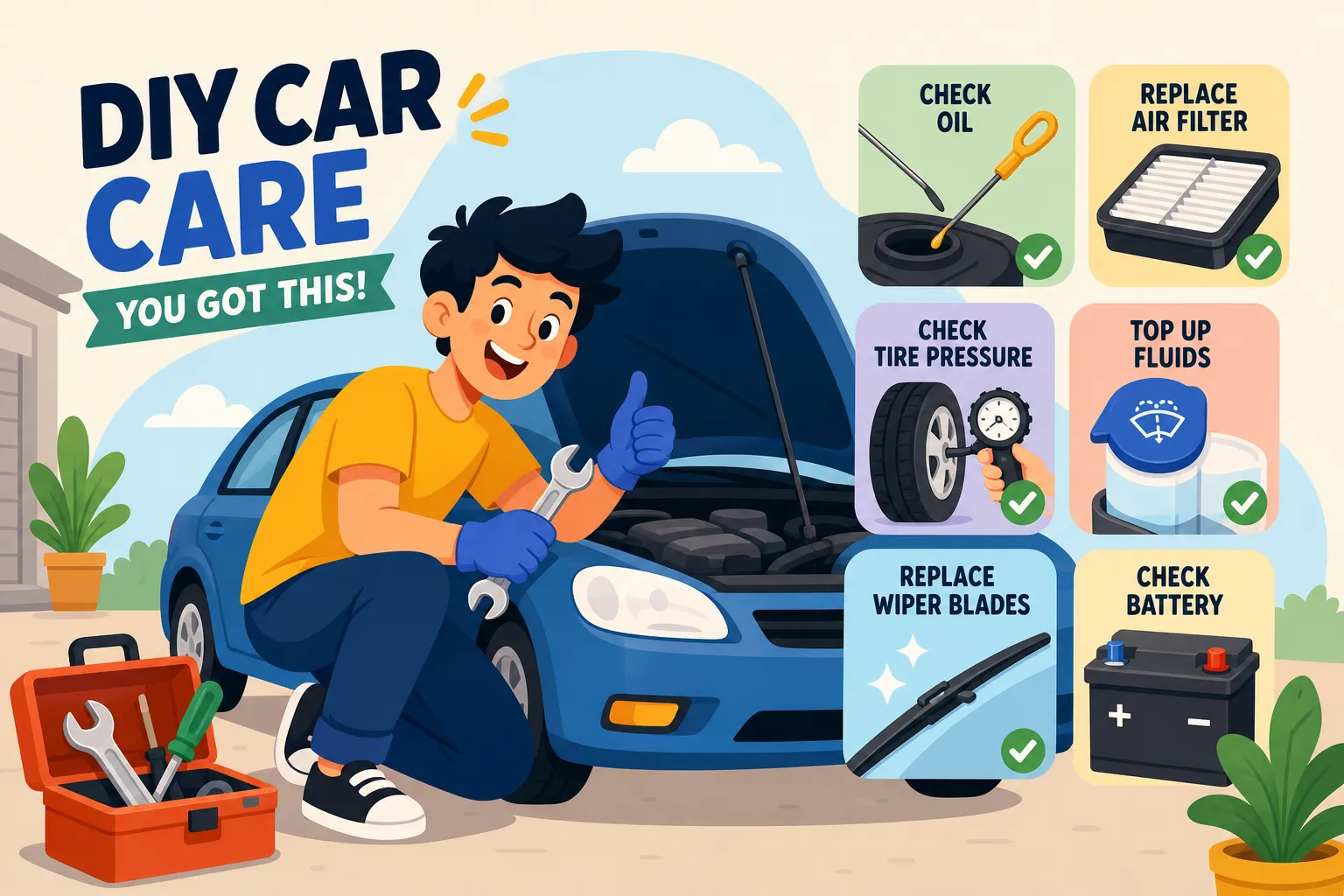
Checking your engine oil level, inspecting tire pressure with a basic gauge, and topping off windshield washer fluid are all visual and measurement-based tasks with minimal risk. You’re not removing anything or making a permanent change, you’re observing and, at most, adding fluid. Coolant can also be checked visually, but only when the engine is fully cool, and you should always use the exact type specified in your owner’s manual; the wrong coolant or topping off to mask an underlying leak can cause serious damage. When in doubt on any fluid, consult your owner’s manual first, because the wrong fluid in the wrong reservoir creates a far bigger problem than running low.
These checks are quick but often overlooked by many drivers until something goes wrong. Tire pressure alone affects fuel economy, handling, and tire life, and it should be checked at least once a month. Think of these as the foundation of any basic auto care for beginners before you move on to anything else.
Simple swaps that take under 30 minutes
Windshield wiper blades, engine air filters, and exterior bulbs, headlights, taillights, turn signals, are all snap-in or unscrew-and-replace jobs that require few or no tools. Parts typically run under $30 for most vehicles, and the process usually involves a clip, a tab, or a single screw. The key variable is how your specific vehicle handles each one, which is why looking up your exact year, make, and model before buying parts matters.
Engine air filters are one of the most overlooked items on this list. Dealers can charge $50 to $75 to replace a part that costs $15 to $25, a part that sits inside a plastic box you unclip and open. Most filters follow a 15,000 to 30,000-mile replacement schedule, so this comes up every year or two depending on how much you drive.
Slightly more hands-on tasks worth learning
Changing your engine oil and filter, rotating tires, and swapping a dead battery represent the next tier. These jobs typically take 30 to 60 minutes, require a few specific tools, and have a little more at stake if you skip a step. They’re still very much beginner-reachable with proper prep, but they reward doing your homework first. Qurabox has detailed walkthroughs for each of these if you want a thorough guide before picking up a wrench; for example, our tire change guide is written for total beginners.
The payoff for learning these tasks is significant. Oil changes alone come due two to four times per year depending on your vehicle’s recommended interval and how much you drive, and the savings stack up quickly once you own the process yourself.
What tools and supplies you actually need before you start
One reason beginners talk themselves out of DIY maintenance is the assumption that they need a garage full of expensive tools, but for the tasks covered here, that assumption isn’t close to accurate.
The core starter kit that covers most tasks
A basic socket and ratchet set, nitrile gloves, safety glasses, and a few shop rags handle the majority of inspection and swap tasks. Add a digital tire gauge, a funnel, and the correct fluid types from your owner’s manual, and you’re covering most of what this article describes. That full setup often runs less than $60 when shopping budget brands, and the tools will last for years. A digital gauge is worth owning because it tends to give a quicker, more readable measurement than the pop-in stick gauges at gas stations.
Task-specific tools for the bigger jobs
Oil changes need a drain pan, an oil filter wrench, and either ramps or a floor jack with jack stands to lift the car safely. For a checklist of the typical items you’ll want when you do your first oil change, see the recommended list of tools to change oil. Tire rotations add a torque wrench and wheel chocks to that list, because lug nuts need to be tightened to a specific spec, not just “tight enough.” Battery swaps are actually the most straightforward of the three: you need the right socket size to loosen the terminal clamps, and that’s about it.
Plan your tool purchases task by task so you’re not buying everything at once. Start with the inspection tools, do those jobs a few times, then invest in the drain pan and jack setup when you’re ready to move on to oil changes.
What you actually save doing basic car care at home
Individual savings are real, and they compound over time in a way that’s easy to underestimate. Here’s what the numbers look like in practice.
The quick wins with the biggest dollar-per-minute payoff
An engine air filter replacement costs $15 to $25 for the part and about 10 minutes of your time. Shop service for the same job can run $50 to $75, often several times the cost of the part itself. Wiper blades run $20 to $40 for a set and install in five minutes; many shops add labor fees that make the total noticeably more expensive. Neither job is difficult, and both come due at least once a year, sometimes twice.
The bigger jobs where savings stack up fast
An oil change runs $30 to $50 in parts at home versus $50 to $100 at a shop, and takes about 45 minutes the first time and closer to 20 minutes once you know the process. Full synthetic for a standard sedan typically comes in around $32 to $47 for five quarts of oil and a filter. A battery replacement costs $100 to $200 for the part with no labor charge versus $50 to $100 in installation fees at a shop. Over three to five years of ownership, these savings add up to several hundred dollars, before you even factor in the time you’re not spending in a waiting room. For a broader look at DIY maintenance tasks and where they make sense, consult AAA’s DIY maintenance guide.
Understanding which tasks you can own yourself is one of the most practical financial habits you can build as a car owner. The goal isn’t to replace every mechanic visit; it’s to stop paying shop rates for jobs that genuinely don’t require one.
Safety rules and common mistakes beginners make
The risks of DIY car maintenance are real, but they’re specific and avoidable. Unfocused fear of messing something up is less useful than a specific list of what to watch for. For a trusted primer on basic care and safety for new owners, see the car care basics for first-time owners.
What to do before you get under the car or open the hood
Never work on a hot engine. Allow the engine and all components to cool thoroughly before touching fluids, filters, or anything near the exhaust, as a general rule, give it at least 30 minutes, though actual cooling time varies by conditions. If you’re lifting the car, use properly rated jack stands on solid, level ground with the wheels chocked. A floor jack alone is not a safe support while you’re underneath the vehicle; it can slip, and no savings justify that risk.
Using the wrong fluid is one of the most common beginner mistakes and one of the most damaging. Always cross-reference your owner’s manual before adding anything to any reservoir. Brake fluid, power steering fluid, and transmission fluid are not interchangeable, and the wrong choice can cause serious system damage.
Battery and brake-specific hazards worth knowing
Batteries release corrosive gases and contain acid, so gloves and eye protection are non-negotiable before you touch the terminals. Always disconnect the negative terminal first and reconnect it last. For brake work: never let the caliper hang by the rubber brake hose, avoid getting any grease or fluid on the friction surface, and always pump the brake pedal several times to restore pressure before you move the car an inch.
Getting brake reassembly wrong is one of the few beginner mistakes with direct safety consequences. If the pedal feels soft or spongy after a brake job, or the car pulls hard to one side, do not drive it. Brake work is learnable, but it requires the right tools and a solid understanding of the reassembly process before you attempt it the first time. A practical reference on friction materials and basic pad replacement considerations is available in this brake pads guide.
Symptoms and situations that mean you need a professional
Knowing when to stop is as important as knowing how to start. Some symptoms tell you the problem is already beyond what a routine inspection or basic swap will fix.
Warning lights and physical symptoms that signal serious trouble
A red brake warning light, oil pressure light, or engine temperature warning means stop driving and don’t attempt a DIY diagnosis. Fluid puddles under a parked car, a soft or spongy brake pedal, steering that pulls to one side, or any grinding or clunking from the wheels all point to problems deeper than beginner maintenance territory. These symptoms need a mechanic’s eyes on them first.
Jobs that are simply not beginner territory yet
Coolant flushes, transmission fluid changes, suspension work, timing belt replacements, and anything involving the airbag system belong at a shop. Hybrid and EV high-voltage battery systems are professional-only without exception. Attempting these jobs without the right experience and equipment doesn’t save money, it typically creates a more expensive problem than the one you started with.
Brake pad and rotor replacement can eventually be learned, but it requires the right tools, a clear understanding of the full reassembly sequence, and no shortcuts on the safety checks. It’s not a good starting point for a first-time DIYer. Build up to it after you’ve done a few oil changes and feel comfortable working under the car.
Routine car maintenance you can do yourself, start small, build from there
The core idea is straightforward: the beginner-safe tasks in this guide are genuinely low-risk when approached with the right prep and the right tools. The jobs flagged for professionals aren’t there to gatekeep, they’re there because the consequences of a mistake are too serious to work through by trial and error in your driveway.
Start with the inspection tasks. Check your oil, your tire pressure, your fluids. Do it a few times until it feels routine. Then move to wiper blades and air filters. Once those feel easy, tackle your first oil change or battery swap. If you want step-by-step help specifically for changing a flat or rotating tires, our How to Change a Tire guide walks through the entire process for beginners. This beginner automotive maintenance checklist is the same progression that turns a total novice into someone who confidently handles most of their own simple car repairs at home.
Every task covered here has a dedicated step-by-step guide on Qurabox with specifics for common vehicle types, so you can follow along before you pick up a single tool. If you’ve been wondering what car maintenance tasks you can realistically do yourself without a mechanic, this article, and those guides, give you a practical, honest starting point. For an overarching list, see our car care checklist.
The drivers who save the most money and keep their cars in the best shape aren’t the ones who try everything themselves. They’re the ones who know exactly where their skill level ends and where a mechanic’s begins, and they’re confident about both.