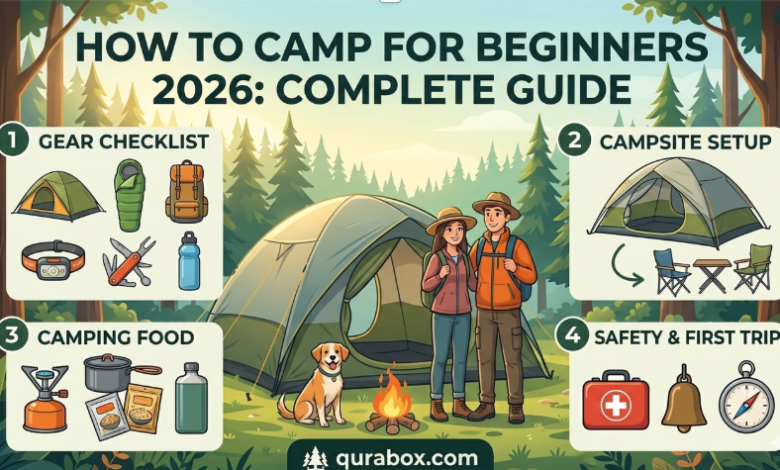
Camping sounds simple. You pack a tent, drive to a campsite, cook outdoors, and sleep under the stars. But your first camping trip can feel confusing if you do not know what to bring, where to sleep, how to cook, or how to stay safe. The good news is simple. You do not need to be an outdoor expert to enjoy camping. You only need a clear plan, the right basic gear, and a safe beginner-friendly campsite. This complete guide explains how to camp for beginners in 2026. It covers camping types, first-trip planning, a full gear checklist, campsite setup, easy camping food, campfire safety, wildlife safety, Leave No Trace rules, and common beginner mistakes. Camping is also more popular than ever. KOA’s 2026 Camping & Outdoor Hospitality Report says more than 52 million North American households camped in 2025, creating a $66 billion economic footprint. The Dyrt’s 2026 Camping Report also reported 2.6 million first-time campers in 2025. So if you are starting now, you are not alone. What This Guide Covers Section What You Will Learn Why Camping Is Popular in 2026 Why more people are choosing camping for travel, wellness, and family time Camping Types Which camping style is best for first-time campers First Trip Planning How to choose a campsite, check weather, and prepare before leaving Gear Checklist What to pack and what to skip Budget Guide How much beginner camping gear costs Campsite Setup How to pitch your tent and organize your camp Camping Food Easy meals and smart food packing tips Fire Safety How to build and put out a campfire safely Wildlife Safety How to store food and avoid animal problems Leave No Trace How to camp without damaging nature Beginner Mistakes What first-time campers often get wrong FAQ Quick answers to common camping questions Why Camping Is Booming in 2026 Camping is no longer only for hikers, scouts, or wilderness experts. It has become one of the easiest ways to travel, rest, and spend time outdoors without spending as much as a hotel vacation. Many people camp because they want a break from screens, traffic, noise, and daily stress. Others camp because it is affordable and family-friendly. A developed campground gives you nature, fresh air, cooking space, and a simple place to sleep. Camping also gives people something many modern trips do not: quiet. You can sit near a fire, cook slowly, walk under trees, and sleep with fewer distractions. 2026 Camping Fact Why It Matters 52M+ North American households camped in 2025 Camping is now mainstream travel $66B economic footprint Campers support local communities and outdoor tourism 2.6M first-time campers in 2025 Many beginners are entering camping every year 82.4M Americans camped in 2025 Camping remains one of the most popular outdoor activities Beginner takeaway: Camping is popular because it is flexible. You can start with a simple one-night car camping trip before trying harder outdoor adventures. Camping Types Explained: Which One Is Best for Beginners? Not all camping is the same. Some camping styles are easy and comfortable. Others need advanced skills, lightweight gear, and outdoor experience. For your first trip, choose the easiest option: developed car camping. Camping Type Difficulty Best For Facilities Beginner-Friendly? Developed Car Camping Easy First-timers, families, couples Toilets, water, fire rings, parking Yes Tent Camping at Basic Campground Easy to Moderate Campers wanting a simple outdoor experience May have toilets and water Yes Glamping Very Easy Comfort-focused travelers Beds, cabins, bathrooms, electricity Yes RV Camping Easy to Moderate Families and long trips Hookups, kitchen, bathroom options Yes, if renting Backpacking Hard Experienced hikers None No Dispersed Camping Moderate to Hard Campers wanting remote sites Usually none Not for first trip Survival/Wild Camping Hard Highly experienced campers None No Best choice for beginners: Start with a developed campground where you can park near your tent. You will have access to basic facilities, other campers nearby, and easier emergency options. Planning Your First Camping Trip A good camping trip starts before you leave home. Most beginner problems happen because people pack randomly, arrive late, forget weather checks, or do not test their gear. Follow this simple planning process. Step What to Do Why It Matters 1 Choose a developed campground Easier, safer, and better for beginners 2 Book early Popular campgrounds fill quickly 3 Check the weather Rain, wind, and cold nights affect your gear 4 Check fire rules Some areas ban campfires during dry weather 5 Plan every meal Prevents overpacking and food waste 6 Test your tent at home Avoids setup problems at the campsite 7 Tell someone your plan Important safety habit 8 Arrive before dark Makes setup easier and safer Choose a Campsite Close to Home For your first camping trip, do not travel too far. Choose a campground within two or three hours of your home. This keeps the trip simple and gives you an easier backup plan if the weather gets bad. Look for a campground with toilets, drinking water, picnic tables, marked campsites, and good reviews. If possible, choose a campground with a camp host or staff nearby. Check the Weather Twice Check the forecast when you start planning. Then check it again the day before leaving. Night temperatures can be much colder than daytime temperatures, especially near mountains, forests, lakes, or open areas. Pack for the coldest expected temperature, not the warmest afternoon temperature. Do a Gear Test at Home Set up your tent once before the trip. Check the poles, stakes, rainfly, and zippers. Try your sleeping bag and sleeping pad. Test your stove. Turn on your headlamp. This one habit can save your first trip. Complete Beginner Camping Gear Checklist 2026 You do not need every outdoor product on the market. You need the right basics. Start with three core items: shelter, sleep system, and safety gear. Shelter and Sleep System Item What to Look For Priority Tent 3-season tent with rainfly, poles, stakes, and enough space Must Have Tent Footprint or Groundsheet Protects tent floor from moisture and sharp ground Recommended Sleeping Bag Rated below the coldest temperature you expect Must Have Sleeping Pad Foam or inflatable pad for comfort and insulation Must Have Pillow Camp pillow or a small pillow from home Nice to Have Extra Stakes Useful if the ground is hard or windy Recommended Beginner tip: A two-person tent is more comfortable for one person. A three-person tent is better for two people if you want extra space. Clothing Checklist Item Why You Need It Priority Moisture-Wicking Shirt Keeps sweat away from your skin Must Have Fleece or Warm Layer Keeps you warm at night Must Have Rain Jacket Protects you from rain and wind Must Have Hiking Pants or Quick-Dry Pants More comfortable than jeans Must Have Wool or Synthetic Socks Helps prevent blisters Must Have Comfortable Shoes Broken-in shoes reduce foot pain Must Have Warm Hat Useful during cold nights Recommended Sun Hat or Cap Protects from sun exposure Recommended Camp Sandals or Slides Comfortable around camp Nice to Have Avoid cotton when possible. Cotton holds moisture and can make you cold when temperatures drop. Camp Kitchen Checklist Item Notes Priority Camp Stove A two-burner propane stove is easiest for beginners Must Have Fuel Bring enough for all meals Must Have Lighter or Waterproof Matches Carry more than one fire-starting option Must Have Cooking Pot and Pan One pot and one pan are enough for a short trip Must Have Plates, Bowls, and Cups One set per person Must Have Fork, Spoon, Knife Bring cooking utensils too Must Have Cooler Needed for meat, dairy, eggs, and drinks Must Have Water Bottles At least 2 liters per person per day Must Have Biodegradable Soap Use away from streams and lakes Must Have Trash Bags Pack out all trash Must Have Cutting Board Makes food prep cleaner Recommended Coffee Maker or Instant Coffee Optional but useful Nice to Have Safety and Navigation Checklist Item Why It Matters Priority Headlamp Keeps both hands free at night Must Have Spare Batteries or Power Bank Backup power for lights and phone Must Have First Aid Kit Handles cuts, burns, blisters, and stings Must Have Map or Offline Map App Useful when phone signal is weak Must Have Compass Backup navigation tool Recommended Whistle Emergency signal if you need help Recommended Multi-Tool or Knife Useful for repairs and camp tasks Recommended Sunscreen Prevents sunburn Must Have Insect Repellent Helps with mosquitoes and ticks Must Have Emergency Blanket Lightweight emergency warmth Recommended Duct Tape Good for quick gear repair Recommended Hygiene and Personal Care Checklist Item Notes Priority Toilet Paper Keep in a waterproof bag Must Have Hand Sanitizer Use before eating and after bathroom breaks Must Have Toothbrush and Toothpaste Store with other scented items Must Have Microfiber Towel Dries faster than cotton Recommended Wet Wipes Useful when showers are not available Recommended Small Trowel Needed if no toilets are available Situation-Based Personal Medication Pack more than enough for the trip Must Have Beginner Camping Budget Guide Camping can be cheap or expensive depending on how much gear you buy. For your first trip, borrow or rent costly items if possible. Gear Item Budget Range Better Option Buy or Borrow? Tent $60–$120 $150–$250 Borrow first if possible Sleeping Bag $40–$100 $120–$200 Buy Sleeping Pad $20–$50 $60–$120 Buy Headlamp $15–$35 $40–$70 Buy Camp Stove $40–$80 $100–$180 Borrow first Cooler $30–$70 $100–$250 Borrow first First Aid Kit $15–$40 $50–$80 Buy Rain Jacket $40–$100 $120–$250 Buy Cookware $20–$50 $60–$120 Borrow first Camp Chair $15–$40 $60–$120 Optional Smart spending rule: Buy safety and sleep items first. Borrow comfort items until you know you enjoy camping. How to Set Up a Campsite Step by Step Arrive early. Daylight makes everything easier. Step 1: Choose the Best Spot Pick flat, dry ground. Avoid low areas where rainwater may collect. Do not pitch your tent under dead branches. Look up before setting up. Step 2: Clear the Ground Remove sticks, stones, and sharp objects. A tiny rock can feel terrible under your sleeping pad at night. Step 3: Lay the Groundsheet Place your footprint or groundsheet under the tent. Make sure it does not stick out beyond the tent edges. If it sticks out, rain can collect on it and run under your tent. Step 4: Pitch the Tent Stake the corners first. Add the poles. Attach the rainfly. Use guylines if it is windy. Make the tent firm, but do not overstretch it. Step 5: Set Up Your Sleeping Area Put the sleeping pad down first. Then unroll your sleeping bag. Keep your headlamp, water bottle, phone, and warm layer close to you. Step 6: Build the Kitchen Area Keep your kitchen away from your tent. Set the stove on a stable surface. Keep water nearby. Store food in a cooler, food locker, or approved container. Step 7: Store Food Safely Never keep food inside your tent. This includes snacks, toothpaste, deodorant, and anything with a strong smell. Campsite Area Best Location Important Rule Tent Area Flat, dry, clear ground Avoid low areas and dead branches Cooking Area Away from tent Never cook inside the tent Food Storage Locker, car, bear box, or approved container Keep scented items away from sleeping area Fire Area Existing fire ring only Keep water nearby Trash Area Sealed bag or campground bin Never leave trash overnight Camping Food for Beginners Keep your first camping menu simple. Your goal is not to cook restaurant food. Your goal is to eat well without stress. Easy Camping Meal Plan Meal Food Idea Why It Works Breakfast Oatmeal with nuts and dried fruit Fast, warm, and easy Breakfast Eggs with bread or tortillas Filling and simple Lunch Peanut butter and banana wraps No cooking needed Lunch Tuna packets with crackers Lightweight and easy Dinner One-pot pasta Simple cleanup Dinner Grilled sausage with potatoes Easy campfire or stove meal Snack Trail mix High-energy and no prep Snack Granola bars Easy to carry Dessert S’mores Classic camping treat Food Packing Tips Prepare food at home. Chop vegetables before leaving. Portion spices into small containers. Freeze water bottles to help keep your cooler cold. Keep raw meat sealed and separate from ready-to-eat foods. Bring more snacks than usual. People often get hungry faster outdoors. Simple Cooler Packing Method Cooler Layer What to Put There Bottom Ice blocks or frozen bottles Middle Meat, dairy, and food for later meals Top Food for the first day Side Pocket/Top Bag Snacks, condiments, and drinks Campfire Safety for Beginners Campfires are enjoyable, but they must be handled carefully. Before starting a fire, check campground rules. If fires are banned, do not build one. Use your camp stove instead. Safe Campfire Rules Rule Why It Matters Use only the fire ring Prevents fire from spreading Keep water nearby Helps control emergencies Burn small wood only Easier to manage Never leave fire unattended Wind can spread embers quickly Keep children and pets away Prevents burns Put fire out completely Ashes can stay hot for hours How to Put Out a Campfire Pour water slowly over the fire. Stir the ashes. Pour more water. Touch the ashes carefully with the back of your hand from a safe distance. If you feel heat, it is not out. The fire should be cold before you leave or sleep. Personal Safety and Wildlife Safety Most camping trips are safe, especially at developed campgrounds. Still, you need basic outdoor safety habits. Personal Safety Checklist Safety Action Why It Helps Tell someone your campsite and return time Helps if you do not return on time Carry a first aid kit Handles small injuries Bring enough water Prevents dehydration Wear proper shoes Reduces slips and blisters Keep light nearby at night Prevents falls Know where bathrooms and exits are Helps after dark Keep phone charged Useful in emergencies Wildlife Safety Checklist Do This Do Not Do This Store food in sealed containers Do not keep snacks in your tent Use bear lockers where provided Do not feed wildlife Keep a clean campsite Do not leave food scraps Dispose of trash properly Do not approach animals Store toiletries with food items Do not cook beside your tent Even small animals can create problems. Raccoons, mice, squirrels, and birds can chew through bags if they smell food. Leave No Trace Camping Principles Leave No Trace means enjoying nature without damaging it. Principle Beginner Meaning Plan Ahead and Prepare Know rules, weather, and campsite conditions Travel and Camp on Durable Surfaces Use marked trails and established campsites Dispose of Waste Properly Pack out trash and use toilets when available Leave What You Find Do not take rocks, plants, or historic objects Minimize Campfire Impact Use existing fire rings and keep fires small Respect Wildlife Watch animals from a distance Be Considerate of Others Keep noise low and respect quiet hours Simple rule: Leave your campsite cleaner than you found it. 10 Beginner Camping Mistakes to Avoid Mistake Better Choice Arriving after dark Arrive at least two hours before sunset Not testing the tent Practice setup at home Packing too much Bring essentials first Forgetting warm clothes Pack for cold nights Cooking inside the tent Cook outside in a safe area Leaving food out Store food properly Depending only on phone signal Download offline maps Ignoring fire rules Check restrictions before leaving Wearing new shoes Use broken-in shoes Leaving trash behind Pack out everything Quick First Camping Trip Plan For your first trip, keep it short and simple. Time What to Do 1–2 weeks before Choose and book campground 3–5 days before Check weather and fire rules 2 days before Buy food and test gear Night before Pack bags and prepare meals Arrival day Reach campsite before sunset First hour Set up tent and sleeping area Evening Cook simple dinner and relax Before sleep Store food and put out fire fully Morning Cook breakfast, clean site, pack out trash FAQ: How to Camp for Beginners What should a beginner bring camping? A beginner should bring a tent, sleeping bag, sleeping pad, headlamp, first aid kit, water, food, camp stove, rain jacket, warm clothes, insect repellent, sunscreen, trash bags, and basic hygiene items. What is the easiest camping type for beginners? Developed car camping is the easiest. You can park near your tent and use campground facilities such as toilets, water, picnic tables, and fire rings. How much does beginner camping gear cost? A simple beginner setup can cost a few hundred dollars if you buy budget gear. You can reduce the cost by borrowing a tent, stove, cooler, and cookware for your first trip. Is camping safe for first-timers? Yes, camping is usually safe for first-timers when they choose a developed campground, check the weather, carry basic safety gear, store food properly, and follow fire rules. What food should I bring for my first camping trip? Bring easy food such as oatmeal, eggs, sandwiches, wraps, one-pot pasta, canned beans, trail mix, fruit, granola bars, and simple grilled food. Should I camp for one night or two nights the first time? One night is best for your first camping trip. It gives you enough experience without making the trip too tiring. Can I camp without a campfire? Yes. A campfire is optional. A camp stove is more reliable for cooking and can still be used when campfires are not allowed, depending on local rules. Where should I store food while camping? Store food in a sealed cooler, bear locker, car, or approved food container. Never keep food, snacks, toothpaste, or scented items inside your tent. Final Thoughts Learning how to camp for beginners is not about buying expensive gear or acting like a survival expert. It is about making smart choices before you leave home. Choose a beginner-friendly campground. Pack the essential gear. Test your tent. Bring simple food. Arrive before dark. Store food safely. Respect nature. Keep your first trip short. Once you finish your first camping trip, the next one will feel much easier. Camping becomes enjoyable when you stop guessing and start preparing. Read more